
Gorilla Trekking in Uganda & Rwanda
Gorilla tracking in Uganda and Rwanda | Heart-thumping Gorilla trekking in Africa
While Africa is famous for once-in-a-lifetime experiences, few are as awe-inspiring as tracking mountain gorillas in their natural habitat. Silently sitting on the cold floor of one of the world’s last remaining tropical rainforests observing a family of these endangered creatures up-close is arguably the most profound wildlife encounter on Earth.
In this guide, discover why gorilla trekking in Africa should top your bucket list. Get insider tips for planning an unforgettable gorilla tracking safari, explore trekking options, and embark on a life-transforming wildlife experience.
What Is Gorilla Trekking?
Gorilla trekking is a guided hike through dense tropical rainforests, led by a machete-wielding guide, to find and spend one hour with a family of habituated mountain gorillas.
Although physically demanding, gorilla tracking is a profoundly rewarding experience that combines the adrenaline of hiking through steep terrain, narrow footpaths, and dense jungles with the rare privilege of observing critically endangered species up close in their natural habitat. Meeting these gentle giants face-to-face in their natural habitat is an intimate and life-changing wildlife experience.
Where Are Gorillas Found?
Gorillas are found in the tropical and montane rainforests of Sub-Saharan Africa, across 10 countries including Uganda, Rwanda, the Republic of Congo, the Democratic Republic of Congo, Nigeria, Cameroon, Central African Republic, Equatorial Guinea, Gabon, and Angola.
There are two main species of gorillas: western and eastern, but most people travel to see the popular mountain gorillas, a sub-species of the eastern gorilla species.
Rwanda, Uganda, and the Democratic Republic of Congo are the most popular places to see mountain gorillas. These countries offer the best sustainable, accessible gorilla trekking experiences in Africa.
The first group of the only two wild populations of mountain gorillas are scattered in groups in the Virunga Massif, a volcanic mountain range spanning Uganda (Mgahinga Gorilla National Park), Rwanda (Volcanoes National Park) and the Democratic Republic of Congo (Virunga National Park).
The other group inhabits the densely forested Bwindi Impenetrable National Park in Uganda. Uganda is home to almost half the population of the world’s endangered mountain gorillas with which we share 98.3% of our DNA.
Where Is The Better Place To See Gorillas In Africa?
The best places for gorilla trekking in Africa are Bwindi Impenetrable National Park in Uganda and Volcanoes National Park in Rwanda. Most travelers avoid Virunga National Park in the Democratic Republic of Congo due to the current safety issues there. However, whether you go trekking in Rwanda or Congo, much of the information such as preparation, packing list, and the actual hiking experience are quite similar.
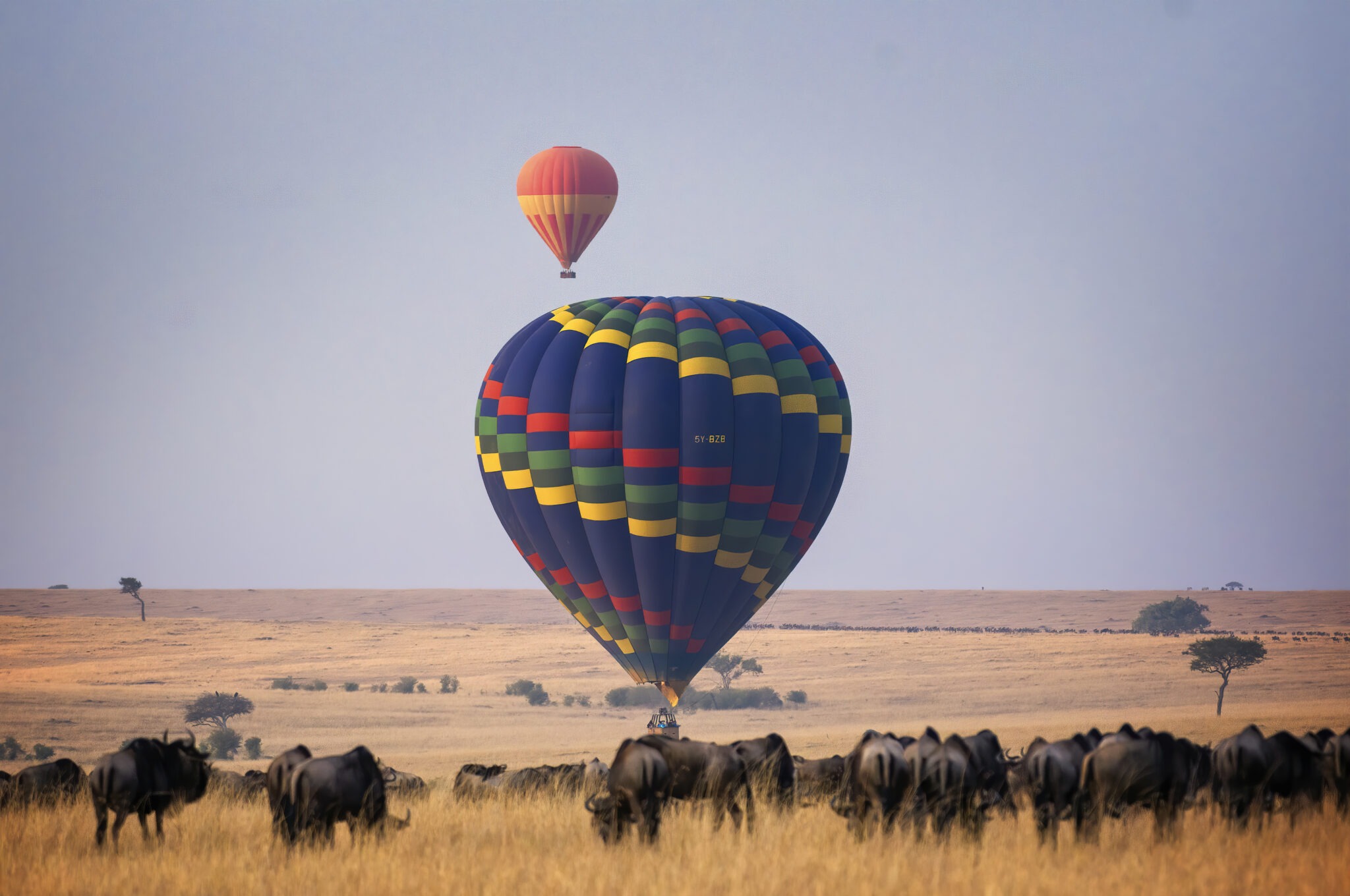
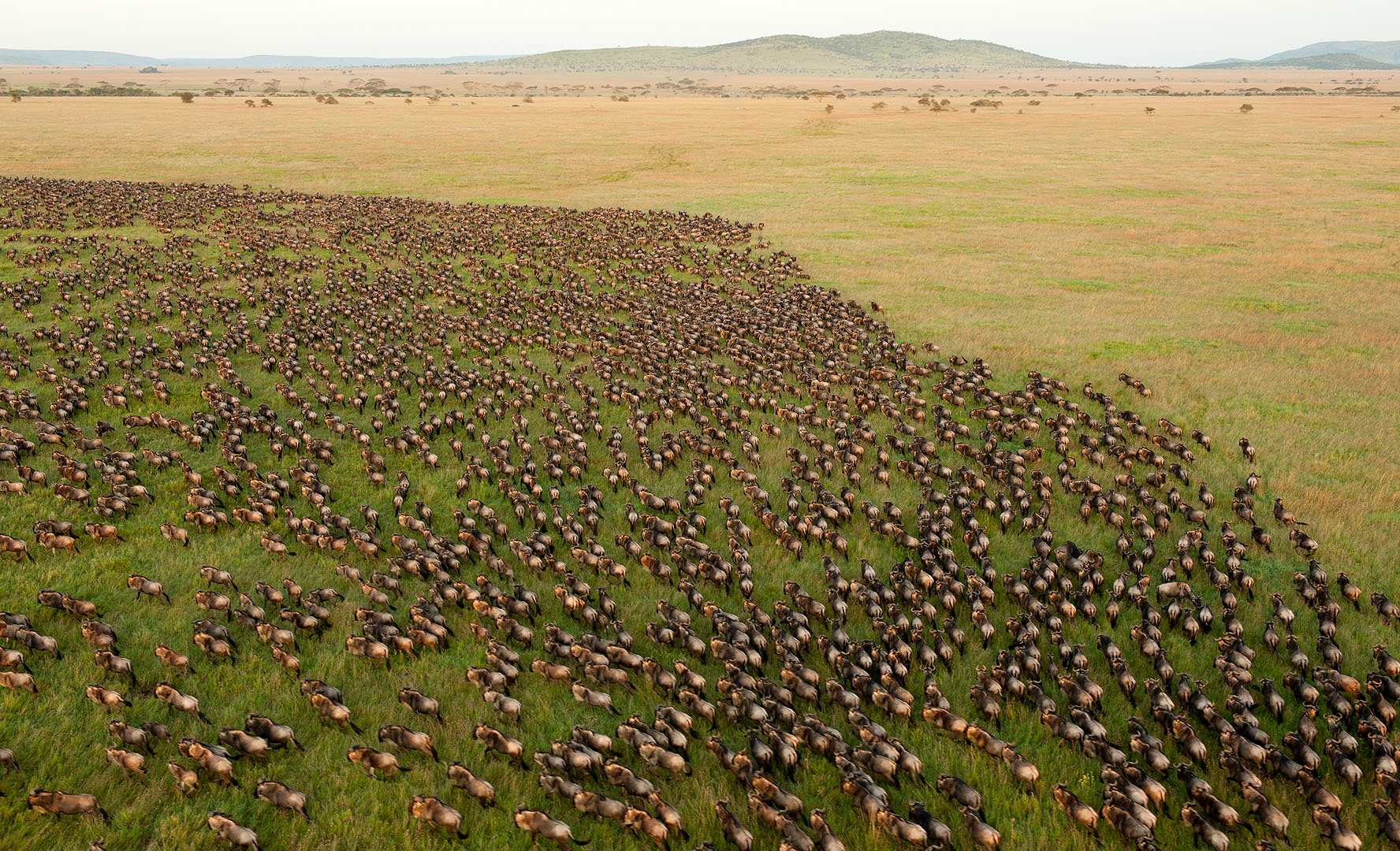
These two destinations offer some of the best gorilla trekking safaris that can easily be combined with other epic wildlife experiences like the Big Five or the wildebeest migration in Masai Mara and Serengeti.
What To Expect When Visiting Gorillas In Africa?
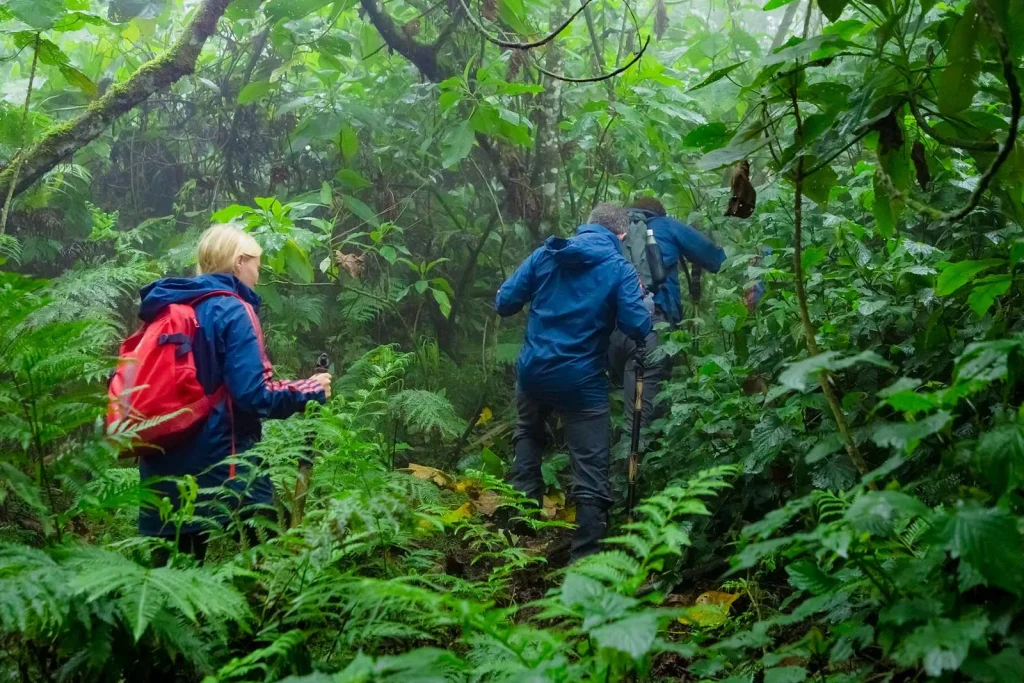
Daily gorilla tracking excursions typically start from the park headquarters, where you’ll report for registration and a mandatory briefing at 7 a.m. This briefing involves an introduction to the essential rules and guidelines for meeting the primates.
At the trailhead (starting point of the trek), you are divided into groups of eight individuals, ensuring the trekking experience is kept as unobtrusive as possible for humans and gorillas alike. An experienced tracker and two armed rangers are assigned to each group to ensure safety since you’ll be hiking in untamed areas with potential risks.
The ranger guides lead the way, usually with a machete to clear your path. You’ll navigate the dense forest with steep and sometimes muddy paths, a process that can take anywhere between 30 minutes and five hours.
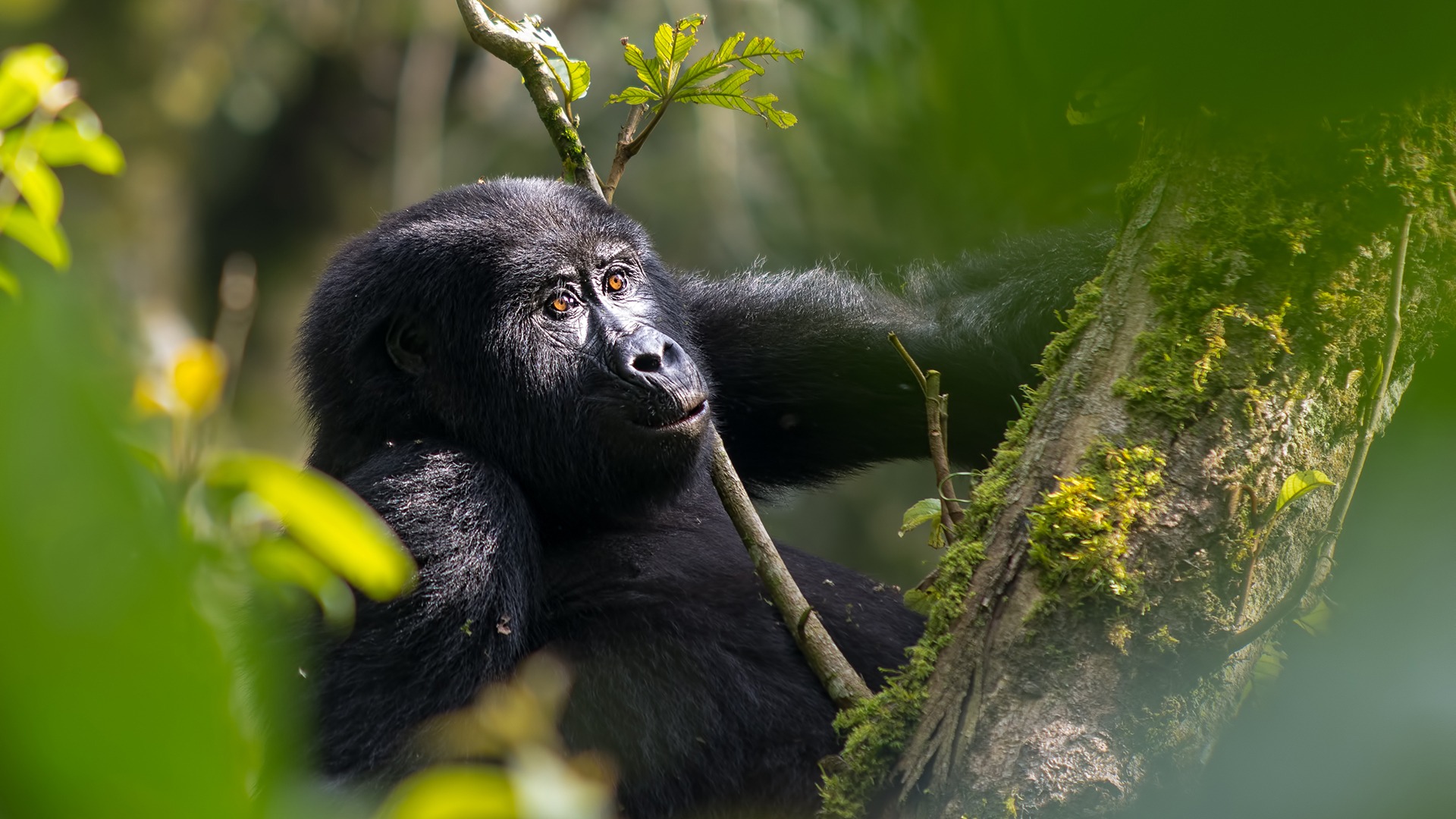
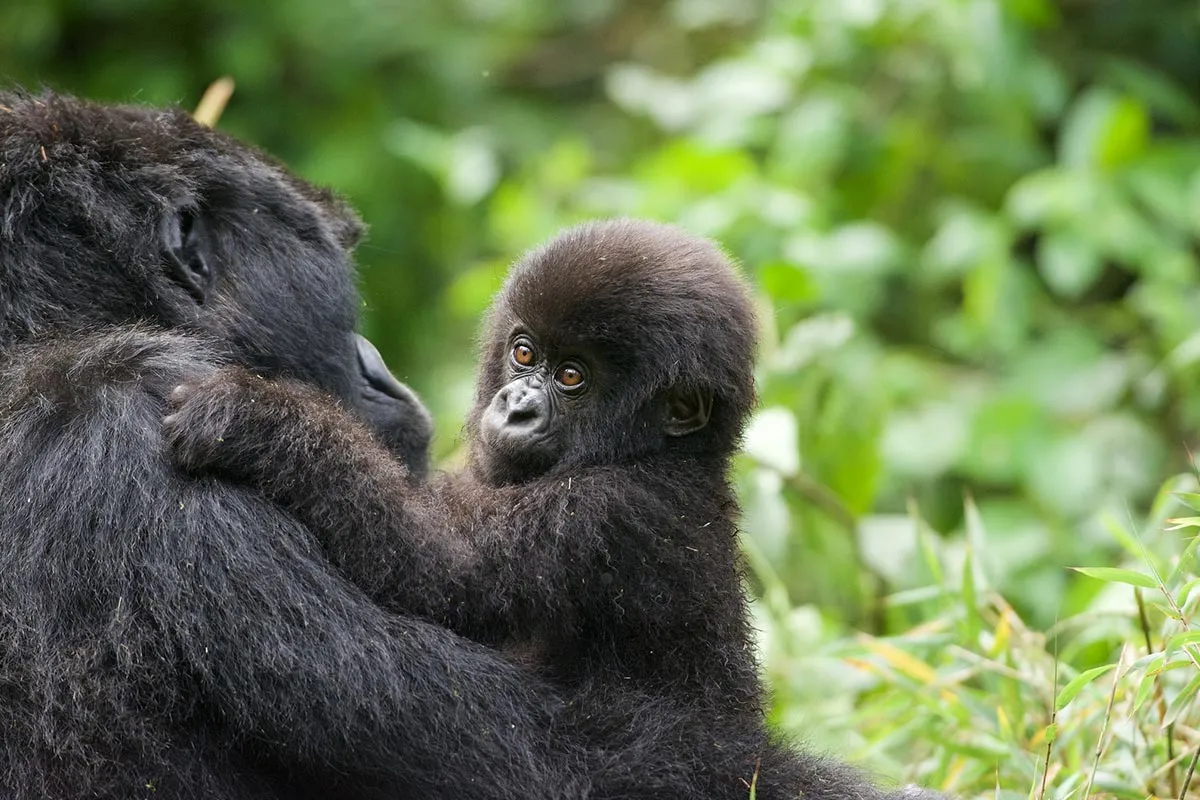
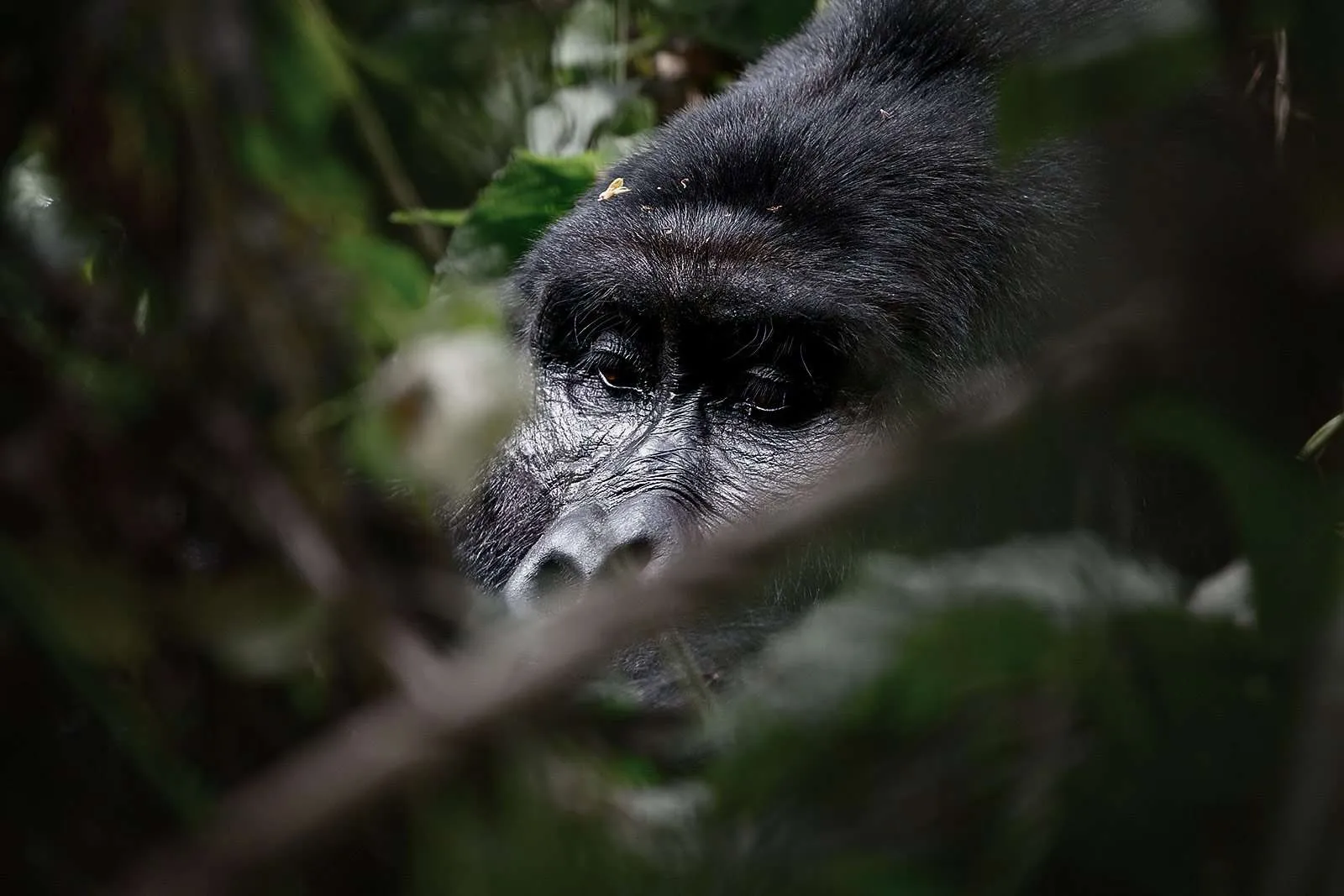
Once you find a family of habituated mountain gorillas, you’ll be allowed to spend an hour witnessing their magnificence up close from a safe distance of 10 meters. Sit silently on the cold forest floor and marvel as these gentle creatures munch, play, groom and interact with each other. Their soulful eyes will penetrate deep within you.
- Expect a strenuous and physically demanding hike through dense rainforest, potentially steep climbs, rugged terrain and muddy conditions – a moderate level of fitness will be required. The guides will ensure you take plenty of breaks and are properly equipped for a tough environment.
- You’ll be hiking at high altitudes of 2500 and 3000 meters which can make breathing more difficult.
- Once with the gorillas, unnecessary movement and conversations are usually prohibited for their comfort and your convenience.
- It’s essential to adhere to the rules and guidelines for your safety and the gorillas alike.
- Note that gorillas are highly susceptible to human diseases since we share about 3% of DNA. You will not be allowed to go on a gorilla trek if you have a cold or any other contagious illness. Sometimes you’ll be required to wear a face mask to protect the gorillas from human illnesses.
- The weather can be unpredictable in Uganda and Rwanda, so be prepared for both rain and sunshine.
- You may not see some of these guides and porters after trekking. Tipping them is customary and appreciated.
- Unforgettable Experience: Spending time in the presence of these magnificent creatures in their natural habitat is a truly unique and unforgettable experience.
How Many Mountain Gorillas Are Left In The World?
There are an estimated 1,063 mountain gorillas left in the world and listed as a critically endangered species. This number is divided across two distinct populations: the first in Uganda’s Bwindi Impenetrable National Park and the second in the Virunga Mountain Ranges.
Bwindi Impenetrable National Park alone is home to 459 individual mountain gorillas. The rest of the population (about 604 individuals) is dispersed in the Virunga Mountain Ranges, which spans Mgahinga Gorilla National Park in Uganda, Volcanoes National Park in Rwanda, and Virunga National Park in the Democratic Republic of Congo.
Although mountain gorillas are critically endangered—being just two classifications away from extinction—the total number in the wild is gradually increasing and now tops 1,000, thanks to decades of collaborative conservation efforts between three dedicated countries and their partners to ensure these gentle giants are protected, along with their habitat.
Do I Need A Permit To See Gorillas In Africa?
Yes, you need a tracking permit to see gorillas in Africa. A gorilla permit is a mandatory, government-issued document every visitor is required to possess when trekking in Bwindi Impenetrable National Park, Volcanoes National Park, Virunga National Park and Mgahinga Gorilla National Park.
Why Do I Need A Trekking Permit?
A gorilla trekking permit is required for all visitors to ensure a controlled, sustainable, and safe gorilla trekking experience for both visitors and the gorillas.
The permit system helps regulate the number of visitors to the park or visiting each gorilla group, ultimately preventing overcrowding and minimizing human impact on the gorillas and their habitat. It ensures a more enjoyable experience for all.
The revenue generated directly supports gorilla conservation efforts by funding park rangers, including anti-poaching patrols, research, protecting habitat and other initiatives that protect these endangered species.
Additionally, gorilla permits provide financial incentives for locals to safeguard these endangered primates. Local communities benefit directly through employment in lodges and acting as guides, allowing them to have purchasing power and in turn support local businesses. This creates a strong motivation to protect the gorillas and their habitat.
What Is The Cost Of Gorilla Permit In Uganda And Rwanda?
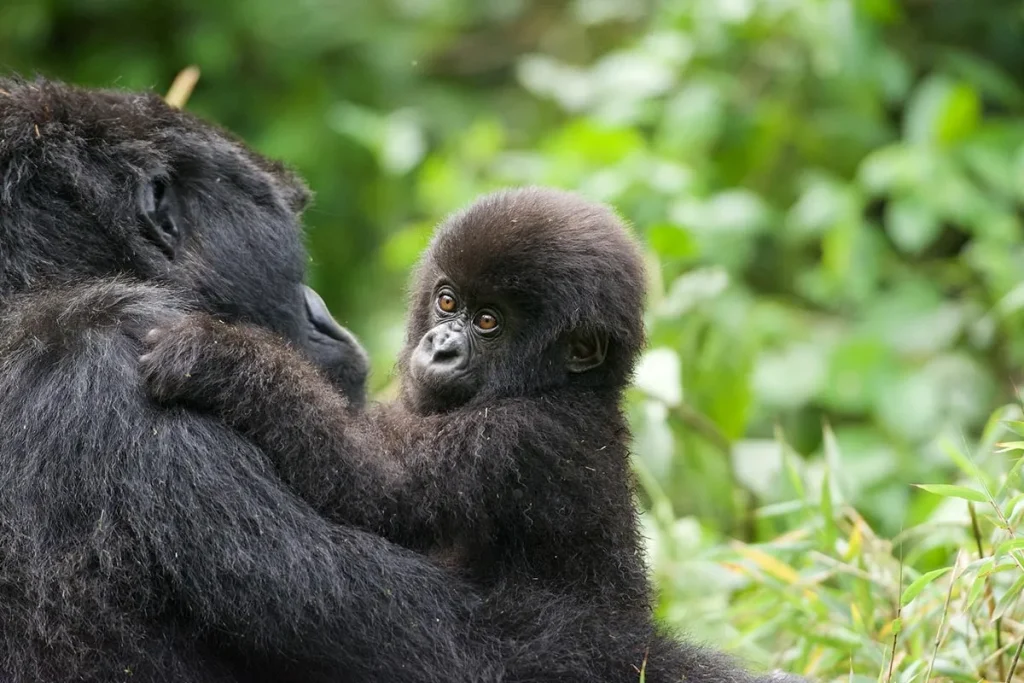
Gorillas in Volcanoes National Park
The cost of a gorilla permit in Uganda is US$ 800 for foreign non-residents per person, US$700 for foreign residents (with work permits) per person and UGX 300,000 for East African residents per person per trek.
In Rwanda, a permit costs US$ 1,500 for foreign non-residents, US$500 for foreign residents and UGX US$ 300 for East African residents, each per person per trek. 15 years is the minimum age for obtaining a permit in Uganda and Rwanda.
The more immersive Gorilla Habituation Experience permit costs $1,500 per person. It allows you to spend up to four hours in the presence of a semi-habituated gorilla family which contrasts with the normal gorilla trekking where you spend a maximum of one hour. The Gorilla Habituation Experience can only be conducted in Uganda’s Bwindi Impenetrable National Park.
Why Does Rwanda Gorilla Trekking Permit Cost Much More?
Rwanda’s gorilla trekking permits cost $1,500—much more than in Uganda or Congo—because they focus on offering premium experiences. In contrast, Uganda focuses on more affordable tourism experiences.
It is their prerogative to target a wealthier travel market and sell as a luxury gorilla trekking destination, which is why many luxury-minded travelers head there, while Uganda sells as an affordable gorilla trekking destination and attracts a large number of budget-minded travelers.
Is Gorilla Tracking Worth The Money?
Yes, gorilla trekking is considered worth the money for many reasons, but above all, the unique opportunity of encountering these magnificent creatures face-to-face in their natural habitat is not only intimate and unforgettable but also life-transforming.
Mountain gorillas are not kept in zoos, nor can they survive in captivity. You can only find them by trekking in the wild. This is why seeing them in these parks is referred to as a once-in-a-lifetime opportunity.
Besides, you will be interacting with one of the world’s endangered species – their populations, even in protected areas, are counted in hundreds rather than thousands with only 1,063 individuals left in the world.
How Difficult Is Gorilla Trekking?
Gorilla tracking is a moderately difficult activity which requires some level of physical fitness, regardless of whether you trek in Uganda or Rwanda. You will be hiking at high altitudes between 2500 and 3000 metres above sea level to find the gorillas, meaning the terrain is steep and uneven and oxygen will be thinner and the lungs will demand more.
Healthy individuals are usually more than able to take up the challenge. While gorilla trekking can be physically demanding, it is well worth the experience of seeing a patriarchal silverback in his natural habitat.
Is Gorilla Trekking Safe?
Yes, gorilla tracking is without a doubt a safe activity provided the rules and safety regulations are adhered to. Although inherent risks and challenges are involved, necessary measures have been put in place to ensure the safety of visitors. Both Uganda and Rwanda are generally safe to visit.
Besides, the gorillas themselves are gentle and peaceful, and most families are habituated and live in secure and protected areas. We highly recommend it to anyone looking to have a once-in-a-lifetime experience.
What Is The Minimum Age For Gorilla Trekking In Africa?
While the minimum age for gorilla trekking in Africa is generally 15 years, Uganda offers exceptions for children as young as 12; however, the standard rule remains that children below 15 are not allowed to trek.
It is quite difficult for children to remain calm in the presence of the primates for a given time period. Therefore, keeping them away helps minimize any potential risk of the gorillas reacting negatively.
In some cases, children might be allowed to trek if their parents are confident in their physical ability and maturity. However, they will need to sign a consent letter (waiver) and be responsible for any potential risks.
When Is The Best Time To Go Gorilla Trekking In Africa?
The dry seasons of June to September and December to February (peak seasons) are the best times to go gorilla trekking in Africa. There is considerably less rainfall during these times, making the trails less slippery and easier to navigate and ultimately ensuring a more comfortable trekking experience. The drier conditions also mean increased visibility, making it easier to sight the gorillas.
While the dry season is ideal for gorilla trekking in Africa, the experience is available year-round, even though trails can be more challenging during the rainy season. If you prefer fewer crowds, consider visiting during the low season—March to May or October to November—which coincides with the rains.
What To Pack For Gorilla Trekking In Africa?
To experience smooth gorilla tracking in Uganda and Rwanda, you will need to wear lightweight and breathable clothing such as long-sleeved shirts and pants to protect against scratches and insect bites. Wearing gloves, a rain jacket, the most supportive waterproof hiking boots with good traction, thin moisture-wicking socks covered by thicker cotton socks to prevent blisters will ensure a comfortable trekking experience.
Sample Gorilla Tracking Safaris
8 DAYs
Uganda Classic Primate & Wildlife Safari
Destinations: premier parks
- Shoebill tracking
- Intimate gorilla and chimp tracking and immersive cultural experience

7 DAYS
Rwanda Primate Safari (Gorilla & Chimpanzee Tracking)
Destinations: Volcanoes and Nyungwe Forest, Rwanda
- Vibrant city and mystic jungle experience & a resort haven in Lake Kivu
