

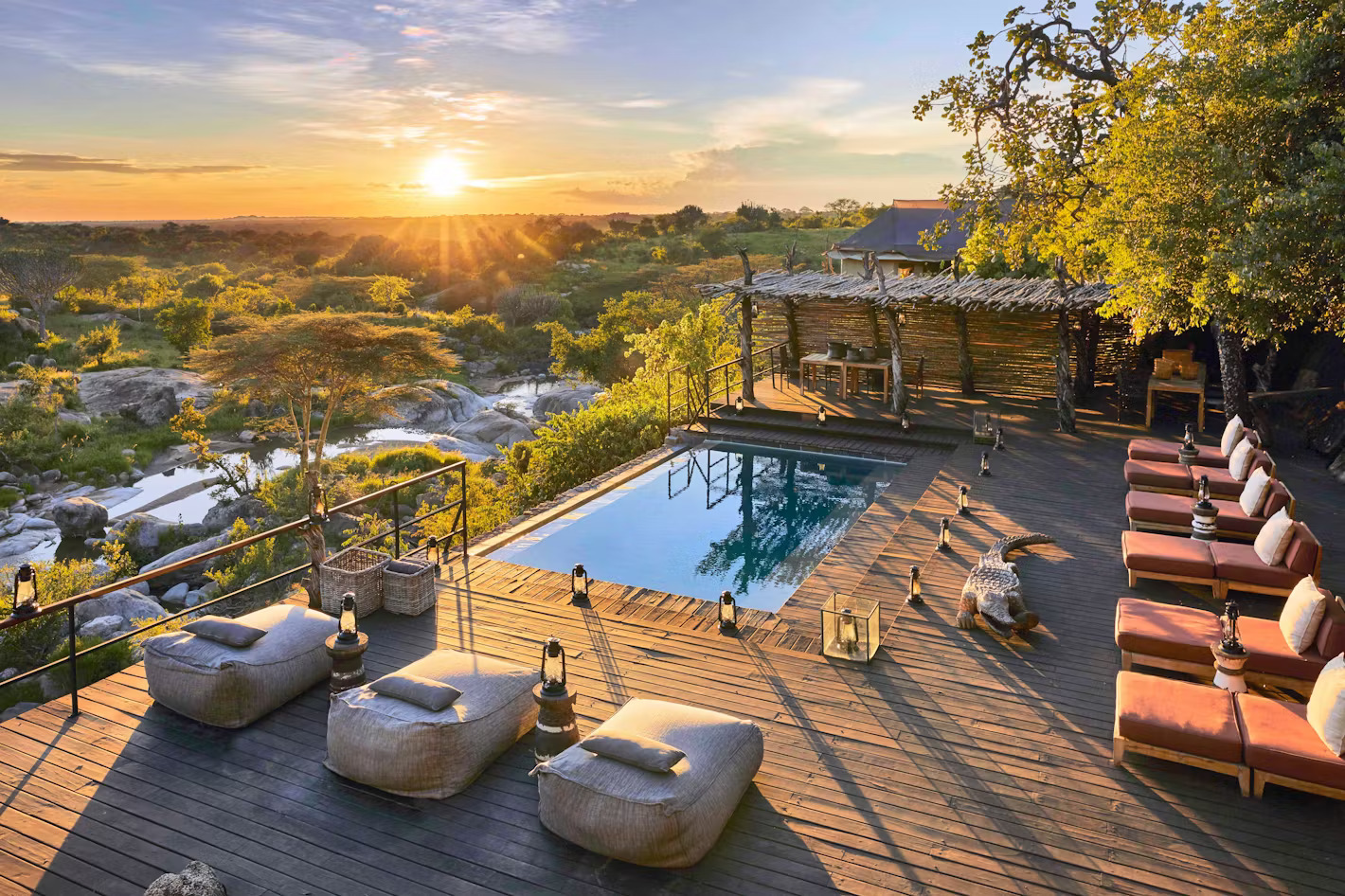
Wildebeest Migration Kenya & Tanzania
Wildebeest Migration | Great Migration in Serengeti, Tanzania and Masai Mara, Kenya
The Wildebeest Migration, or the Great Migration is one of the world’s most epic, sought-after, and photographed wildlife spectacles. It’s the main reason why many travelers go on safari in Kenya or Tanzania, especially around mid-year to experience one of nature’s greatest shows. Hearing and seeing columns of wildebeest stretching for many kilometers and looking at the dust cloud all around you is an experience you can’t fully fathom.
Interested in following the Great Wildebeest Migration? Below is a practical guide offering expert advice as to what exactly the migration entails, where, how, and when it occurs, and the best time to witness the events.
What is the Wildebeest Migration?
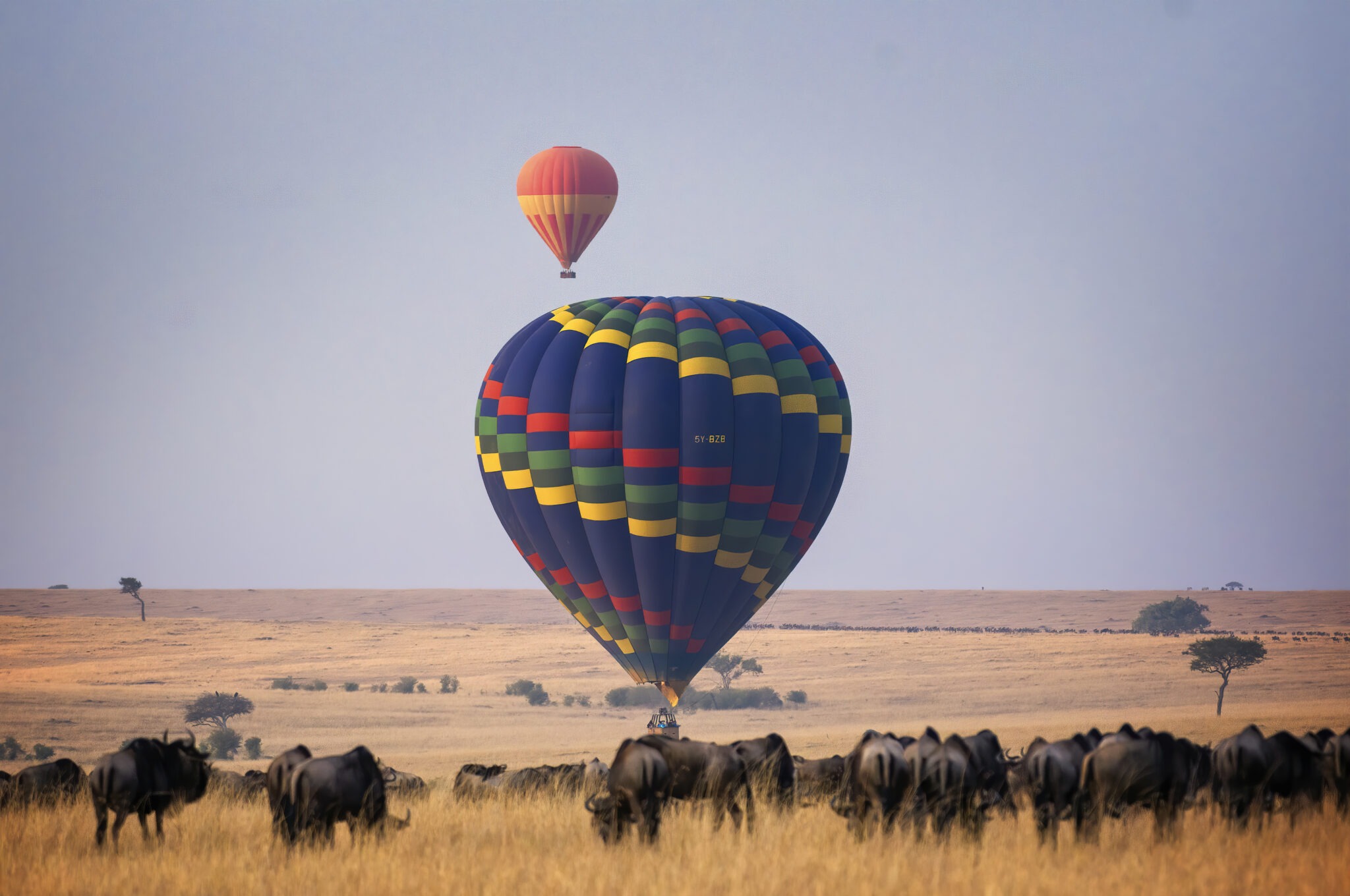
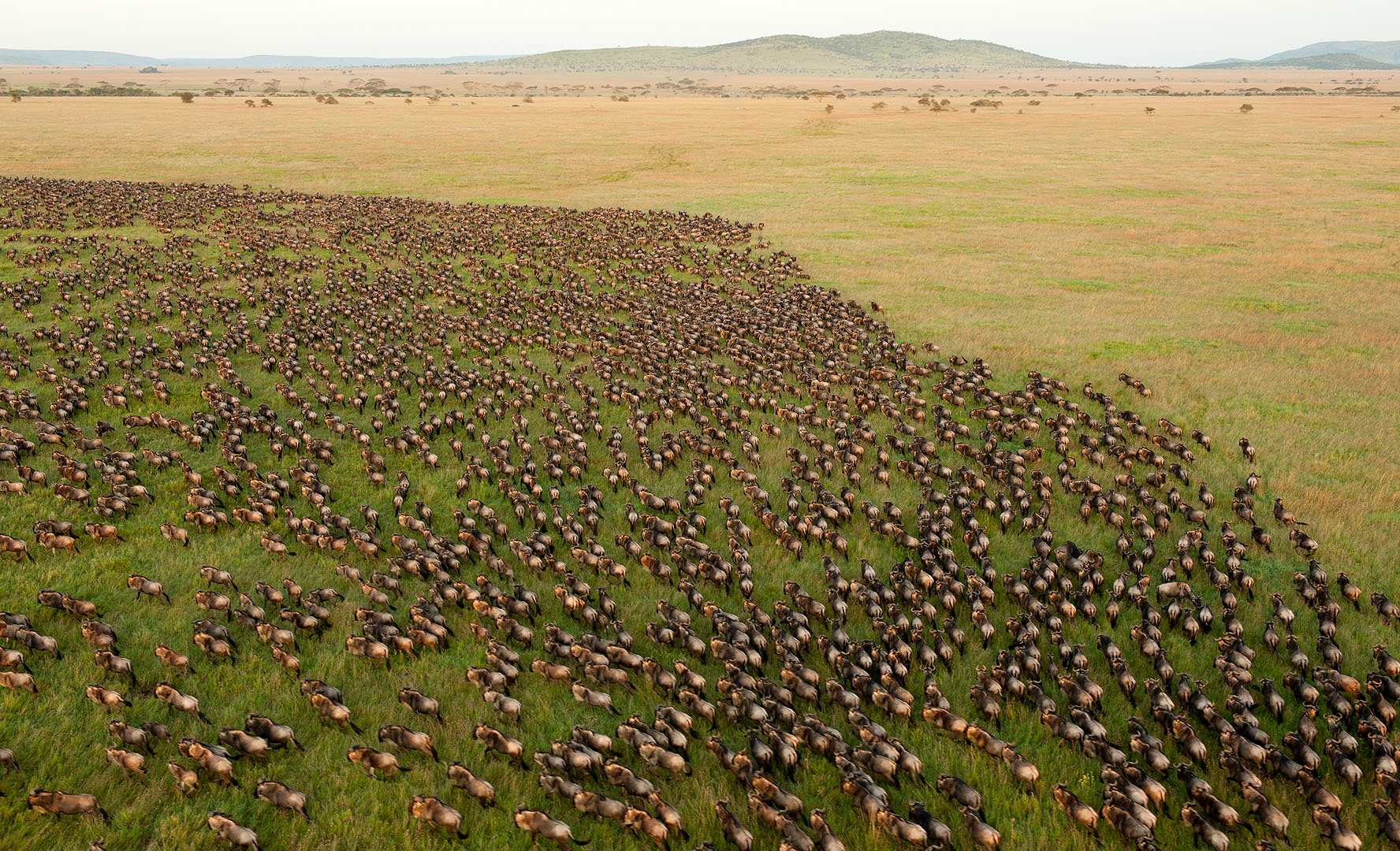
The Wildebeest Migration is a massive overland movement of millions of wildebeest, zebras, and Thompson’s gazelle from the Serengeti plains in Tanzania into Masai Mara in Kenya in search of fresh grazing and better-quality water. In this constant year-round movement, columns of wildebeest can be seen from space. Together with a host of zebras and Thomson’s gazelle, the herds diligently follow their inner compass across the Serengeti-Mara ecosystem.
The overwhelming numbers highlight the magnificence of this natural spectacle, where up to 2 million herbivores form one super herd as they thunder across the Serengeti in Tanzania and Masai Mara in Kenya. It is considered the “greatest wildlife show on Earth” and the “World Cup of Wildlife”.
The grazers begin their long journey in the southern plains of the Serengeti in December during calving season. Moving west and then north towards the Mara plains by July and August, they spend the dry season there before eventually turning east and south to complete the cycle.
The search for fresh grazing does not come without danger. Nearly 250,000 wildebeest and 30,000 zebra fall prey to hungry predators, or die of injury, drowning, thirst, hunger, and exhaustion. However, the numbers are replenished by the birth of new calves in the thousands between January and March—a stark representation of the merciless cycle of life and death.
Where does the Wildebeest Migration take place?
The wildebeest migration or the great migration takes place primarily within the Serengeti-Mara ecosystem, spanning a significant portion of northern Tanzania and southwestern Kenya. The Serengeti and Masai Mara are one continuous landscape divided by an invisible man-made boundary.
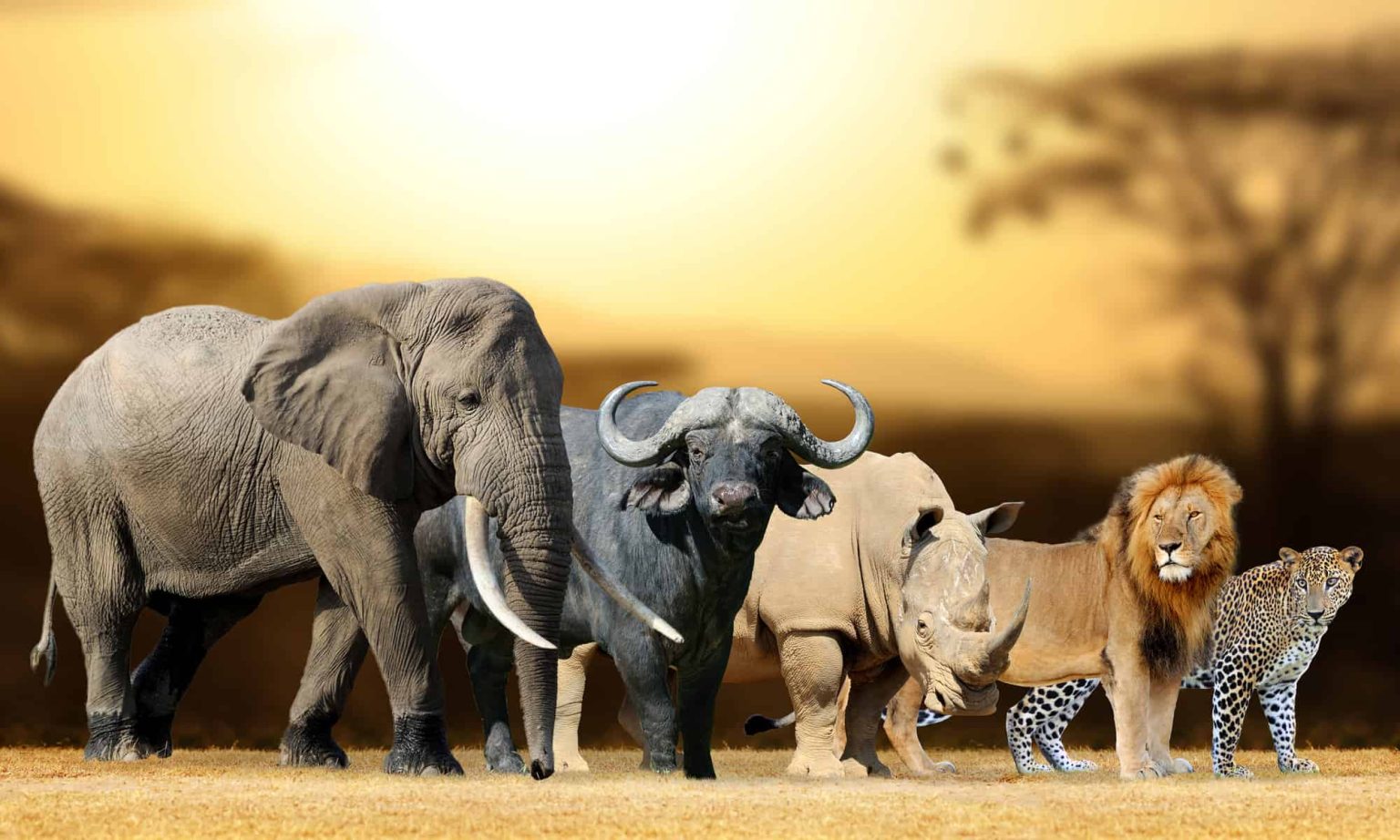
This vast area covers approximately 40,000 square kilometers (15,000 square miles) and is home to astonishing wildlife, including wildebeest, zebras, Thomson’s gazelles, elephants, buffalo, giraffes, hippos, lions, leopards, cheetahs, hyenas, and wild dogs.
The wildebeest migration follows a circular route from southern Serengeti in Tanzania to Masai Mara in Kenya and back again every year in a continuous, never-ending cycle.
Is it only Wildebeest that migrate?
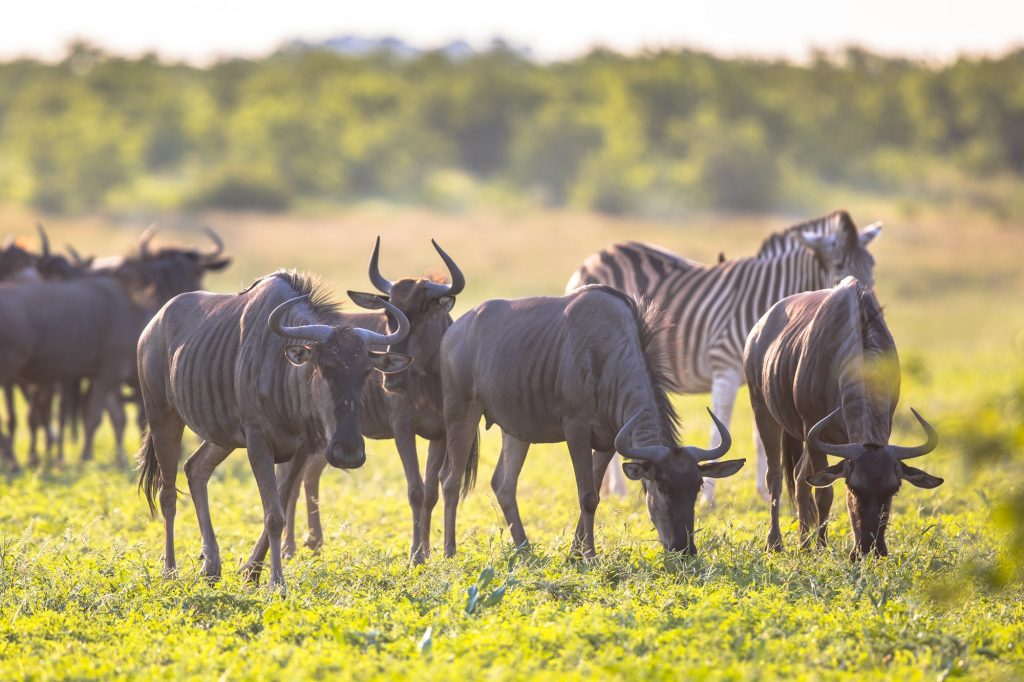
Wildebeest and zebra in Serengeti
No! While wildebeest are the most popular participants, thousands of zebras, gazelles (Thomson’s and Grant’s) and elands also migrate alongside them, forming one massive herd of over 2 million animals.
Notably, wildebeest and zebra are close companions with different grazing habits. Zebras, for example, prefer grazing on taller, lower-quality grass initially, while wildebeests prefer shorter, softer grass. Zebras have long front teeth designed to cut long grass, thus preparing the ground for the wildebeest, which have wider muzzles designed for grazing on shorter grass.
This extraordinary relationship plays out well, benefitting the two species as each has a set of adaptations that perfectly complement those of the other while reducing competition for food. Other species prefer slightly different grazing conditions, so expect to see them at different points along the way.
Meanwhile, predators such as lions, cheetahs, and hyenas don’t migrate with the herds but hunt only when the herds cross their territories.
Why do the Wildebeest Migrate?
Wildebeest migrate primarily to find fresh, nutritious and high-quality pasture when seasons change. In this pursuit, vast herds traverse the expansive Serengeti-Mara ecosystem following the seasonal rains.
Wildebeest need to graze and drink at least each day. As the drought progresses, the vegetation become sparse and water sources dry up forcing them to move towards areas with fresh grass and water.
Guided by survival instinct, these herbivores cover 800 to 1,000kms on an endless pilgrimage all their lives. They have an incredibly powerful sense of smell that allows them to detect water or rain more than 50kms away.
When is the best time to see the Great Migration?
The best time to see the wildebeest migration is between July and October for the dramatic river crossings in northern Serengeti and Masai Mara, and February to March for the calving season in the Ndutu plains, southern Serengeti. However, it depends largely on which events you’re personally interested in seeing, given that the Great Migration is a continuous, year-round cycle with each season offering its own highlights.
Timing is important for being in the right place at the right time of year. Therefore, you need to understand the wildebeest migration in every month to have an idea as to when and where the events will occur, guaranteeing front-row seats to the action. Below is our breakdown.
A month by month guide to a Great migration safari
Wildebeest Migration in January/February/March: Wildebeest Calving Season Vs Predators
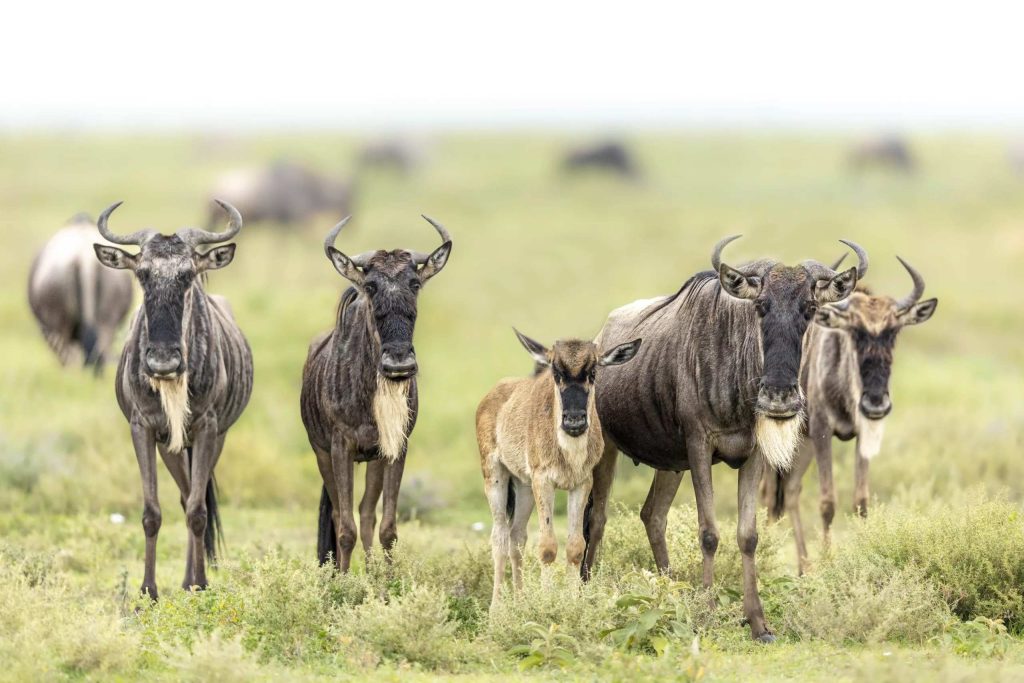
Wildebeest calving in Ndutu
The migration will be completing the cycle with a southward trek in January every year. The herds approach the southern Serengeti plains along the eastern edge of the park, within reach of Ngorongoro. Around this time, the rains have ended and the plains are rich in nutritious grass presenting the perfect condition for the calving season.
About 400,000 calves are born in the southern Serengeti – nearly 8,000 new calves every day marking a significant point in the Great Migration. Expect to see a lot of predator action as they target easy prey – the newborn calves. This is also the best time of year to see cheetahs anywhere in Africa!
- Location: Ndutu, Southern Serenget
- Camps: Sanctuary Kichakani, Olakira, Alex Walker’s Serian Serengeti Kusini
Great Migration in April/May: Herds move towards central Serengeti
With herds having increased in number by the newborns, the animals saunter northwest toward the grassier central Serengeti plains. By May, the ungulates start to gather by the Moru Kopjes.
Huge columns can be seen stretching up to 40 kilometres (25 miles) in length. The mating season begins toward the end of May and males compete for the right to mate with receptive females.
The wildebeest are moving a little quicker now that the calves are stronger, drawing with them thousands of zebra and smaller groups of gazelle towards Serengeti’s Western Corridor.
- Location: Central Serengeti, Western Serengeti
- Camps: Kiota, Dunia, Ubuntu Migration, &Beyond Grumeti Serengeti Tented Camp
Wildebeest Migration in June/July: Grumeti River crossing
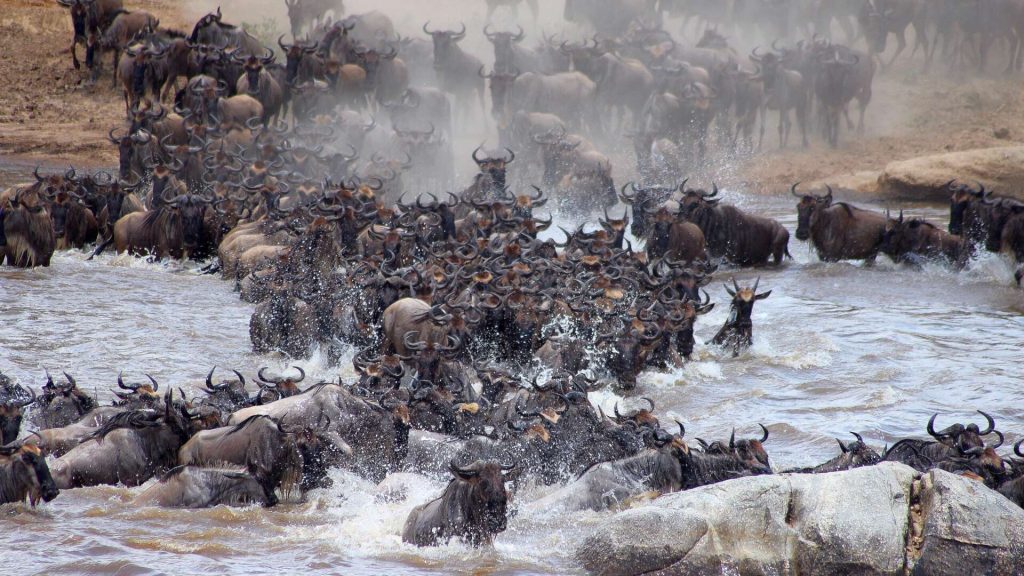
Grumeti River crossing in Tanzania
June sees the herds in Serengeti’s Western corridor and on the southern banks of the Grumeti River. They must face the first of many daunting and tense river encounters – crossing the crocodile-infested Grumeti River.
In July, mega herds head north along the western edge of the park toward the treacherous waters of the Mara River. Tension fills the air as thousands are taken by the river’s strong currents, crocodiles, and big cats waiting on either side.
Timing the river crossings depends on nature and the response of the ungulates. It usually begins at the onset of the high season in July. Expect high visitor numbers given that it is arguably one of the most thrilling and sought-after scenes of the great migration.
We recommend booking your Wildebeest Migration safari up to a year in advance to ensure that you get a lodge as close to the river as possible.
- Location: Northern Serengeti, Masai Mara
- Camps: Lamai Serengeti, Sayari, Governor’s Camp, Rekero Camp
Great Migration in August/September/October: Mara River crossing
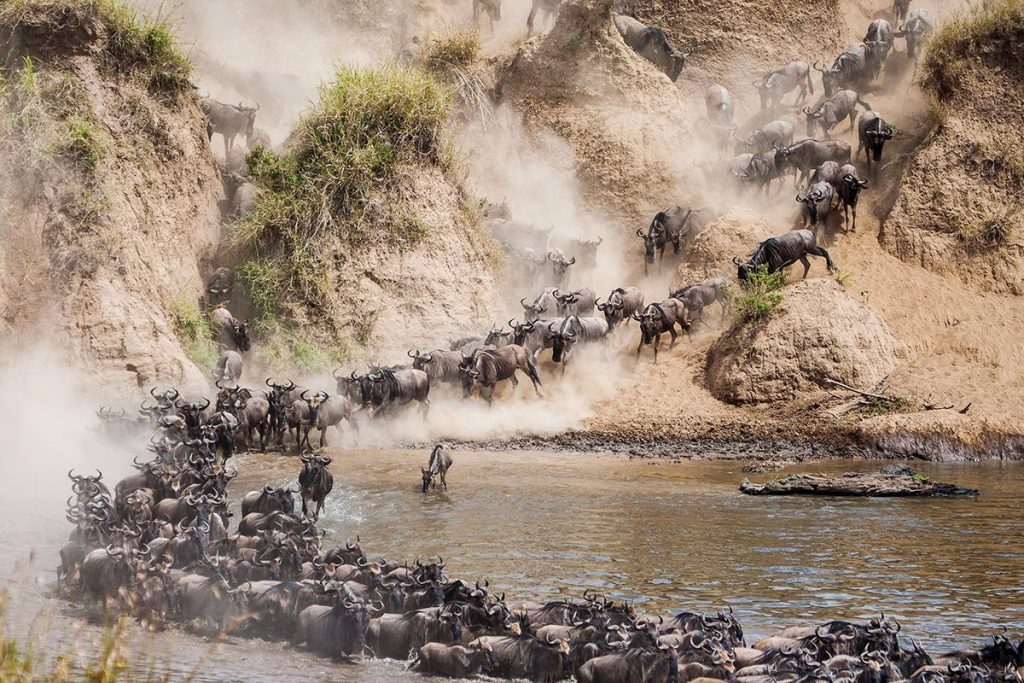
Mara river crossing
With some still crossing the Mara River in August, large herds have swept across the Masai Mara’s northern region, though a significant portion remains in the northern Serengeti. By now, you’ll need a passport to cross into Kenya to ensure better views of the herds. We recommend heading for the private conservancies for a more exclusive safari experience.
By September to October, the chaos is far forgotten and the herds are back to business as usual as they gradually move eastward. However, they will have to face the rough waters of the Mara River once again in order to complete the cycle southwards.
- Location: Northern Serengeti, Masai Mara
- Camps: Lamai Serengeti, Chaka Mobile Kogatende, Governor’s Camp, Rekero Camp
Wildebeest Migration in November/December: Back to southern Serengeti
In late October and early November, the short rains arrive and columns are drawn southwards across the Kenyan border into the eastern reaches of the Serengeti beyond the Namiri Plains.
By December, the herds are scattered throughout the eastern and southern Serengeti plains once again. The grasses are lush with rain, ushering in the calving season where they will give birth to the next generation of migrators and the cycle begins anew.
- Location: central Serengeti, south central Serengeti
- Camps: Naona Moru, Dunia, Serengeti Safari Camp, Pioneer
Sample Great migration safaris
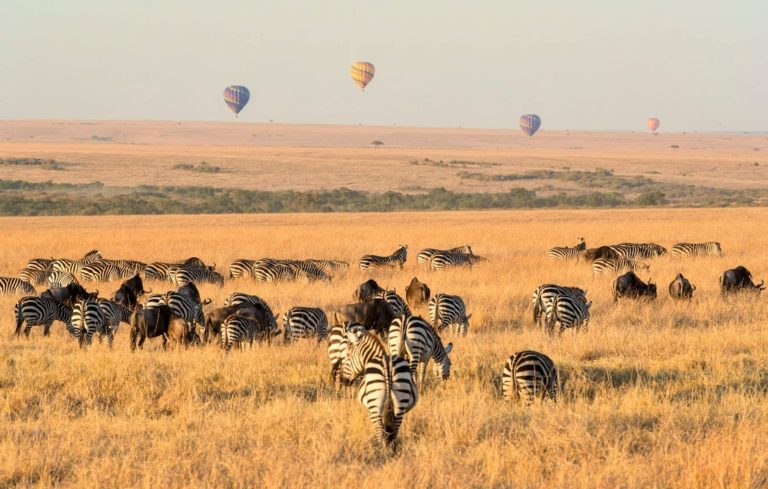
5 DAYS
Masai Mara Wildebeest Migration Safari
Destinations: Kenya
- Experience the famous wildebeest migration in the Masai Mara
- Enjoy multiple game drives in one of Africa’s best-known wildlife reserves
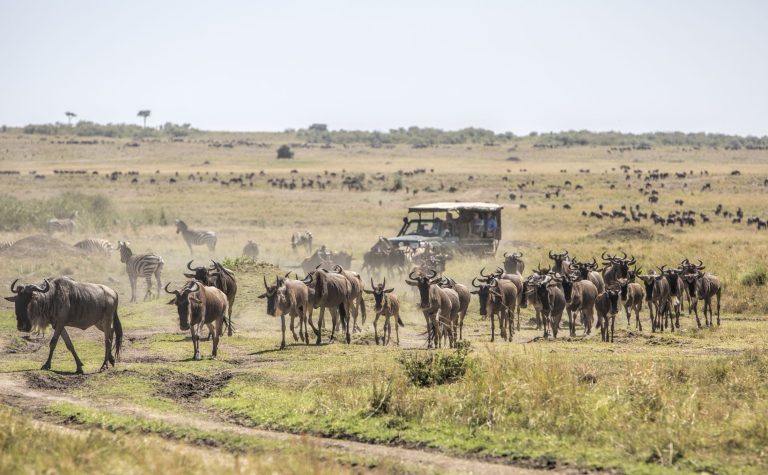
11 DAYS
Tanzania Migration and Zanzibar Safari
Destinations: Tanzania
- Excellent wildlife viewing including the Big Five and wildebeest migration
- Barefoot beach luxury
