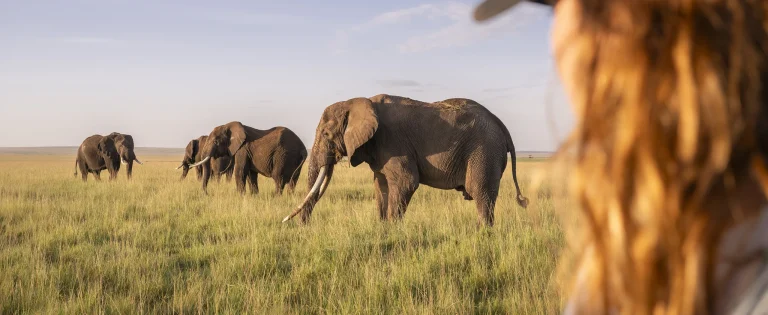
Masai Mara National Reserve is a premier and iconic wildlife haven famous for the annual wildebeest migration. It is well worth visiting for those interested in witnessing over 1.5 million wildebeest, zebras, and gazelles from July to October. The Big Five and big cats are all present, and the vibrant Maasai culture never fails to amaze.
Masai Mara National Reserve at a Glance
Masai Mara is a relatively small reserve located in southwestern Kenya, spanning an area of approximately 1,500km² (580 square miles). Its open grassy plains extend southwards, sharing unfenced borders with the Serengeti and private conservancies in the other directions.
The Mara triangle, a game-rich western section of the reserve offers unbeatable game-viewing opportunities all-year round.
The reserve is a photographic paradise characterized by sprawling savannahs dotted with thorn trees, kopjes, and craters; riverbanks densely lined with trees and shrubs; and, of course, the dramatic, towering escarpment.
Three major rivers drain the reserve; the Sand River, Talek River and the more famous Mara River, which also provides the chief obstacle for the wildebeest migration.
From July through October every year, Masai Mara takes centre stage as overwhelming numbers of wildebeest, zebra and other herbivores cross the plains from the Serengeti in Tanzania in search of grazing and water.
This natural spectacle presents one of the most thrilling events on the Mara plains – the dramatic and iconic river crossings. It’s a life-and-death encounter as hungry predators, such as lions, cheetahs, and hyenas send the ungulates panicking across the crocodile-infested Mara and Talek Rivers.
Did you know?
‘Mara’ means ‘spotted’ in the Maa language (spoken by the Maasai people) refering to how the landscape is characterized by scattered acacia trees, indentations, and craters across the expansive savannah.
Wildlife in Masai Mara

The Masai Mara is home to one of the highest wildlife densities anywhere in the world. Animals to look out for include the Big Five (elephant, rhino, buffalo, lion, and leopard), wildebeest, zebra, Maasai giraffe, eland, Thomson’s and Grant’s gazelles, dik-dik, topi, impala, waterbuck, oribi, and reedbuck.
Other wildlife species include cheetahs, spotted hyenas, servals, bat-eared foxes, black-backed or side-striped jackals, hippos and crocodiles, while more than 450 recorded bird species can be found in various habitats including grasslands, woodlands, and along the Mara River.
This diversity of wildlife is attributed to the short-grass savannahs of the Mara River basin, between the Loita Hills in the east and the Oloololo Escarpment in the west. These attract grazers and consequently predators, making the Masai Mara one of Africa’s premier safari destinations.
Best time to visit Masai Mara
The best time to visit Masai Mara is between June and October (dry season) when the wildebeest migration is occurring. The other dry months from December to March, provide optimal conditions for sighting the Big Five animals. During these dry seasons, animals congregate at water sources, making it easier to spot them.
However, the rest of the months equally offer excellent wildlife viewing opportunities, meaning regardless of the time of year you visit, you are assured of seeing the wondrous side of this incredible African wilderness.
Where to stay in Masai Mara
There’s a wide variety of both mid-range and high-end luxury accommodations located in and around Masai Mara. They range from permanent family-friendly lodges to old-style tented and mobile camps that move with the Wildebeest Migration. The location of the reserve you choose to visit or stay in will greatly influence your safari experience.
The central and eastern sections of the reserve are the most visited because of their proximity to Nairobi. Accommodations in these areas include Mara Simba Lodge, Mara Sopa Lodge, Keekorok Lodge, Sanctuary Olonana and Mara Bushtops.
The game-rich Mara Triangle in the west offers more rewarding game viewing, though it is more remote and harder to access. Accommodation options here include: Mara Governor’s Camp, Serena Safari Lodge and Little Governor’s Camp.
Masai Mara is busiest from July to October (peak season) which also coincides with the Wildebeest Migration. Most of the camps and lodges cater for large numbers of guests. If you are keen on avoiding the crowds, it would be well worth staying in the adjacent conservancies.
The conservancies offer more privacy and exclusive safari experiences and a wider variety of activities like night drives and walking safaris. Our top picks include Angama Mara, andBeyond Bateleur Camp, and Elephant Pepper Camp.
Getting to Masai Mara
To get to Masai Mara, your international flight will likely land at Jomo Kenyatta International Airport (NBO) in Nairobi, and then catch a short-haul flight from nearby Wilson Airport to one of the various airstrips in the Mara. You’ll be picked up and transferred to your camp or lodge by 4×4. Fly-in safaris often help maximise travel time.
The most common and affordable way to get to Masai Mara from Nairobi is by road transfer, which takes approximately 4-5 hours and covers a distance of around 270 kilometers (or 168 miles) to reach the Reserve’s nearest gate.
Tips for visiting Masai Mara safari
- Consider the season you plan to travel. During the peak season from June to October, the park can become crowded.
- Book early up to a year in advance for the wildebeest migration
- Stay in a private conservancy to enjoy excellent accommodation and privacy.
- Consider proper etiquette if you want to travel to Kenya. Good manners and courtesy are highly emphasized.
- Consider packing appropriate clothing before traveling, such as long-sleeved shirts and long pants, sturdy closed-toed shoes, warm jacket, waterproof jacket, daypack and mosquito repellent, among others.
- Don’t forget the gadgets; Camera & lenses, spare camera battery and chargers and binoculars.
- Always ask permission before photographing the locals.
Sample Masai Mara safaris