



Wildebeest Migration River Crossings
The Great Migration River Crossings in Kenya and Tanzania
The wildebeest river crossings are arguably one of the most thrilling wildlife spectacles to witness on a great migration safari. Although they are the most famous, dramatic highlight, they are only one component of the entire wildebeest migration cycle. But first, we need to understand what the wildebeest migration entails before the river crossings happen.
What is the Wildebeest Migration?
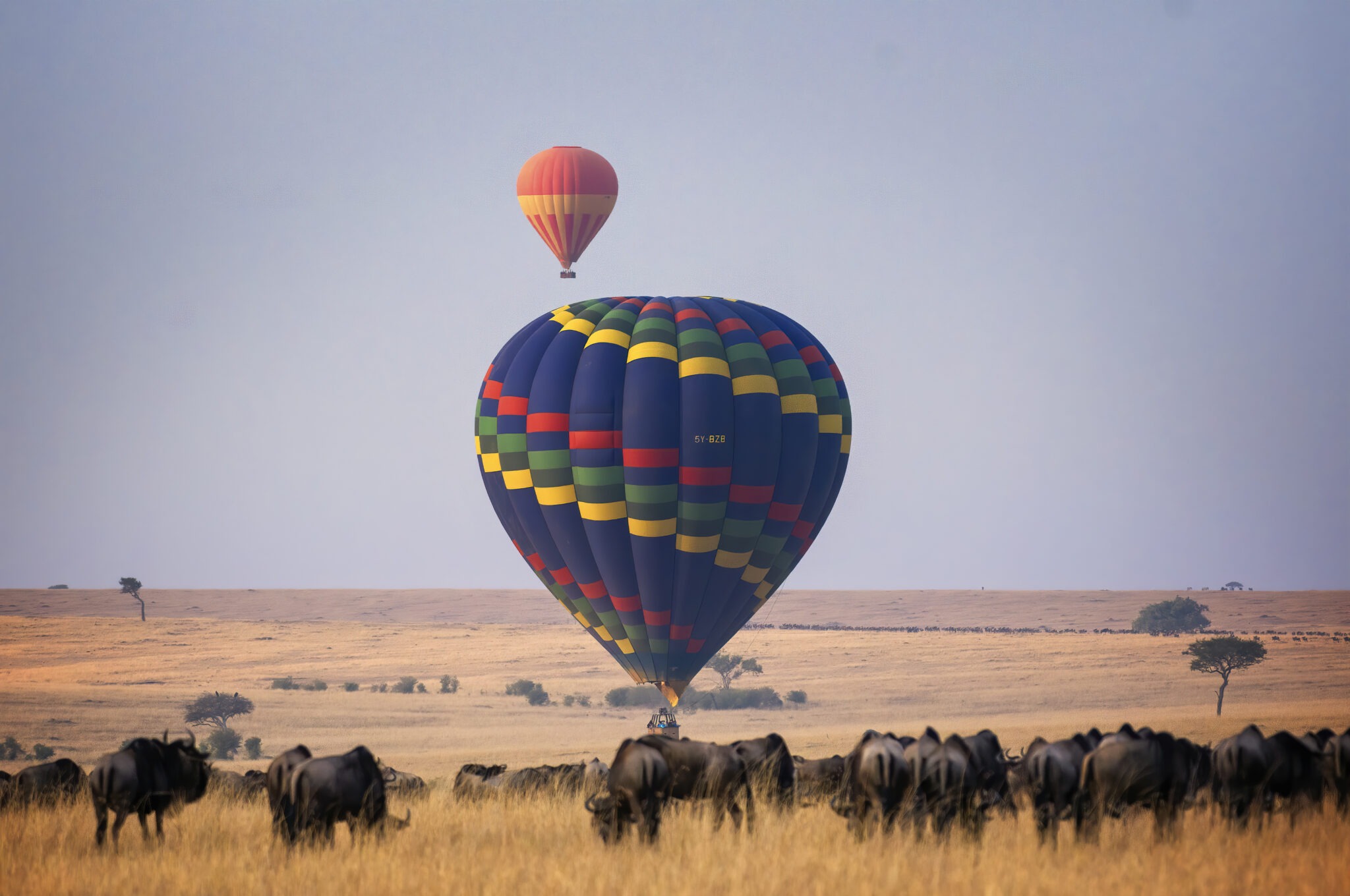
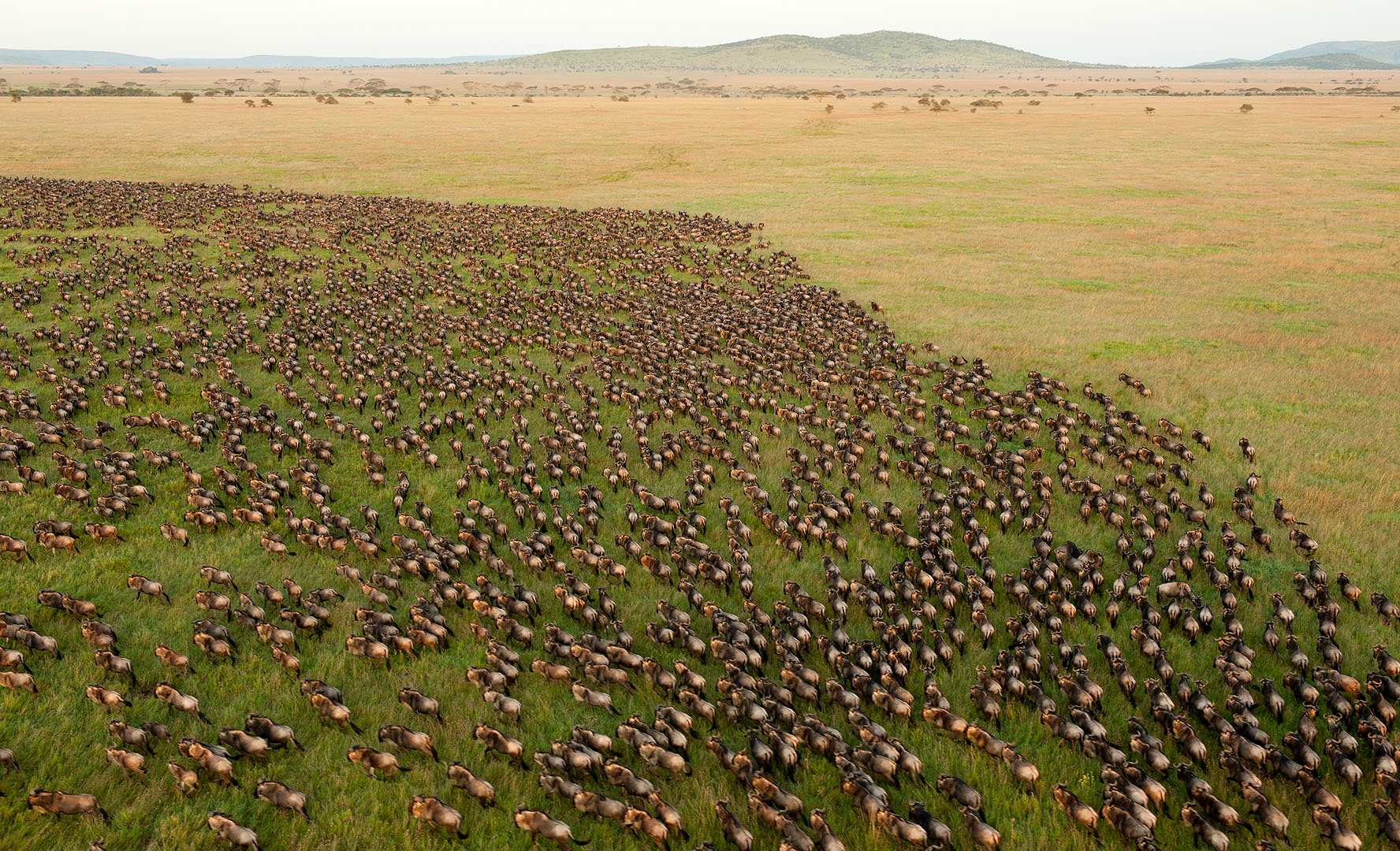
The wildebeest migration also known as the great migration is an awe-inspiring natural spectacle where over a million wildebeest, zebra, and Thomson’s gazelle journey roughly 3,000 km in a clockwise loop across Tanzania’s Serengeti and Kenya’s Masai Mara in search of fresh grazing.
Inspired by seasonal rains, the grazers must follow their age-old migration route in a constant cycle, without start or finish. The movement starts in the South of the Serengeti after the calving season.
The migrating herds traverse the Serengeti plains approaching the well-watered plains of Masai Mara in the north and return again southwards to the Serengeti in a clockwise motion towards the end of the year.
At the heart of this jaw-dropping natural spectacle are some of the most dramatic moments: the calving season (over 8,000 births a day from January to March, rutting season in April and May) and the perilous Mara River crossings where the herds must face strong currents, steep banks and huge hungry crocodiles.
Many travelers consider the river crossings the most exciting part of the wildebeest migration, topping the bucket list. Here’s what to know about the wildebeest river crossing.
Understanding the Wildebeest River Crossings
Wildebeest river crossing
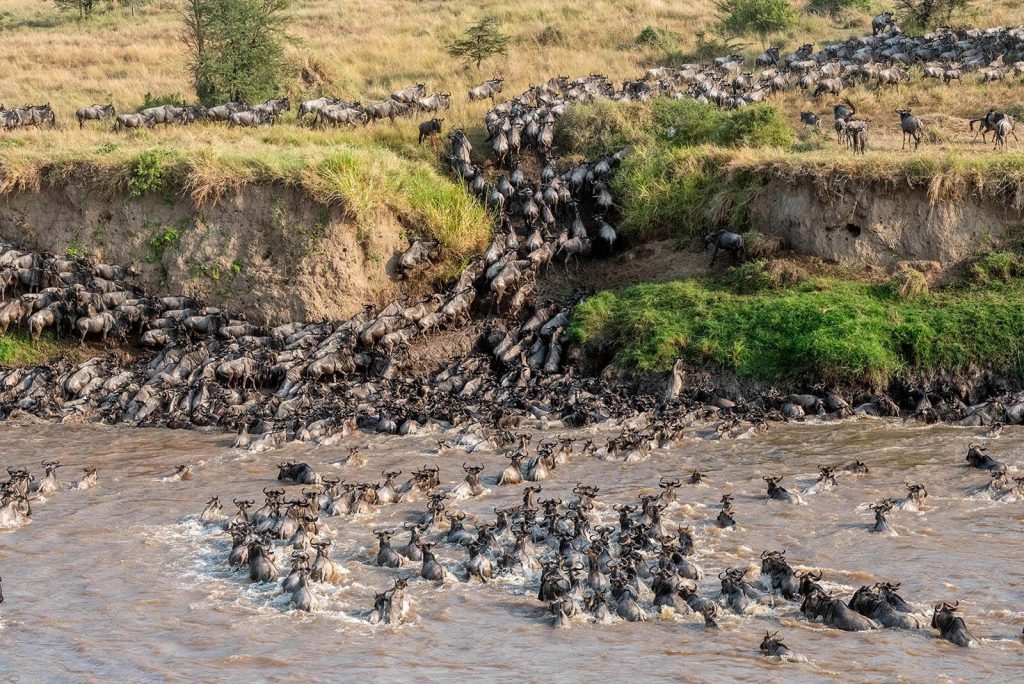
What is the wildebeest river crossing? Wildebeest river crossing is a natural event involving overwhelming numbers of wildebeests, zebras, and other herbivores crossing the great Mara and Grumeti Rivers. The herds must face strong currents, steep banks and huge hungry crocodiles lurking in the water.
The sheer volume of the grazers, roughly 1.3 million wildebeest, 200,000 to 400,000 zebras and 300,000 to 500,000 Thomson’s gazelles is a wonder in itself. However, not all animals cross at the same time, rather, different crossings happen between July and October every year.
Hundreds of thousands of wildebeest and zebra start to arrive at the Grumeti and Mara Rivers. They gather, crowd and even graze around the river banks for hours or even days in hesitation because of the danger that awaits in the murky waters, until a single, daring “leader” decides to take the plunge.
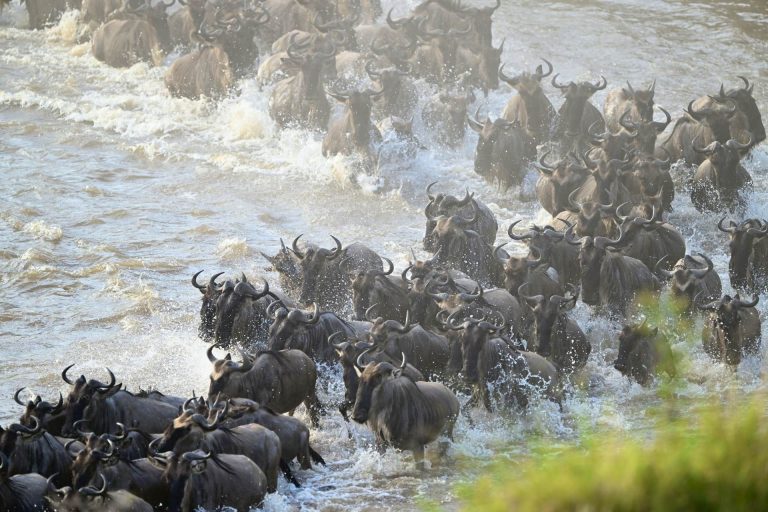
To get to the bountiful plains on the other side, they have no choice but take a suicidal leap into the crocodile-infested rushing water, causing a stampede of thousands. This creates high-energy scenes where the brave break their legs on the steep banks, crocodiles take their share of stragglers, and the weak and exhausted drown.
Predators including large felines (lions, leopards, and cheetahs), and scavengers (hyenas, jackals and vultures) also take their share as they trail the herds closely.
For many travelers, the intense Grumeti and Mara River crossings are the ultimate highlight of a wildebeest migration safari. However, not even well-documented river crossings are predictable as to when and where they will occur.
Wildebeest River Crossing: Why does it Occur?
Why does the wildebeest river crossing occur? Because of fresh nutritious grass (food) and water. The wildebeest follow the seasonal rainfall patterns by tracking the movement of nimbus clouds. Guided by instinct, they can detect rain and lightning from over 50 kilometers.
They know that where there is heavy rain, the grass they eat will sprout immediately afterward. This is essential for the survival of wildebeest and zebras, demonstrating the untamed strength and ecological balance of nature.
Key Wildebeest Migration River Crossing Phases
- The Grumeti River crossings occur in the western Serengeti corridor from June to early July. The Grumeti River is the first major hurdle. Although narrower and less ferocious than the Mara River, it still features dramatic, crocodile-filled action.
- The Mara River gathering in northern Serengeti occurs in early-mid July. It is the most iconic and perilous stage where the herds hesitate at the riverbank sometimes spending days before plunging into the crocodile-infested waters.
- Peak Mara River Crossings from late July to October (with August being the most intense) are the climax of the migration. The herds advance into Masai Mara from northern Serengeti, involving intense predator action.
- Return Crossings from late October to early November: As the dry season progresses in the Mara plains, the herds begin to transition southwards back to Serengeti when the rains begin to return.
Key Wildebeest River Crossing Points
In Masai Mara, Kenya, key crossing points include;
- Mara Triangle Crossing in the scenic western side offers fewer crowds and a more exclusive safari experience.
- Kichwa Tembo, near the popular camp offers easy access.
- Serena Crossing near Serena Lodge is reliable and a visitors’ favourite.
- Lookout Hill Crossing offers high vantage point for breathtaking views.
- Sand River Crossing on the eastern side is often the first crossings of the year.
- Little Governor’s is situated within the Masai Mara National Reserve.
In the Serengeti, Tanzania, popular spots include;
- Grumeti River in the western corridor, features large crocodiles
- Numbered Crossing Points 1-10, where 4, 7 and 10 are the most popular and offer dramatic, predator-filled crossings.
- Kogatende Region in northern Serengeti, near the Mara River
- Lamai Wedge, the key area for crossings into Kenya
Best Time to witness the River Crossings
August is considered the best time and most reliable month to witness the intense Mara river crossings. This is when the peak action occurs in the Northern Serengeti and Masai Mara, featuring intense predator action and high drama. However, the entire crossing events can happen from late June to October.
Sample Trips
11 DAYS
Tanzania Migration and Zanzibar Safari
Destinations: Tanzania
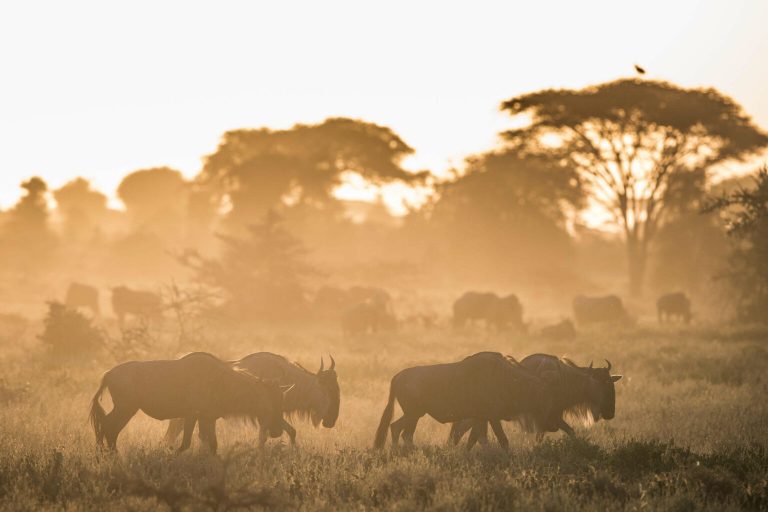
- Arrive between July and October to witness the wildebeest migration and relax at tropical beaches in Zanzibar.
4 DAYS
Wildebeest Mara River Crossings (July-September)
Destinations: Kenya
- Features high drama, chaotic plunges into strong currents and intense predator action.
