
Ziwa Rhino Sanctuary
A Big Five safari in Uganda is incomplete without visiting the spectacular Ziwa Rhino Sanctuary. It is currently the only place in Uganda where you can reliably track these majestic creatures on foot in a semi-wild (protected) environment, making it a bucket-list destination for a Big Five safari in Uganda.
Apart from rhino tracking, other activities to embark on in Ziwa Rhino Sanctuary include nature hikes, night walks, bird watching and tracking the elusive shoebill stork.
Overview of Ziwa Rhino Sanctuary
Ziwa Rhino Sanctuary is located near Nakitoma trading centre in Nakasongola District, northwestern Uganda. It is roughly halfway between the capital, Kampala and Murchison Falls National Park and approximately 176 kilometres (109 mi) north of Kampala.
Seated on a 70-sq-km reserve, Ziwa Rhino Sanctuary is a collaborative effort between the Uganda Wildlife Authority and Ziwa Rhino and Wildlife Ranch Limited, a private land management company, to restore Uganda’s rhinoceros population.
It was established in 2005 with the aim of re-establishing and conserving southern white rhinos, one of Africa’s most endangered species, in Uganda—some 30 years after poachers killed the country’s last wild rhino in Murchison Falls National Park in 1983.
The sanctuary was established to provide a secure home and breeding program for Uganda’s only wild rhinos. This initiative protects them from human and non-human threats, with the ultimate goal of gradually re-introducing them into larger national parks such as Murchison Falls and Kidepo Valley.
Today, Ziwa Rhino Sanctuary is one of the world’s most successful conservation stories. As of 2026, there are approximately 48 southern white rhinos roaming the savannah and wetlands, from an initial six (2 from Disneyland, USA and 4 from Kenya) thanks to efforts of highly trained rangers and committed researchers and donors.
Both the black rhino (Diceros bicornis michaeli) and the Northern white rhino (Ceratotherium simum cottoni) were native to Uganda. However, by 1982, both species had been wiped out in the country due to prolonged armed human conflict, poaching, and the mismanagement of their natural habitat.
Visitors can drive an additional 7 km (about 7 to 15 minutes) on a dirt road after turning off the Kampala-Gulu Highway at the Nakitoma trading center to access the main entrance.
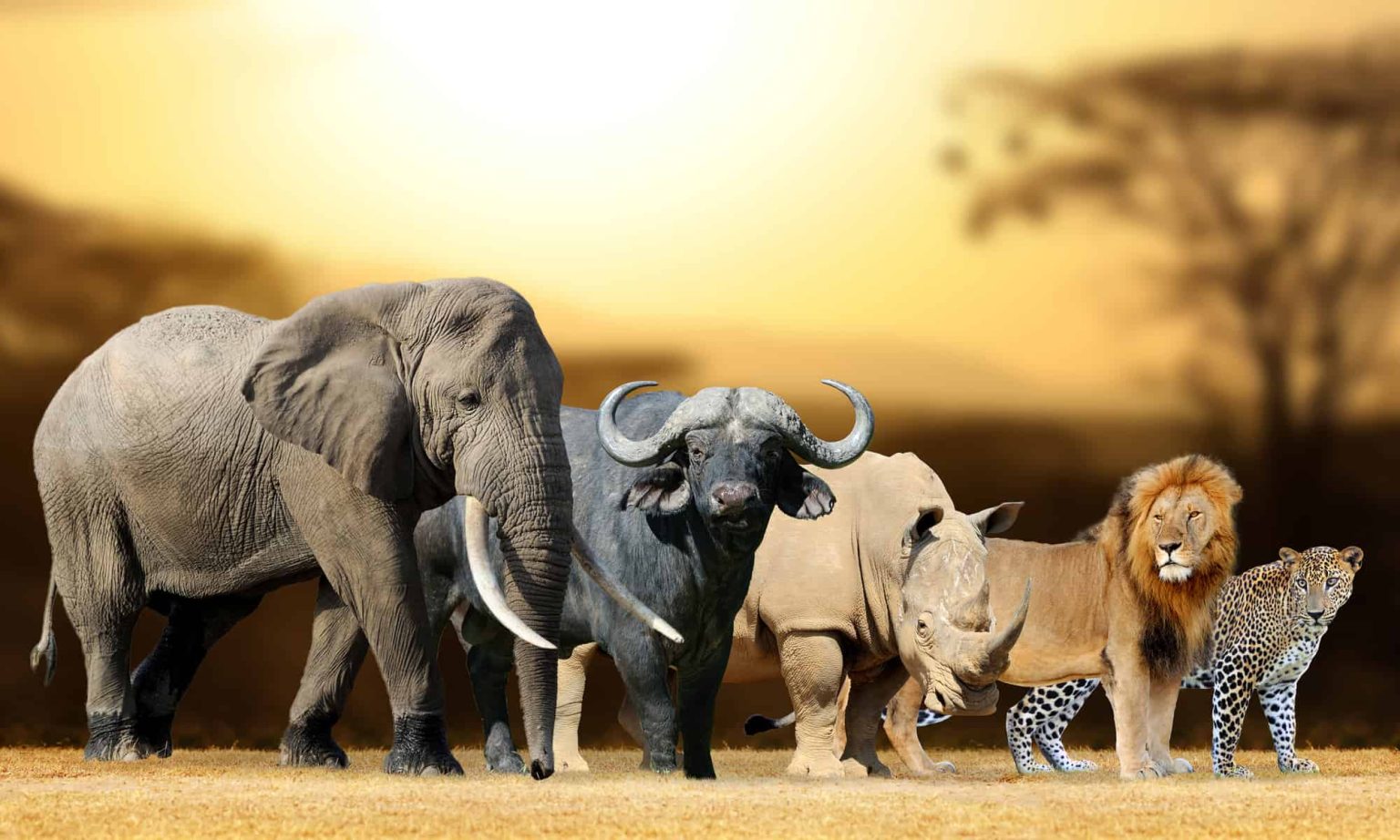
Other members of the Big Five (elephant, buffalo, lion, and leopard) can be seen in major parks like Murchison Falls, Queen Elizabeth and Kidepo Valley. So, don’t miss out on tracking rhinos during your trip to Uganda.
Animals in Ziwa Rhino Sanctuary
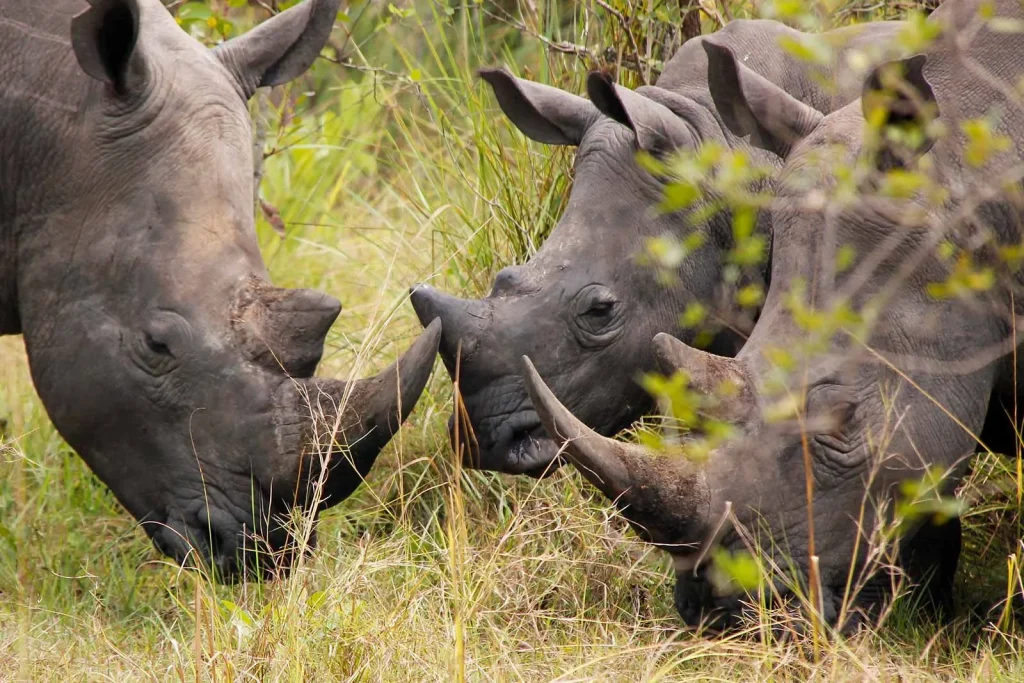
Rhinos in Ziwa Rhino Sanctuary
While Ziwa Rhino Sanctuary is famous for its white rhinos, the 27-square-mile fenced expanse of woodlands, swamps, and savannahs is also home to over 40 other animal species, including crocodiles, hippos, leopards, monkeys, antelopes, tortoises, and approximately 300 bird species.
What to Expect On a Rhino Tracking Safari
Led by an expert ranger guide, you’ll walk through the sanctuary’s savannah and bushland to see the country’s only wild rhinos up-close at a safe but intimate distance of 6-7 meters.
While tracking rhinos on foot sounds quite bizarre and daring, you will be under the watch of trained rangers to ensure your safety out there. The fact that the rhinos are in the company of armed guards 24 hours a day, seven days a week means they’re well and truly accustomed to human presence.
The 70-square-kilometre (27 sq mi) property is protected by a 2-metre-high (6.6 ft) electric fence to keep the rhinos in and intruders out.
Best time to visit Ziwa Rhino Sanctuary
The best time to visit Ziwa Rhino Sanctuary is during the dry season from late June to October (peak season) and then December to February. During these times, general wildlife viewing is excellent because vegetation is sparse and animals are drawn to permanent water sources making them easier to spot.
Rain is less likely to disrupt your planned activities. Visit between 8 am and 10 am or 4 pm and 6 pm to see the rhinos when they are more active.
Nonetheless, the sanctuary is open year-round, and in the wet seasons from September to November and March to May, the vegetation can become lush and green, which is great for birdwatching.
Accommodations: Where to stay at Ziwa Rhino Sanctuary
1. Ziwa Rhino Ranch
Situated near the reception, the newly built Ziwa Rhino Ranch features seven luxury chalets, an inviting swimming pool, and beautiful surroundings to ensure a more comfortable and unforgettable stay for guests.
2. Ziwa Rhino Guest Houses
Ziwa Rhino Ranch offers comfortable lodging in their guest houses, featuring single rooms, double rooms, twin rooms, family rooms, and a dorm room. Those who want to be close to nature can book the nearby campsite.
3. Amuka Safari Lodge
Tucked away in a small woodland in the heart of the reserve, Amuka Lodge guarantees an immersive luxury experience. It features secluded, unfenced chalets named after the rhinos in the park, a fantastic restaurant serving safari cuisine, a swimming pool, and excellent views of the surroundings.
Trips to Ziwa Rhino Sanctuary
5 DAYS
Murchison Falls Wildlife and Primate Safari
Destinations: Murchison Falls National Park, Uganda
- Spotting the big 5 and chimpanzee tracking in Budongo
7 DAYS
Uganda Wildlife Safari (Northern Circuit)
Destinations: Kidepo Valley & Murchison Falls, Uganda
- Unforgettable Big Five viewing including Rhino Tracking
