
Nyungwe National Park
Discover Nyungwe National Park, Rwanda’s thrilling chimpanzee tracking destination. It is one of the best places to encounter these charismatic creatures in their natural habitat. Apart from chimpanzee trekking, Nyungwe offers some of the most exhilarating hiking trails, allowing visitors to have a peek at the incredible wildlife and stunning landscapes.
About Nyungwe National Park
Nyungwe Forest National Park is located in southwestern Rwanda, contiguous with Burundi’s Kibira National Park, which it borders to the south, and Lake Kivu and the Democratic Republic of the Congo to the west.
It spans approximately 1,019 km² (393 sq mi) of an ‘endless’ thick, mist-covered montane rainforest, fertile grassland, bamboo thickets, extensive swamps and burbling streams.
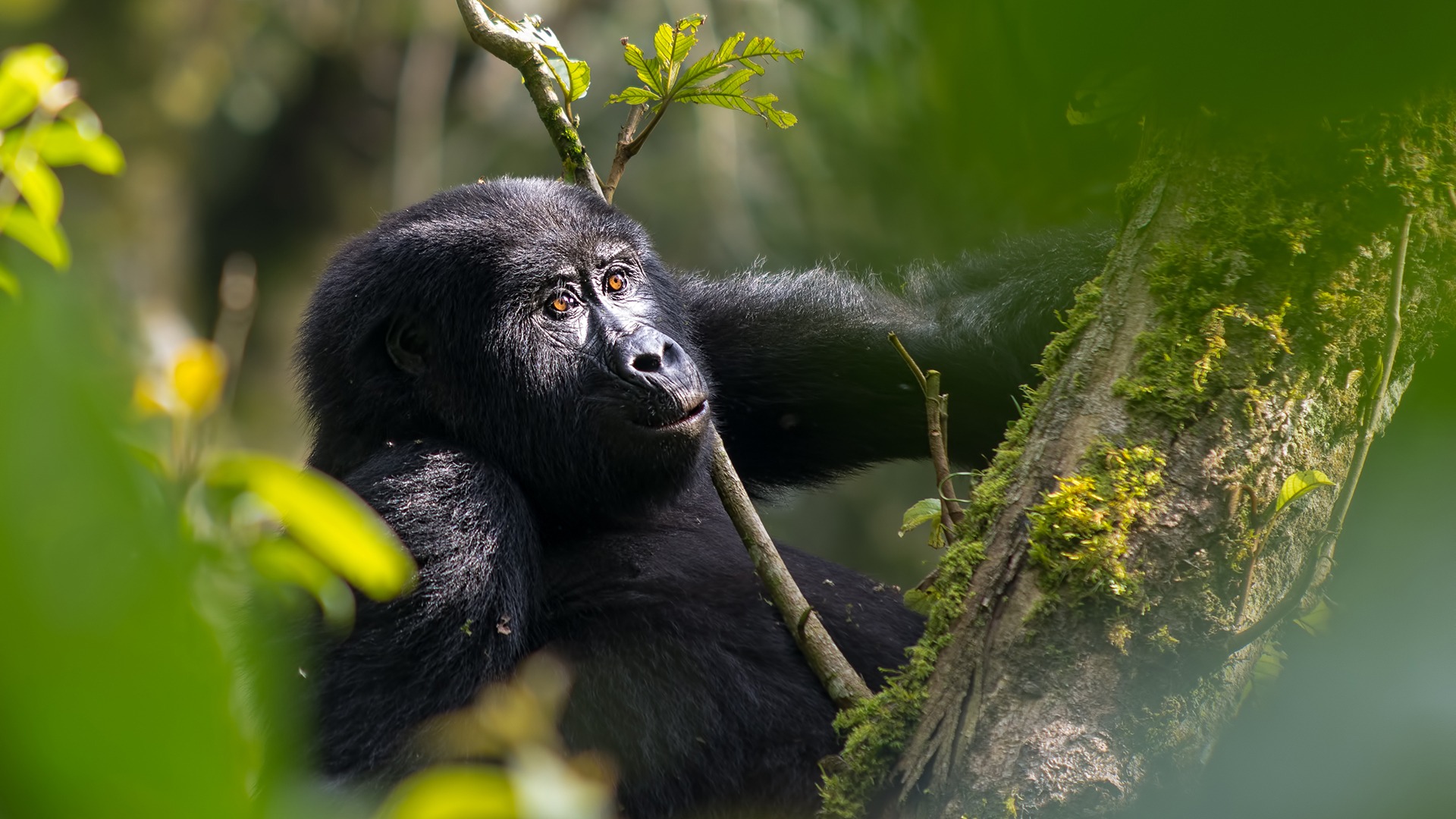
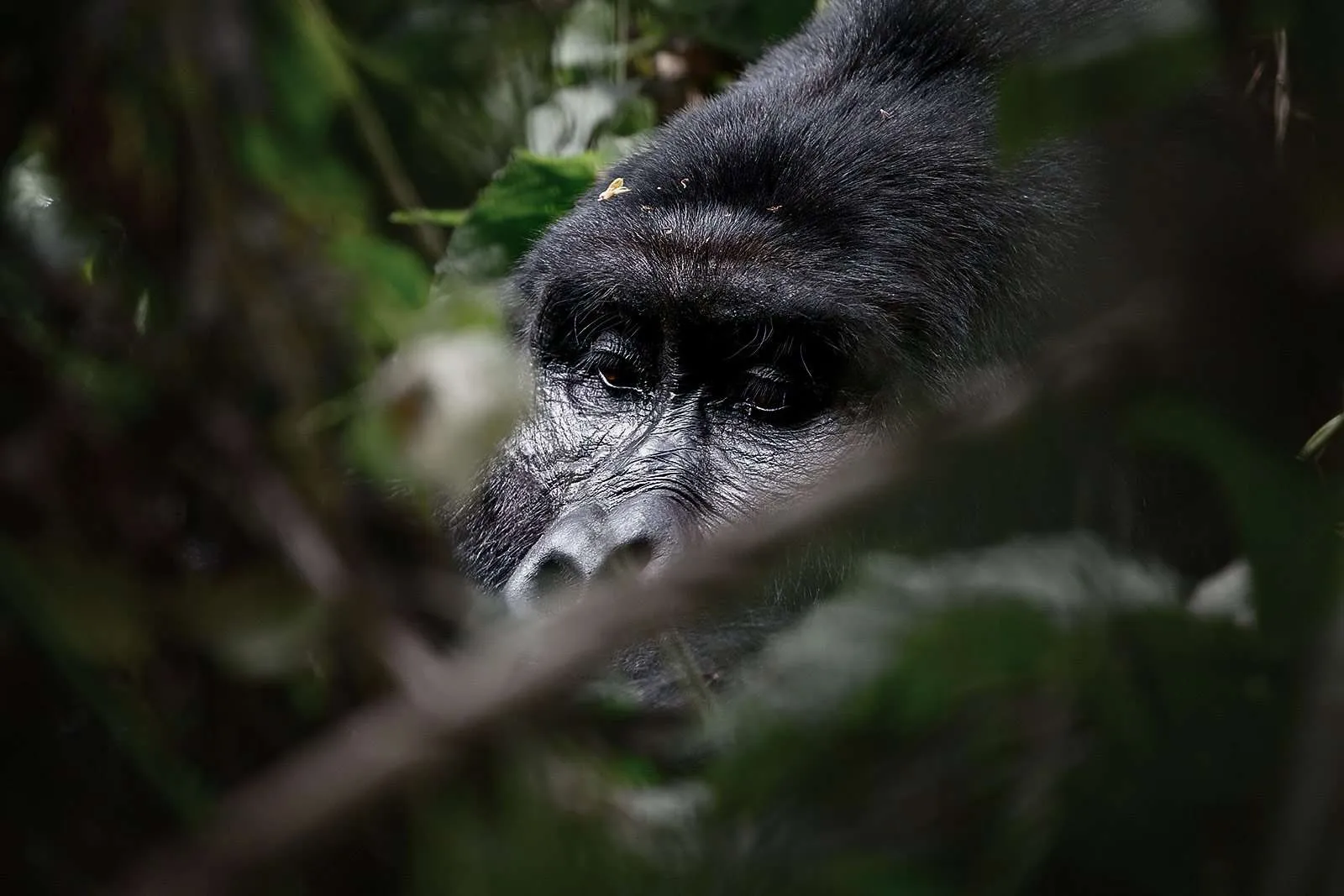
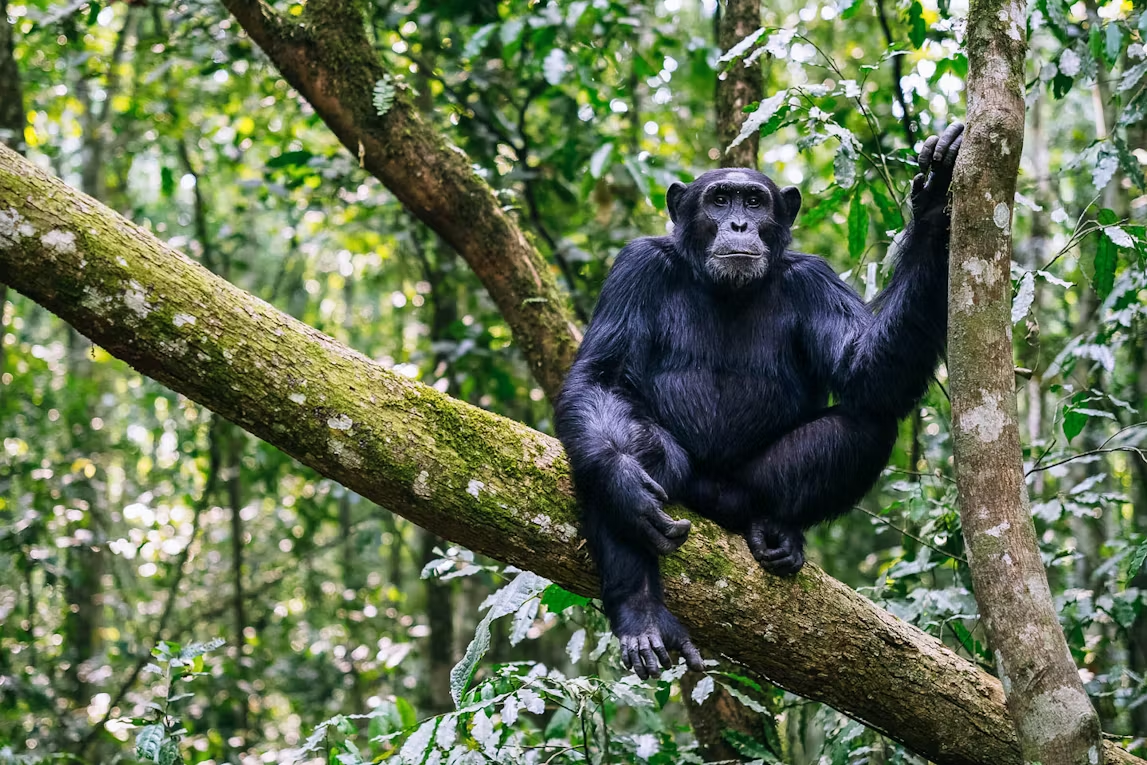
Nyungwe National Park is popular for its fascinating chimpanzees. Visitors have the opportunity to come face-to-face with one of the only two habituated troops just a few yards away.
The extensive network of well-maintained walking and hiking trails allows access to the most scenic spots. Most notably, the popular 70m-/230ft-high and 160m-/525ft-long canopy walk offers panoramic views of the forest from above, allowing you to fully appreciate the richness of the rainforest and its inhabitants.
Wildlife in Nyungwe National Park
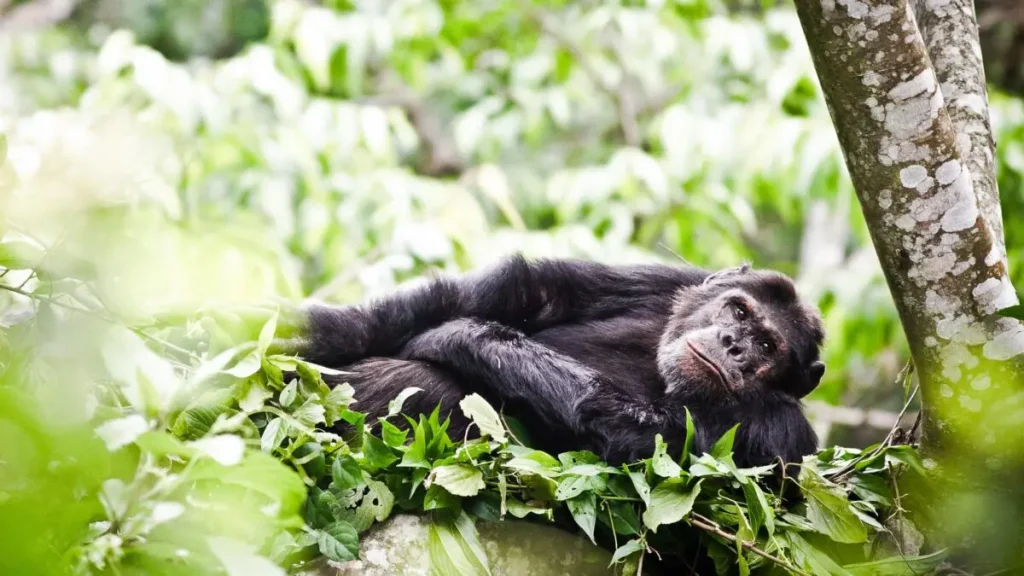
Chimp in Nyungwe
Although Nyungwe National Park is famous for chimpanzees, it is home to 13 other primate species, including black-and-white colobus monkeys, golden monkeys, L’Hoest’s monkeys, grey-cheeked mangabeys, red-tailed monkeys, owl-faced monkeys, crowned monkeys, Dent’s mona monkeys, vervet monkeys, olive baboons, and Angolan colobus monkeys.
Over 85 mammal species wander Nyungwe’s forest paths, slinking through the undergrowth or climbing the ancient trees. These include elephants, the elusive leopards, duikers, golden cats, bushbucks, Congo clawless otters, and servals.
Bird watching opportunities are spectacular with over 330 species recorded including red-collared mountain babbler, the Albertine owlet and Rockefeller’s sunbird, none of which has been recorded elsewhere on the eastern side of the Albertine Rift.
Things to do in Nyungwe National Park
1. Chimpanzee trekking
Guided chimpanzee treks take you to observe one of the habituated chimpanzee troops up-close in their natural habitat. The excursion can take between 2 and 6 hours, but after finding them, you’ll spend a maximum of one hour in their presence, watching them groom, feed and play from tree to tree in the canopies.
2. Birding
Nyungwe National Park’s unique biodiversity and well-established trails provide an unforgettable birding experience for both novice and seasoned birders. Some of the species to look out for include the Albertine Owlet, the Great Blue Turaco, Rockefeller’s Sunbird, the Red-collared Babbler, and Shelley’s Crimsonwing.
3. Canopy Walk
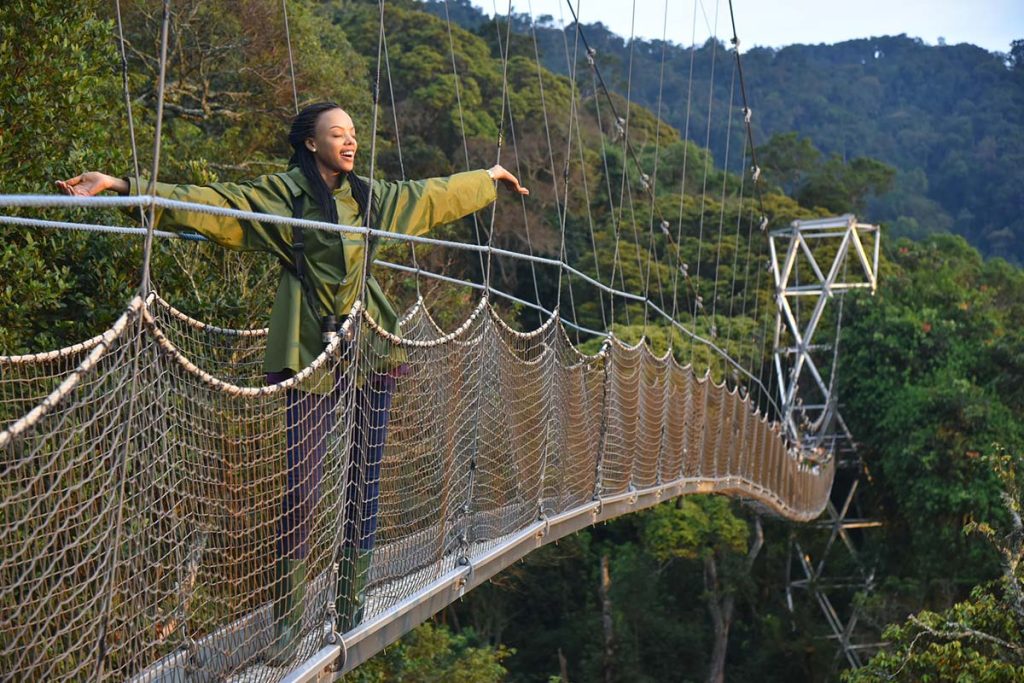
Canopy Walkway in Nyungwe National Park
The canopy walk features a 160-meter-long, 60-to-70-meter-high suspension bridge that offers hikers breathtaking panoramic views above the forested ravine. They can spot canopy-dwelling mammals, birds, and butterflies at close range.
This unique perspective forms part of the Igishigishigi Hiking Trail while the forest below is often draped in a blanket of cloud which only adds to the thrill of the experience.
Best time to visit Nyungwe National Park
Although Nyungwe National Park can be visited any time of year, the best time to visit is during the dry season from June to September and mid-December to mid-February. This is when chimpanzee tracking and hiking are usually most enjoyable because the trails are moderately dry, making it easier to navigate.
Bird watching is best from March to May and October to November when there’s an abundance of food and the influx of migratory birds. However, this time coincides with the rainy season, making trails muddy, slippery, and navigation difficult.
Accommodations in Nyungwe National Park
Campsites are the only accommodation options within Nyungwe National Park particularly at Uwinka Reception Center. Here, campers can rent tents and other camping equipment while food and drinks can be purchased from a small café.
Similarly, they can choose to stay in wilderness camps on the Congo Nile Trail, and at the summit of Mount Bigugu, but they’ll be required to bring their own equipment, including tents, firewood, food, and water.
Most visitors choose to stay in lodges on the outskirts of the park ranging from high-end luxury to budget-friendly. Here are our favorites
- One&Only Nyungwe House: This 5-star all-inclusive resort sits on the western edge of the park within Gisakura tea plantation. It features a two-bedroom woodsy-chic suite and a series of luxury rooms with private decks, an outdoor pool, and great dining options, all built overlooking the surrounding forest canopy. Guests can enjoy guided chimp treks, nature hikes and visits to the tea plantation.
- Nyungwe Top View Hill Hotel sits on a hilltop just outside Gisakura. The mid-range accommodation provides a collection of comfortable cottages, featuring a large deck, restaurant, and bar in the circular main building. Guests can enjoy stunning hilltop views of Nyungwe Forest, tea plantations, and Lake Kivu.
Trips to Nyungwe National Park

7 DAYS
Rwanda Primate Safari (Gorilla & Chimpanzee Tracking)
Destinations: Volcanoes and Nyungwe Forest, Rwanda
- Vibrant city and mystic jungle experience & a resort haven in Lake Kivu
10 DAYS
Ultimate Rwanda Safari (Gorillas & Wildlife)
Destinations: Akagera, Nyungwe Forest & Volcanoes
- Intimate and exclusive gorilla trekking and wildlife viewing
