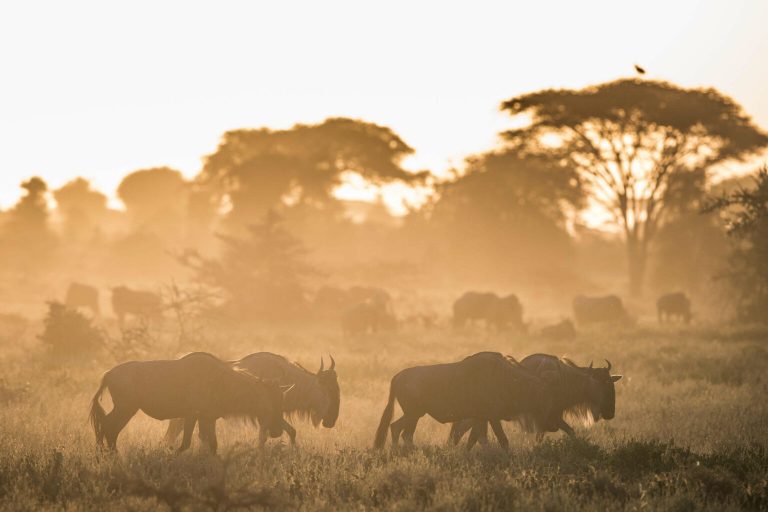
The Ngorongoro Conservation Area is nature’s epic masterpiece and a jewel in Africa’s crown. Praised for its breathtaking natural beauty, a rich cultural heritage and unparalleled wildlife density, particularly within its crater, nowhere else in the world is there a place quite like the Ngorongoro Conservation Area!
Visitors can explore the crater floor to spot the Big Five, including the critically endangered black rhino, as well as predators like cheetahs, wild dogs, and hyenas, alongside a wealth of other animal species.
Ngorongoro Conservation Area at a Glance
Ngorongoro Conservation Area is a protected wildlife region located in Northern Tanzania within the Crater Highlands. It spans 809,440 ha of vast expanses of wetlands, highland plains, grasslands, woodlands and forests from the north-west to the eastern arm of the Great Rift Valley.
Designated a UNESCO World Heritage Site, Ngorongoro Conservation Area is an extension of the Serengeti-Mara ecosystem which hosts one of the largest animal migrations on earth – the world-famous Wildebeest Migration.
Established in 1959, the area consists of the picturesque Ngorongoro Crater (the world’s largest intact caldera), Olduvai Gorge (a 14km-long deep ravine with a rich history of human evolution), and the remote crater highlands.
Ngorongoro Crater
Once a gigantic volcano, the Ngorongoro Crater is the world’s largest intact and inactive volcanic caldera. It was formed when a large volcano (about 19,000 feet) exploded and collapsed in on itself millions of years ago.
Today, the property is a self-contained ecosystem measuring 610 meters (2,000 feet) deep spanning 260 square kilometers (100 square miles). It is surrounded by a heavily forested rim that rises up to 2,300m above the grasslands, swamps, and a soda lake (Lake Magadi) which is fed by the Ngoitokitok Spring and Munge River.
Olduvai Gorge
The Olduvai Gorge sits between the Serengeti plains and the Ngorongoro Crater. It has yielded a wealth of evidence for human evolution through over 80 years of extensive archaeological research.
Today, it is considered the ‘cradle of humanity’ and visitors have the opportunity to learn about the works of the Leakey family and the evolution of early humans, including a visit to a small museum displaying fossils dating back almost four million years ago.
Wildlife in the Ngorongoro Conservation Area

The Ngorongoro Conservation Area is home to a healthy population of wildlife, including the “Big Five” (black rhinoceros, elephants, buffaloes, lions, and leopards), as well as wildebeest, elands, zebras, antelopes, hippos, and primates such as vervet monkeys and baboons.
It also boasts the highest density of mammalian predators in Africa, including lions, cheetahs (often seen around Ndutu Lake), jackals, spotted hyenas, wild dogs, and servals, some of which are endangered.
Prolific birdlife of over 500 species has been recorded, with over 400 found within the crater. All seven East African vulture species can be found here, while vast flocks of lesser and greater flamingos make Lake Magadi, Lake Ndutu and the Empakai Crater great birding havens.
Best time to visit Ngorongoro Conservation Area
Although wildlife viewing in Ngorongoro is excellent all year round, the best time to visit is during the dry season from June to October. This is when temperatures are cooler and game viewing is excellent. The thin vegetation also makes it easy to spot wildlife as they congregate near water sources.
However, the dry season coincides with the peak safari season when the reserve gets crowded with tourists from all over the world.
February is ideal for seeing the wildebeest calving, while April and May offer lower prices. The scenery is lush and spectacular in the wet season from April to May and November to December, transforming the reserve into a remarkable birding sanctuary.
There are far fewer visitors during the wet seasons, which means you can expect to have the reserve all to yourself. However, temperatures can get warm, and the roads around the caldera can get rather muddy.
Where to stay in Ngorongoro Conservation Area
There’s a variety of accommodation options within the Ngorongoro Conservation Area, ranging from high-end luxury hotels and lodges on the crater rim to budget-friendly tented camps and public camping sites. Here are our top picks
- andBeyond Ngorongoro Crater Lodge, is an opulent and idyllic stay where 30 sumptuous suites boast Versailles-inspired decor and magnificent views of the crater.
- Ngorongoro Serena Lodge: Inspired by the Olduvai Gorge cave paintings, the 75-room accommodation sits on the crater rim offering a combination of a great design and breathtaking views of the crater below. It is suitable for families and those who prefer this sort of hotel to a more typical safari camp.
- Lemala Ngorongoro Camp is a new camp on the crater rim featuring eight luxury tents scattered among a thick grove of acacia trees. It offers more of a bush feel and easy access to the crater floor.