



Getting to Ngorongoro Conservation Area
Most International flights in Tanzania arrive at either Julius Nyerere International Airport (DAR) in Dar es Salaam (on the coast) or Kilimanjaro International Airport (JRO) in the north-east.
Getting to Ngorongoro
Getting to Ngorongoro Conservation Area, you’ll most likely fly into Kilimanjaro International Airport (JRO) and then transfer to Arusha. Arusha is situated about 55km (34 miles) from JRO, a 1- to 1.5-hour drive. It serves as the starting point for most northern Tanzania safaris, where you’ll typically spend one or two nights.
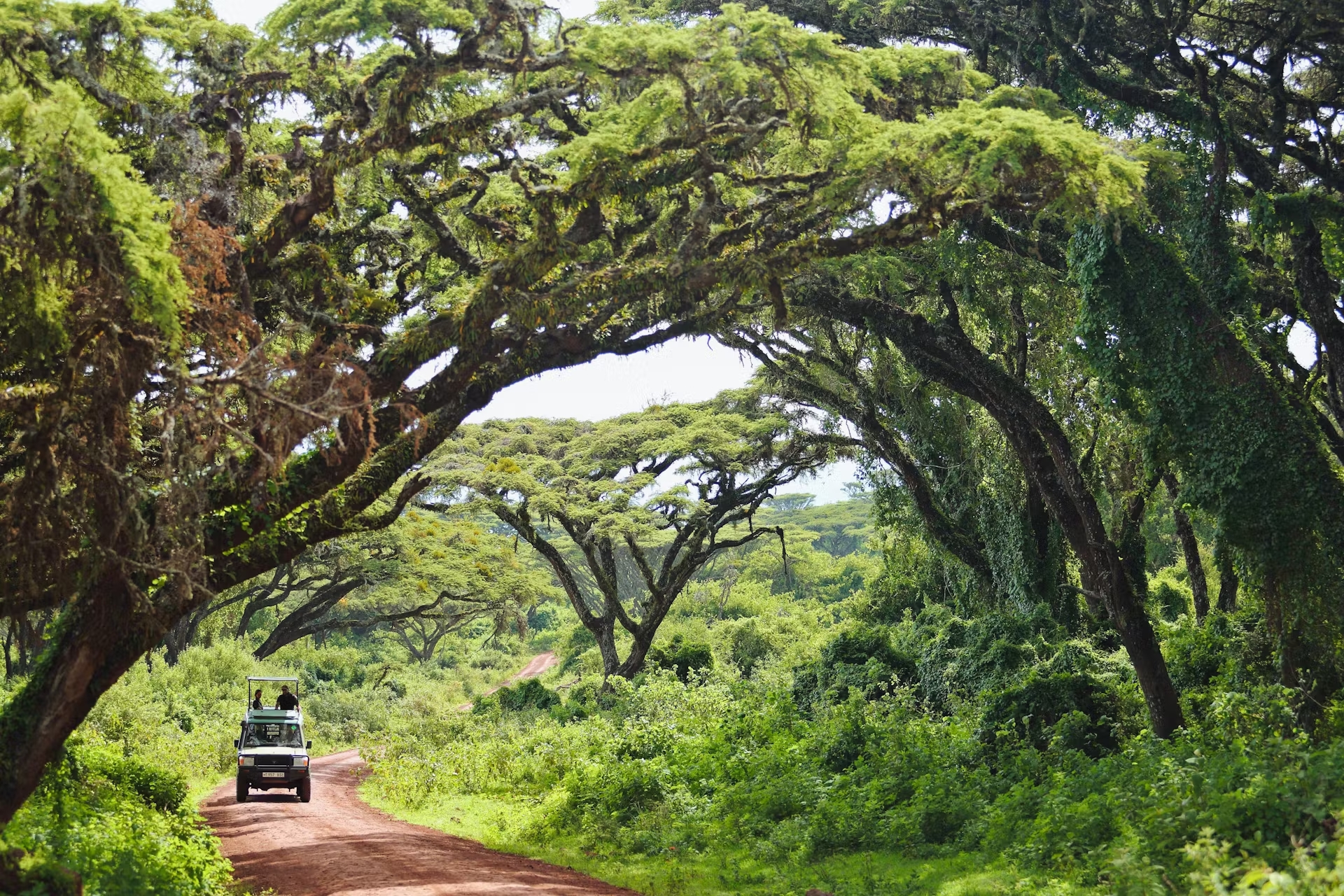
From Arusha Airport (ARK), you can fly north to Ngorongoro Airstrip on a chartered or scheduled small aircraft or take a 3-hour, 180km/112mi drive by safari vehicle. The first 80 kilometers (50 miles) are on tarred road, while the rest is on dirt/gravel road.
The dirt road leads to Mto-wa-Mbu village, situated on the edge of Lake Manyara National Park. It then climbs to the top of the rift wall, passes through densely populated agricultural land, and enters the Ngorongoro Conservation Area at the Lodware Gate. Petrol and diesel are available in the village.
Ngorongoro Conservation Area lies en route to the Serengeti. When traveling from the Seronera area, the distance to the crater is about 140 km / 90 mi and the driving time is roughly 3 hours on a fairly good, all-weather dirt/gravel road, although it is corrugated in parts. While longer, the route allows for wildlife viewing along the way.
The Ngorongoro Crater can only be accessed by robust four-wheel-drive vehicles. All side tracks elsewhere are unsuitable for two-wheel-drive vehicles.
When weather conditions are not favourable at Ngorongoro Airstrip, flying to Lake Manyara Airstrip, a 1.5-hour drive from the Crater offers a feasible transfer alternative. Your travel company will arrange your pick-up upon arrival.
From Nairobi’s Jomo Kenyatta International Airport, you can take a local flight to Arusha or a 7- to 8-hour road journey to Ngorongoro Conservation Area.
Sample Trips
9 DAYS
Tanzania Safari
Destinations: Lake Manyara, Ngorongoro and Serengeti
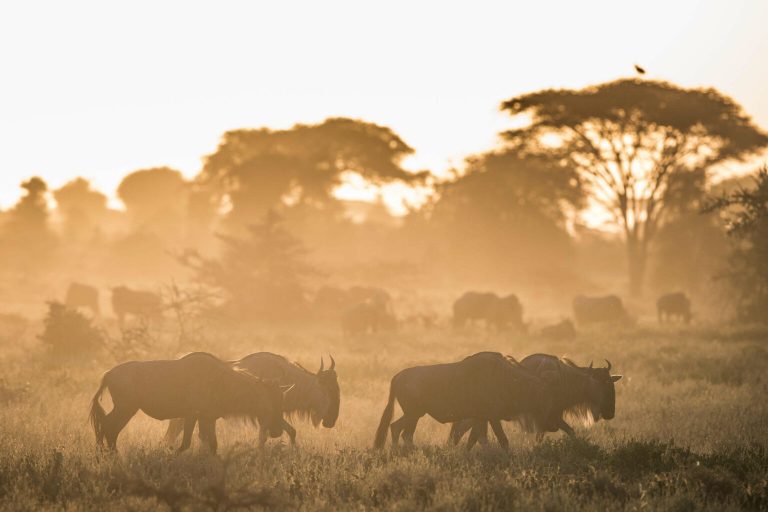
- Excellent wildlife viewing including Big Five and Wildebeest migration
15 DAYS
East Africa Safari (Chimps, Gorillas, Wildebeest Migration)
Destinations: Kibale, Queen Elizabeth, Bwindi, Masai Mara, Serengeti and Ngorongoro Crater
