
Planning your first African safari
While a safari in Africa is a dream for many travelers, the experience can feel daunting for first timers without proper preparation. From selecting the right destination(s) to understanding costs, and figuring out what to pack, where to sleep, what to eat, and how to get around, it’s easy to feel lost in the details.
Embarking on an African safari is one of the most thrilling and rewarding travel experiences you’ll ever have, and with the right preparation, it’s far easier than you might think. We recommend careful planning for a successful, unforgettable and seamless experience. Here is a step-by-step guide to help you plan your first African safari.
What Exactly Is a Safari?
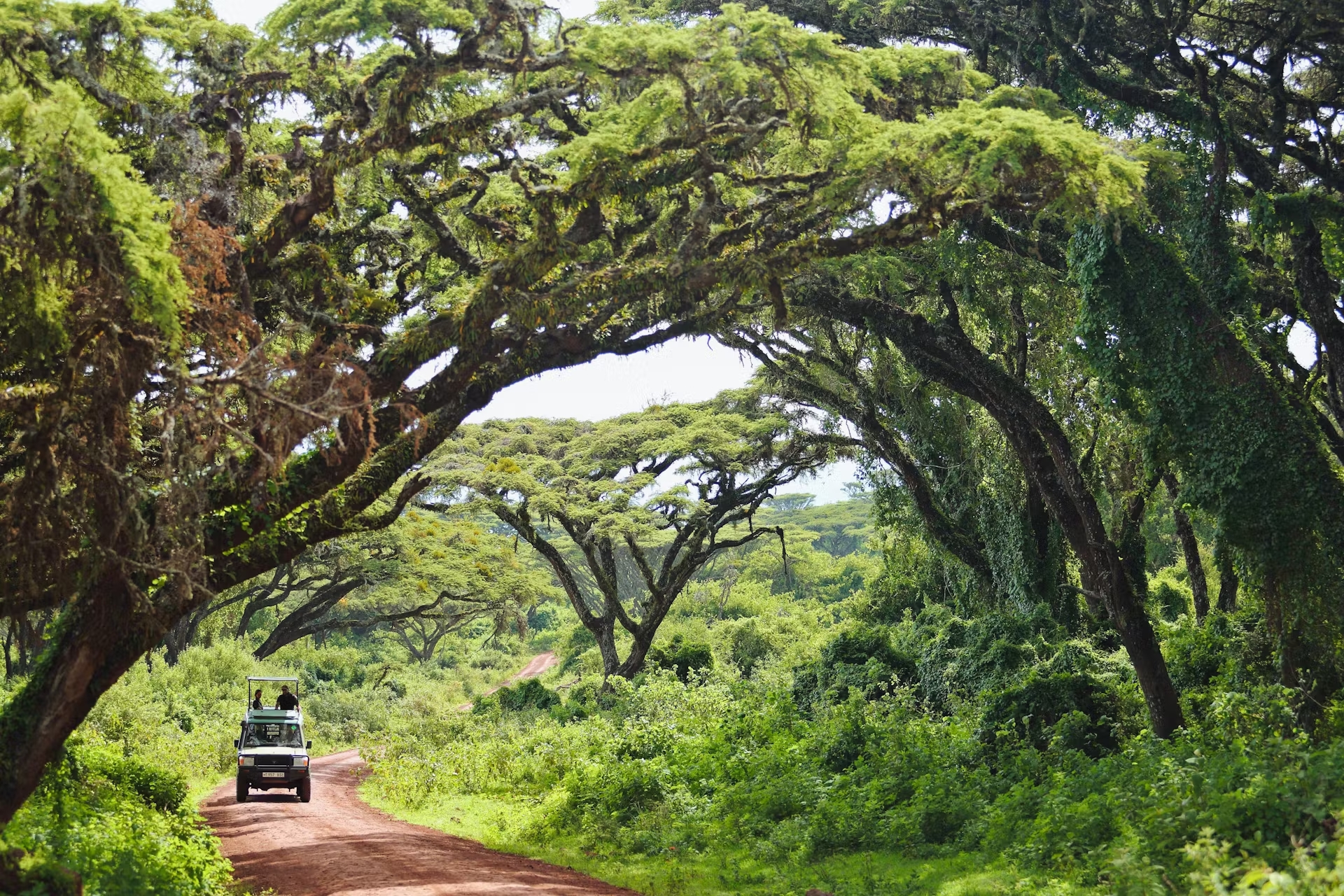
The term “safari” originates from Swahili, meaning “journey.” Safaris are famously associated with viewing, photographing, or studying wildlife in their natural habitats on well-planned expeditions, typically in Africa. You’ll travel through national parks and conservation areas in specially designed vehicles, accompanied by experienced local guides to observe wildlife and learn about their natural environments.
However, unlike zoos, there are no guarantees about what you’ll see on safari. On a good day, you will have the opportunity to spot all your favorites, but at other times, it may not go as planned. All in all, each day brings new surprises for both a first-timer and a seasoned traveler.
What does a typical day on safari look like?
While each day on safari may vary (no two days are ever the same), the customary daily structure revolves around game viewing with breaks to relax and escape the heat.
A typical day on safari starts before dawn with a cup of coffee or tea delivered to your room before you embark on your game drives. You then have a morning and a late afternoon game drive, each lasting approximately three hours.
The timing coincides with when the wildlife is at their most active and also offers the best times to enjoy iconic African sunrises and sunsets. The midday is spent relaxing at your camp to escape the heat in all-inclusive comfort.
How do you decide on where to go in Africa?
Embarking on an African safari for the first time is an indescribable journey. With some of the best safari destinations spread across different locations, each country overflows with enchantment. From diverse breathtaking landscapes to cultural tapestry and transformative wildlife encounters, there’s everything for every traveler to enjoy.
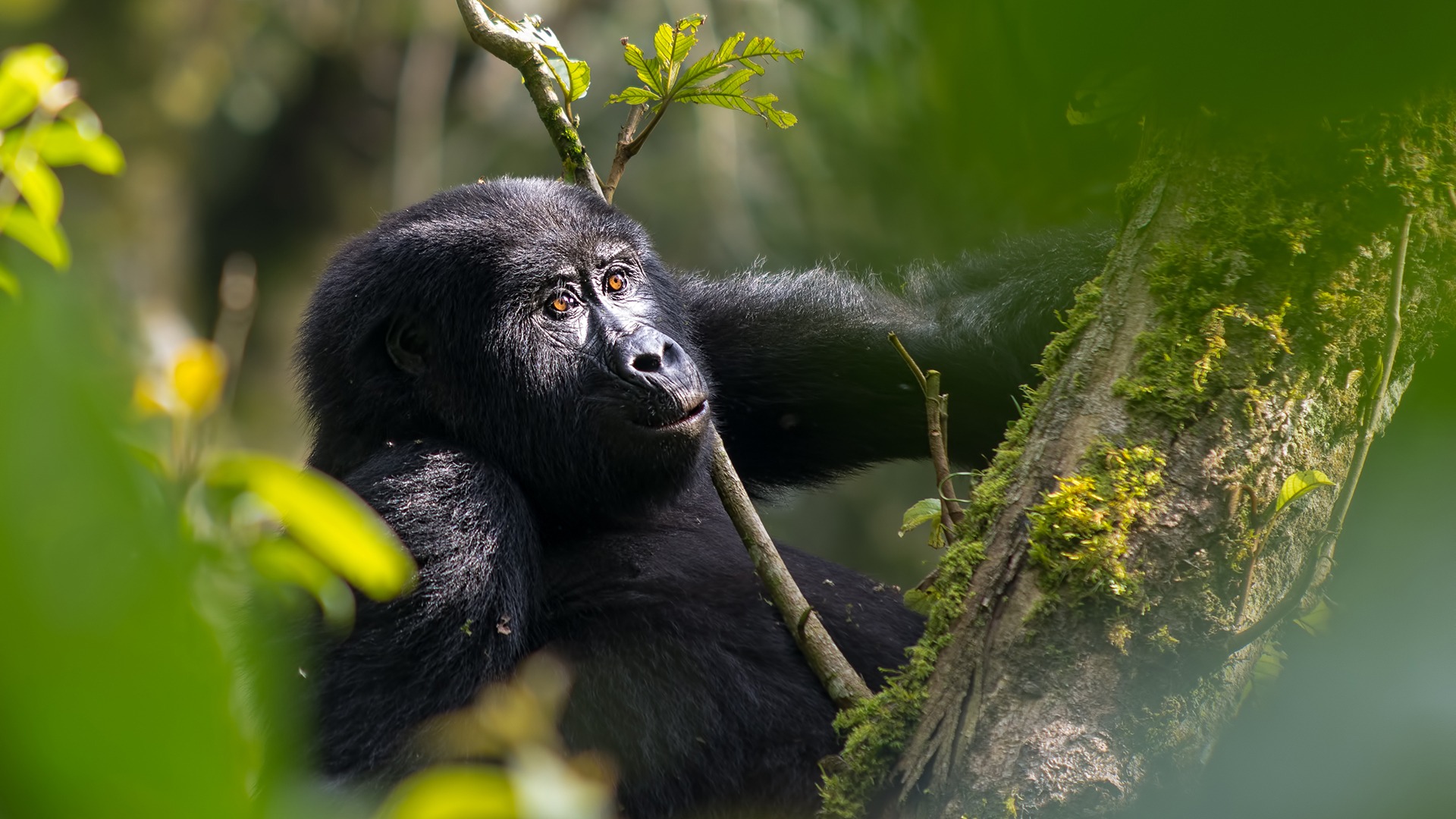
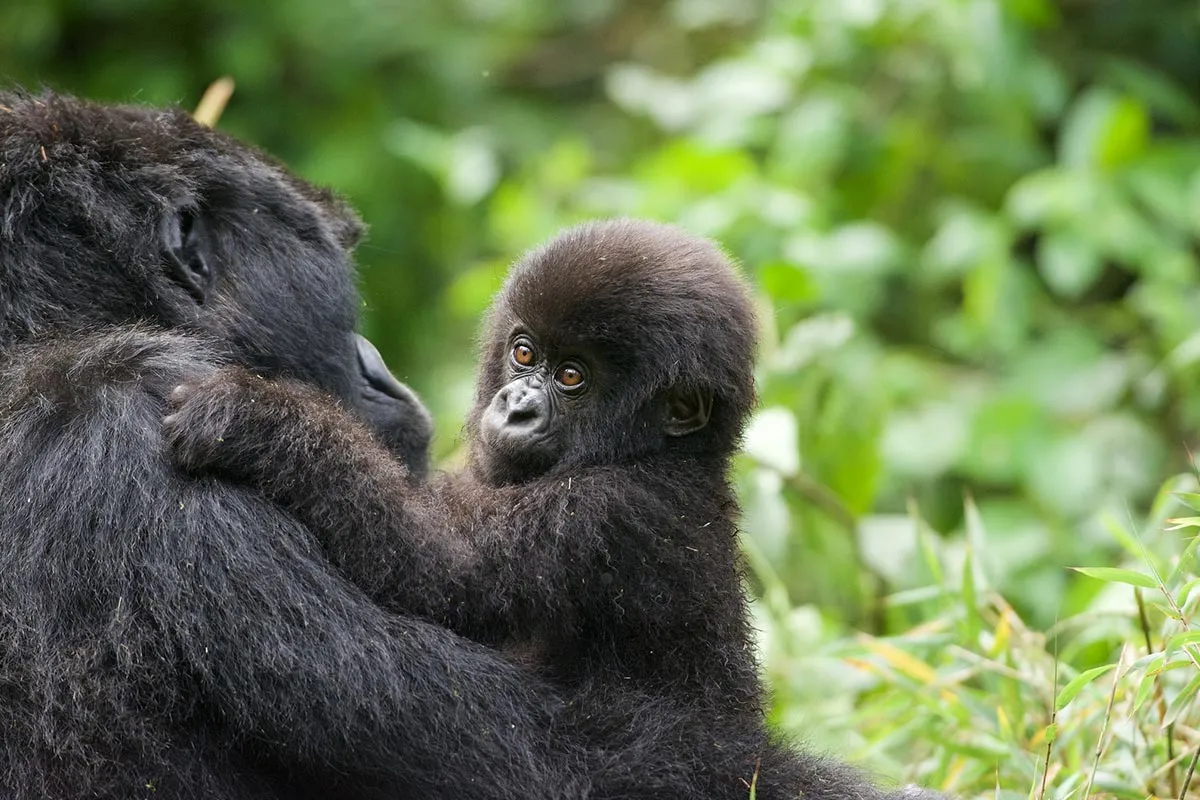
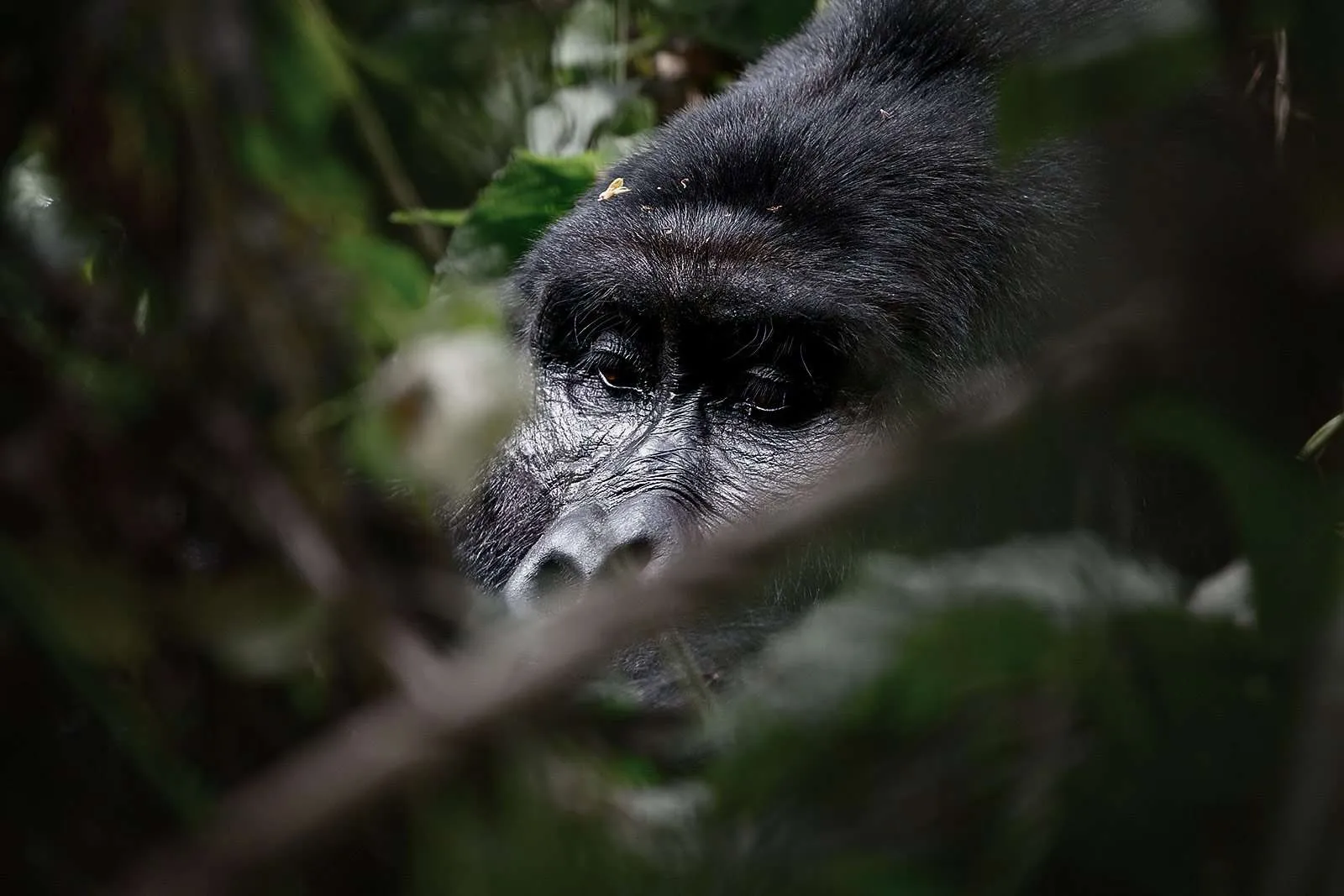
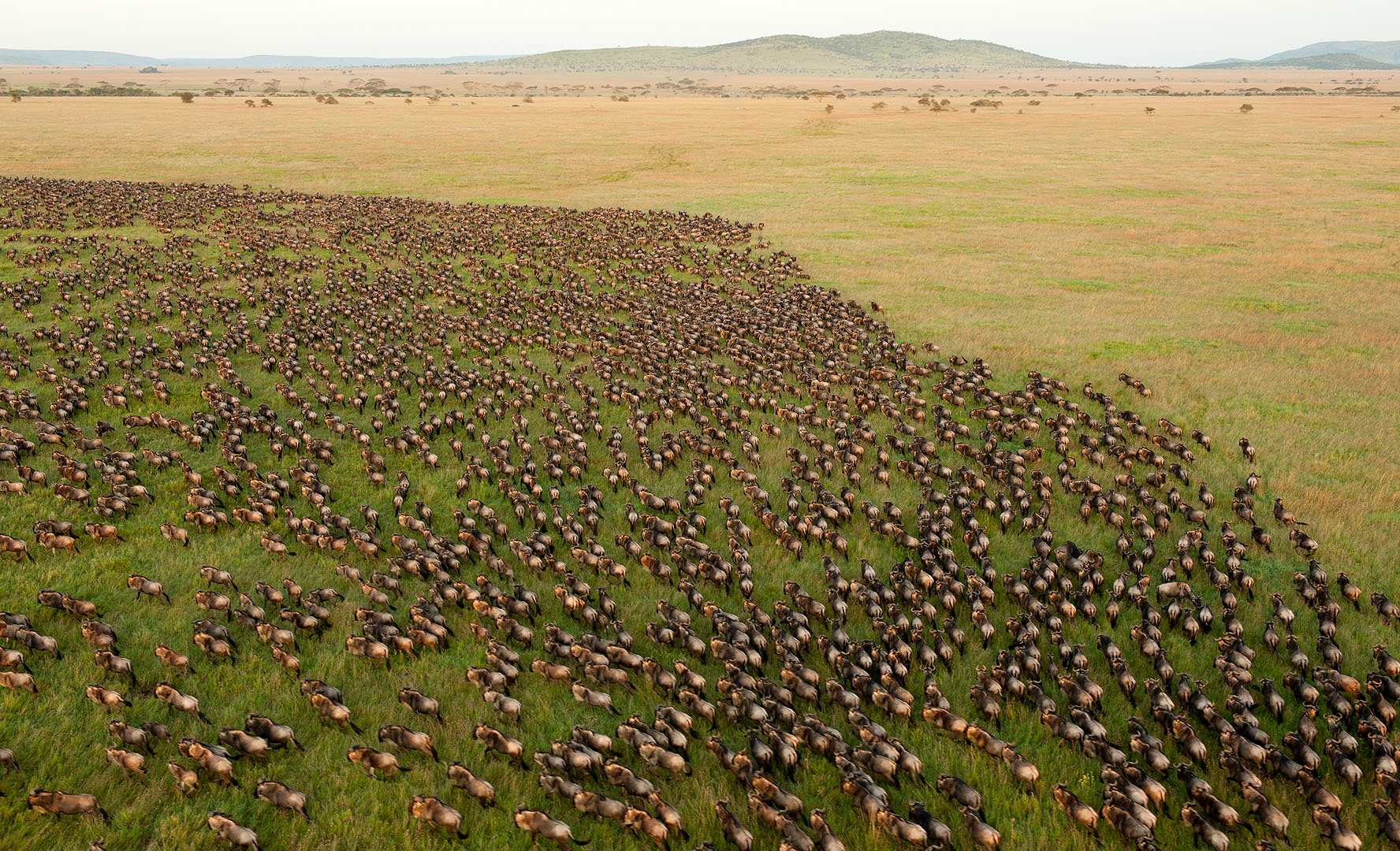
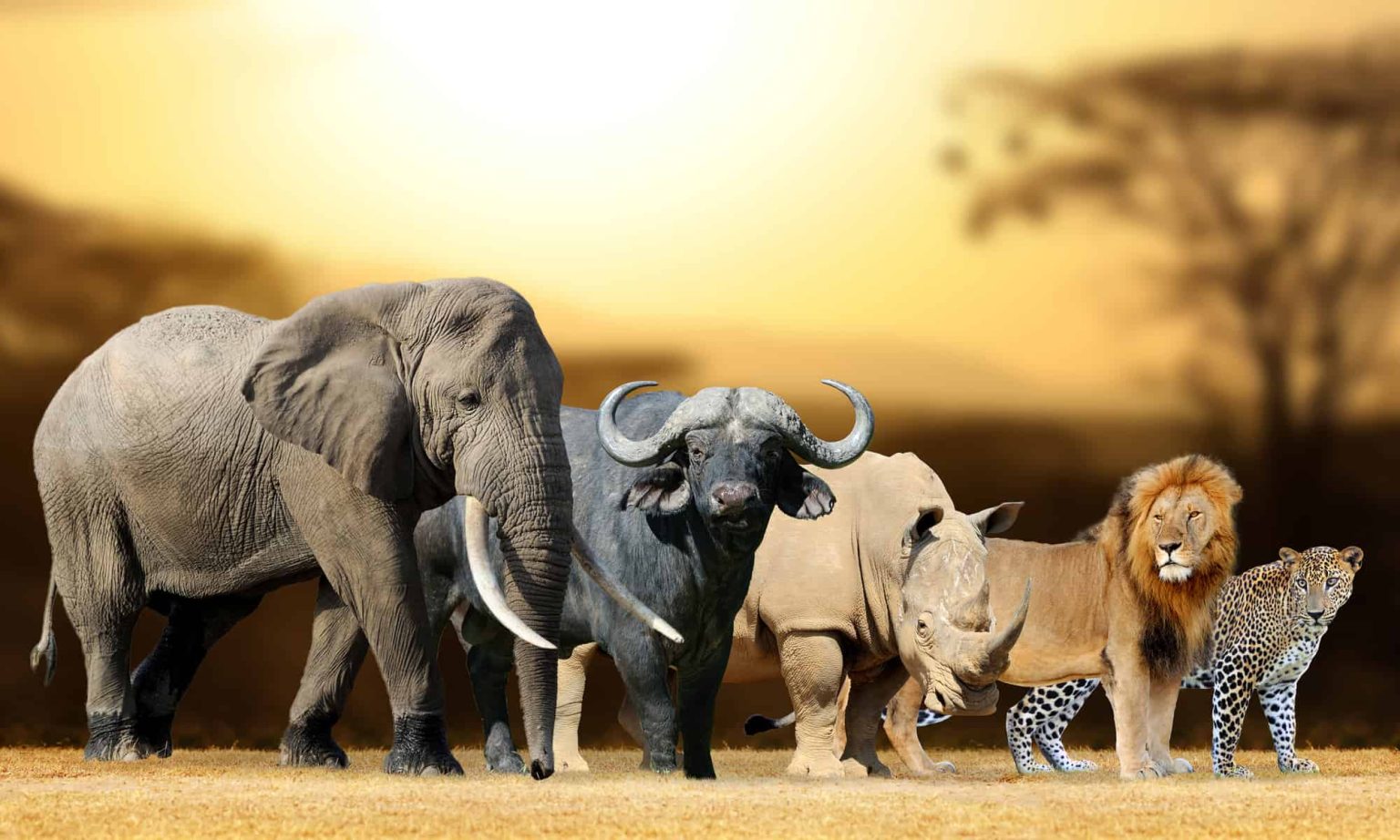
With a wide range of safari destinations to choose from, we recommend narrowing it down based on your preferences. For example, if you’re interested in witnessing the wildebeest migration, visit Kenya or Tanzania; to see the Big 5, visit South Africa, Kenya or Tanzania. If you’d prefer gorilla trekking, consider heading to Uganda or Rwanda. Also read our full guide on Africa’s most iconic and popular destinations as well as hidden gems and off-the-beaten-track hideaways.
How many days should you spend on safari? How long should a first African safari be?
The number of days you spend on safari depends largely on your budget and preferences. However, a shorter safari offers just a glimpse into the incredible wild world, while a longer journey allows you to slow down, absorb the subtle rhythms of the ecosystem and connect more profoundly with the environment.
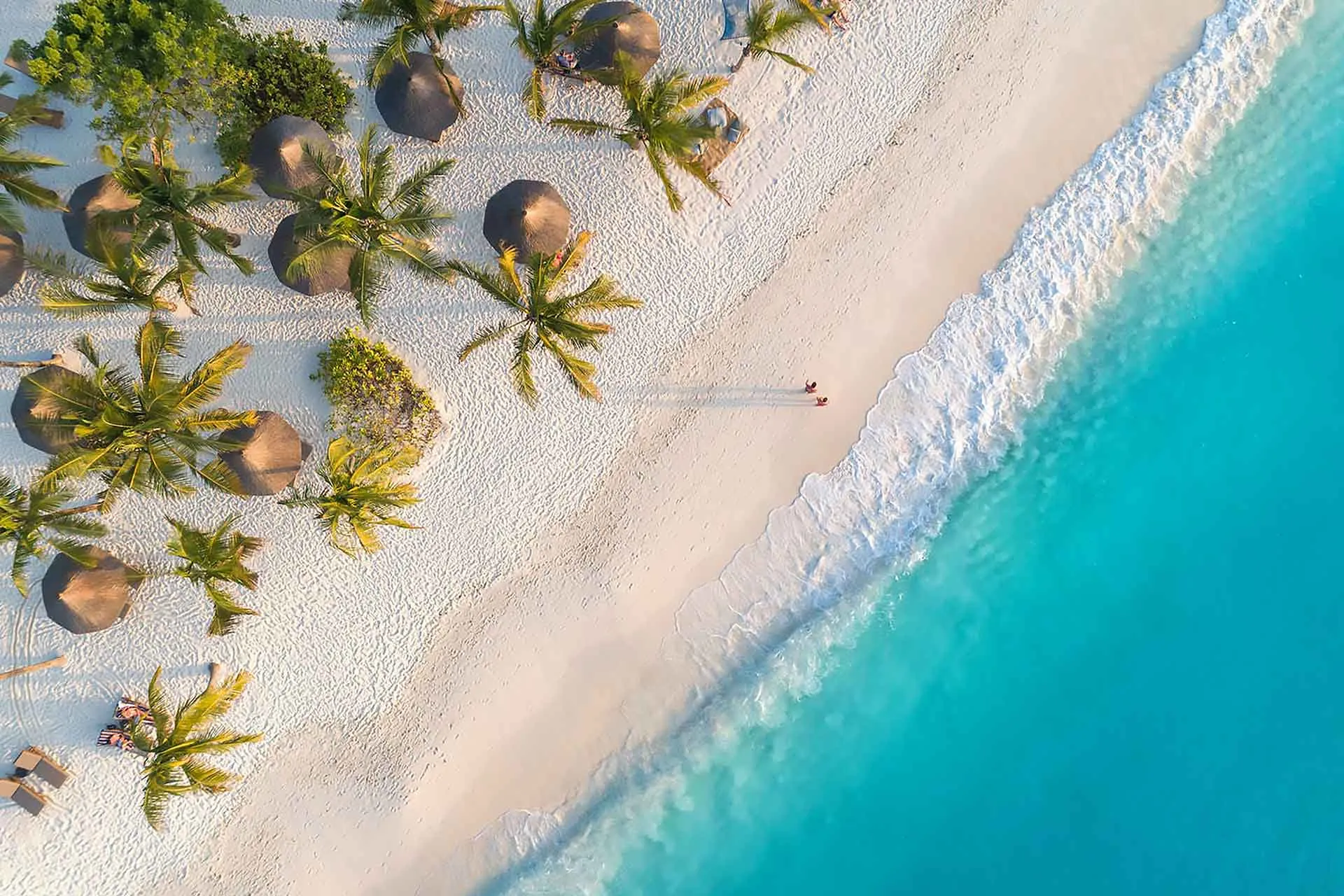
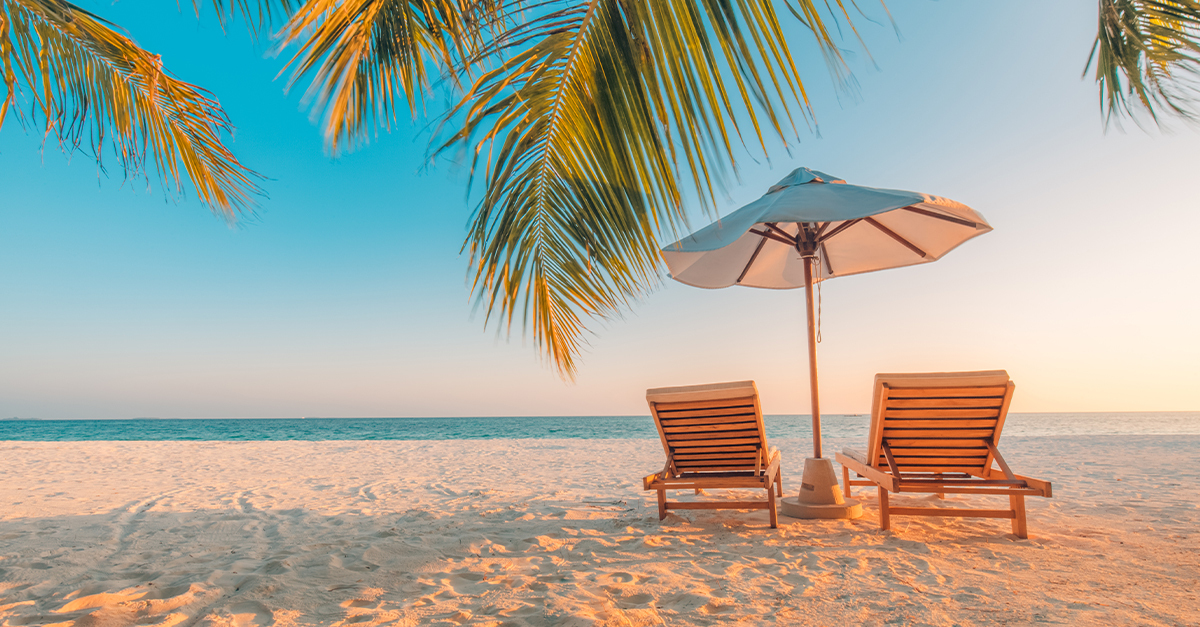
Most travelers usually choose a 5 to 7 days safari which ends with another three days at the beach, allowing them to explore multiple parks and spot diverse wildlife without feeling rushed.
How Much Does an African Safari Cost?
This is one of the most frequently asked questions with no definite answer. However, while a safari won’t be the cheapest holiday you can take, it’s one of the most thrilling and unforgettable experiences you’ll ever have. There are several factors that influence the cost of an African safari, including the level of comfort for accommodations, location, length of trip and the time of year.
If you want to keep costs down, consider visiting during the shoulder seasons (March to May and October to mid-December) rather than sacrificing the location of your lodging. Staying inside the parks is generally more costly but worth it.
What type of safari should you choose?
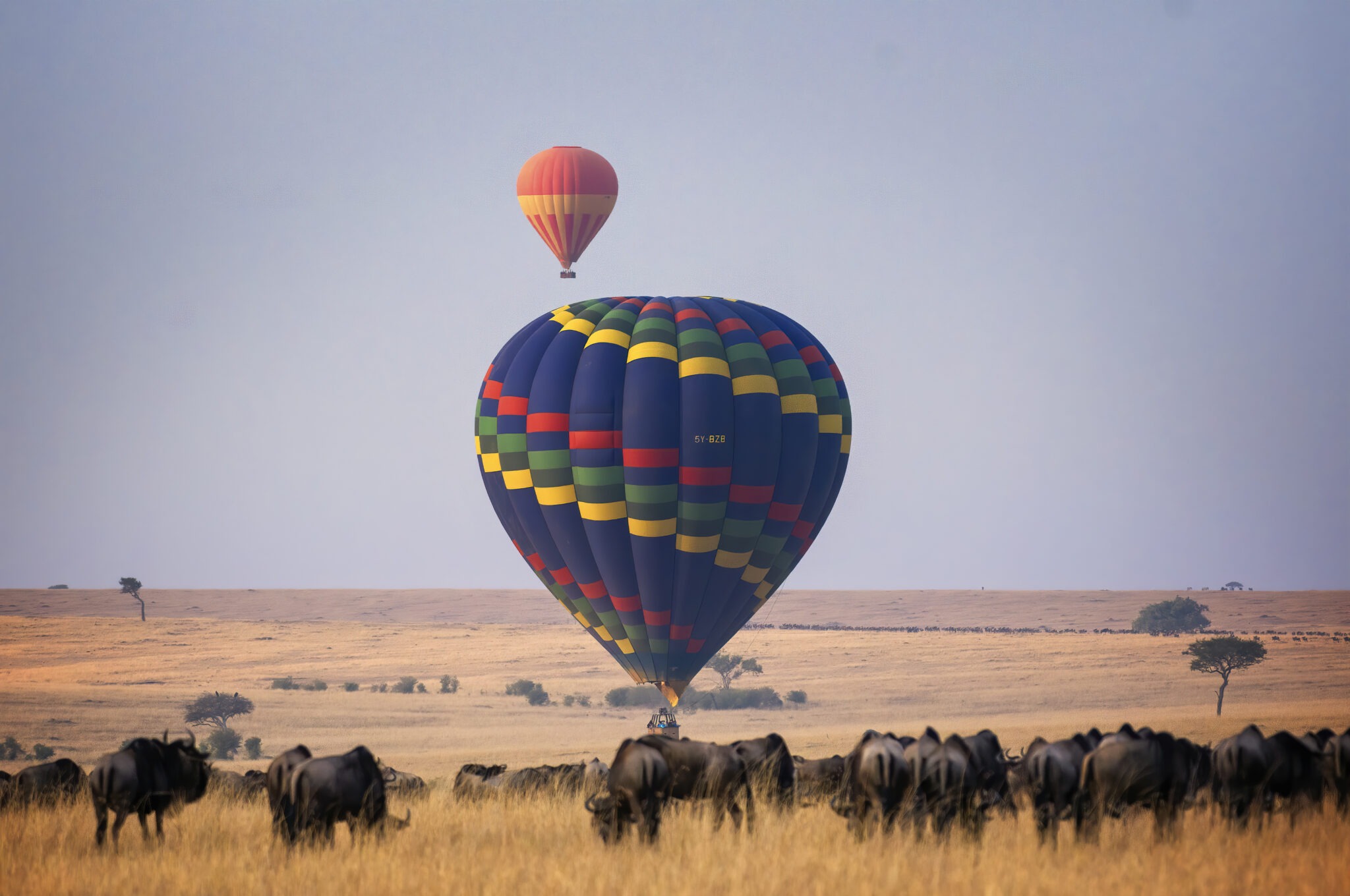
There are several types of African safari adventures ranging from gorilla trekking and Big Five safaris to walking safaris, self-drive safaris, cultural safaris, and romantic/honeymoon holidays. You can also take a hot-air balloon flight over the savanna to see vast herds of the Wildebeest Migration. So, choosing the right safari for you entirely depends on your preferences.
- Browse our many types of safaris on offer across Africa.
- Have a look at the most popular types of safaris and tour inspirations.
Travel style on your first African safari
Understanding your travel style will significantly impact your daily rhythm and quality of wildlife viewing. For example, group travel or scheduled safaris are highly social, budget friendly and structured, while a private safari provides a dedicated vehicle, a personal guide and complete flexibility or oversight over your itinerary.
When is the best time to go on Your first African safari?
The best time to go on safari depends entirely on what you want to see and experience. However, June to August and December to February are generally dry weather with less vegetation, providing the best conditions for wildlife viewing. Animals gather around permanent water sources, making them much easier to spot.
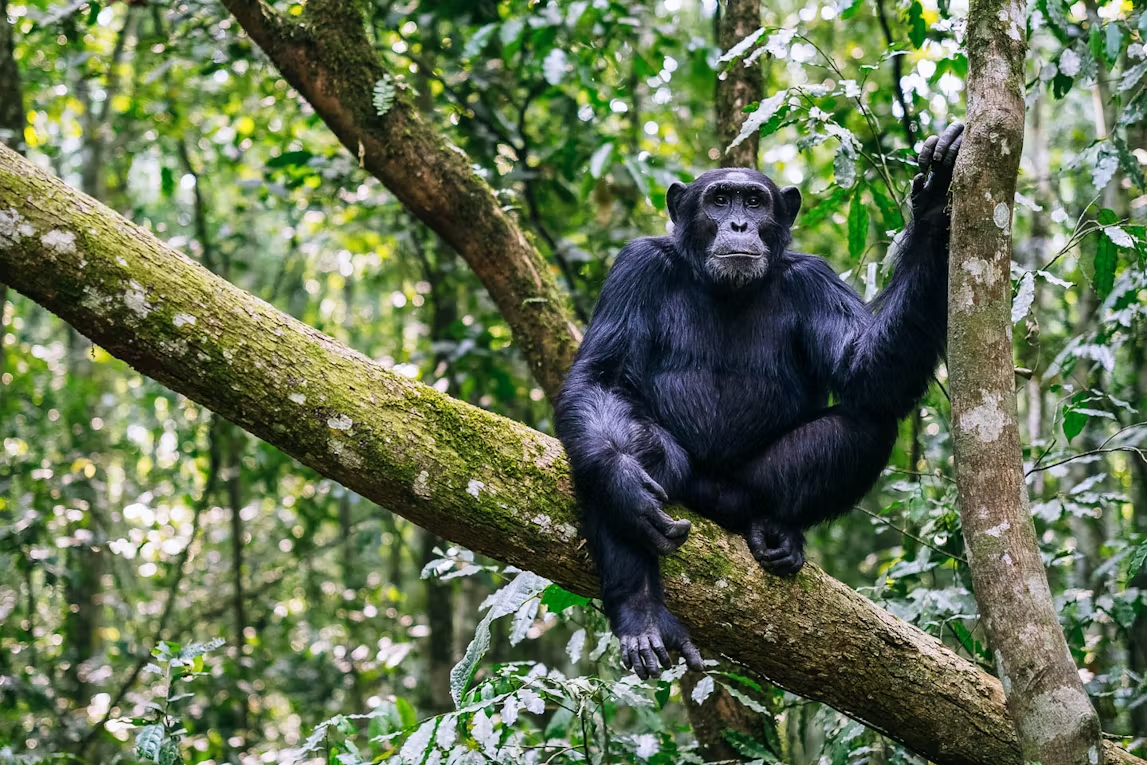
It is also the best time for gorilla or chimpanzee trekking and wildebeest migration but be sure to book your gorilla permits well in advance since this period is the peak season.
Where will you stay on Your first African safari?
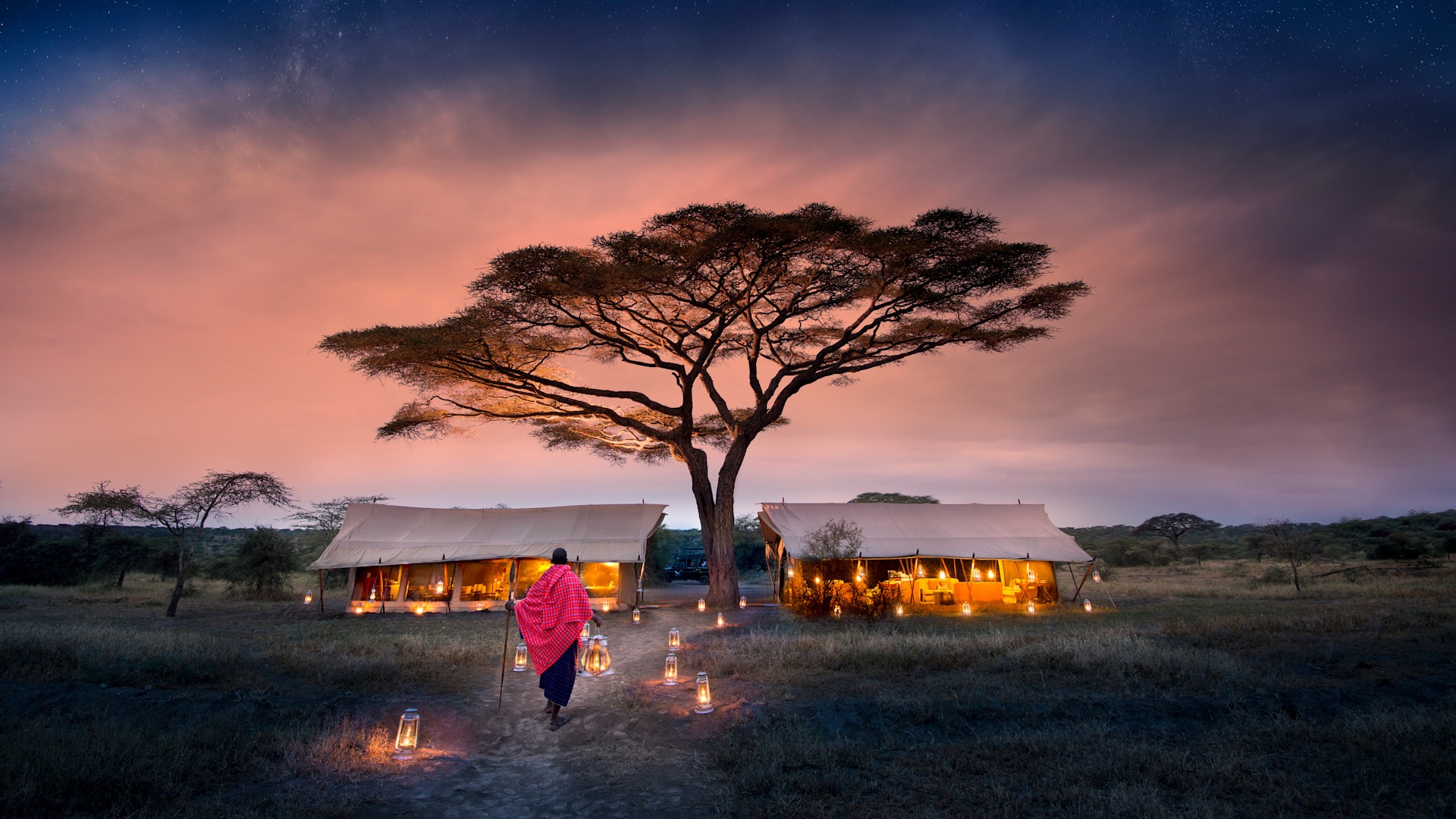
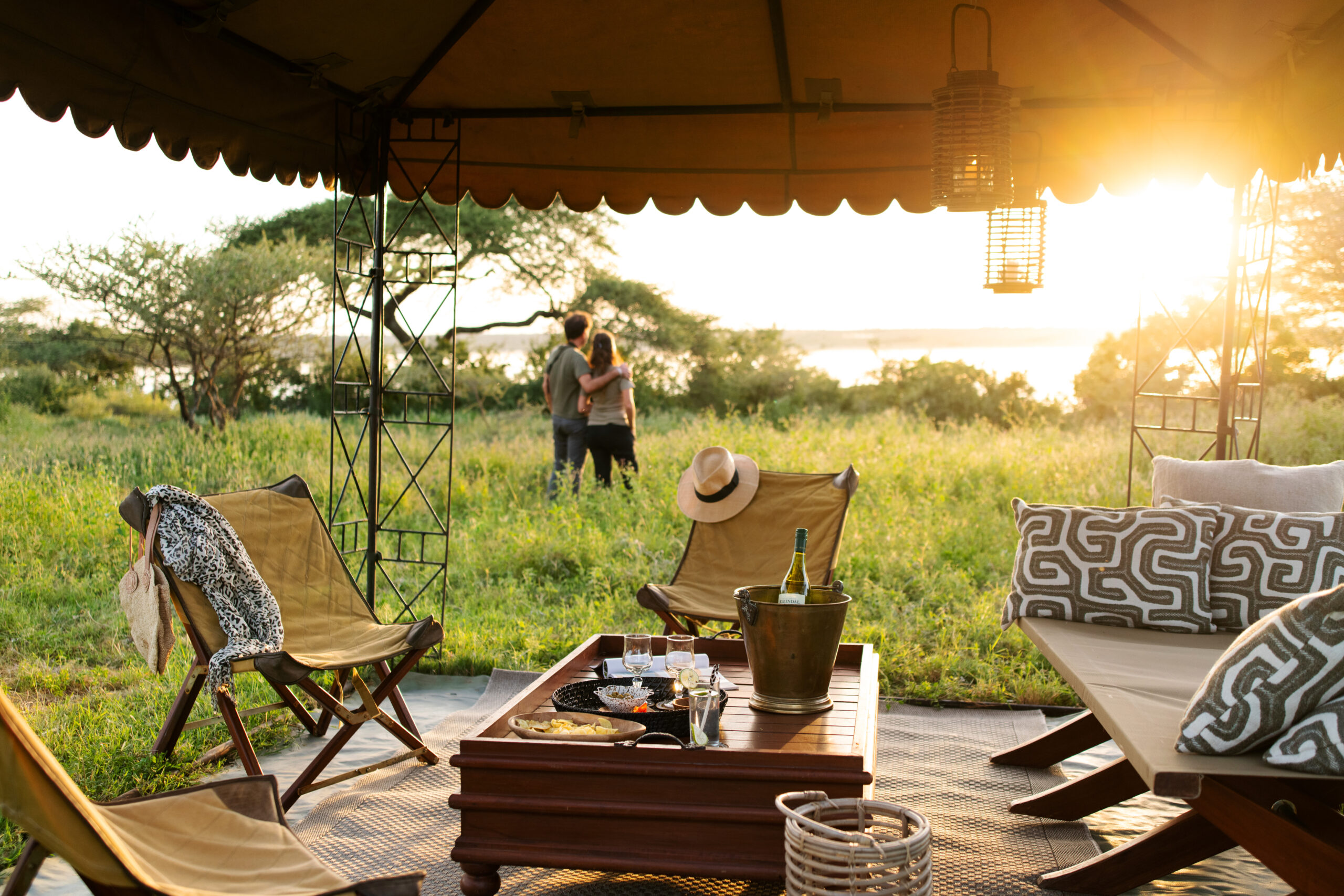
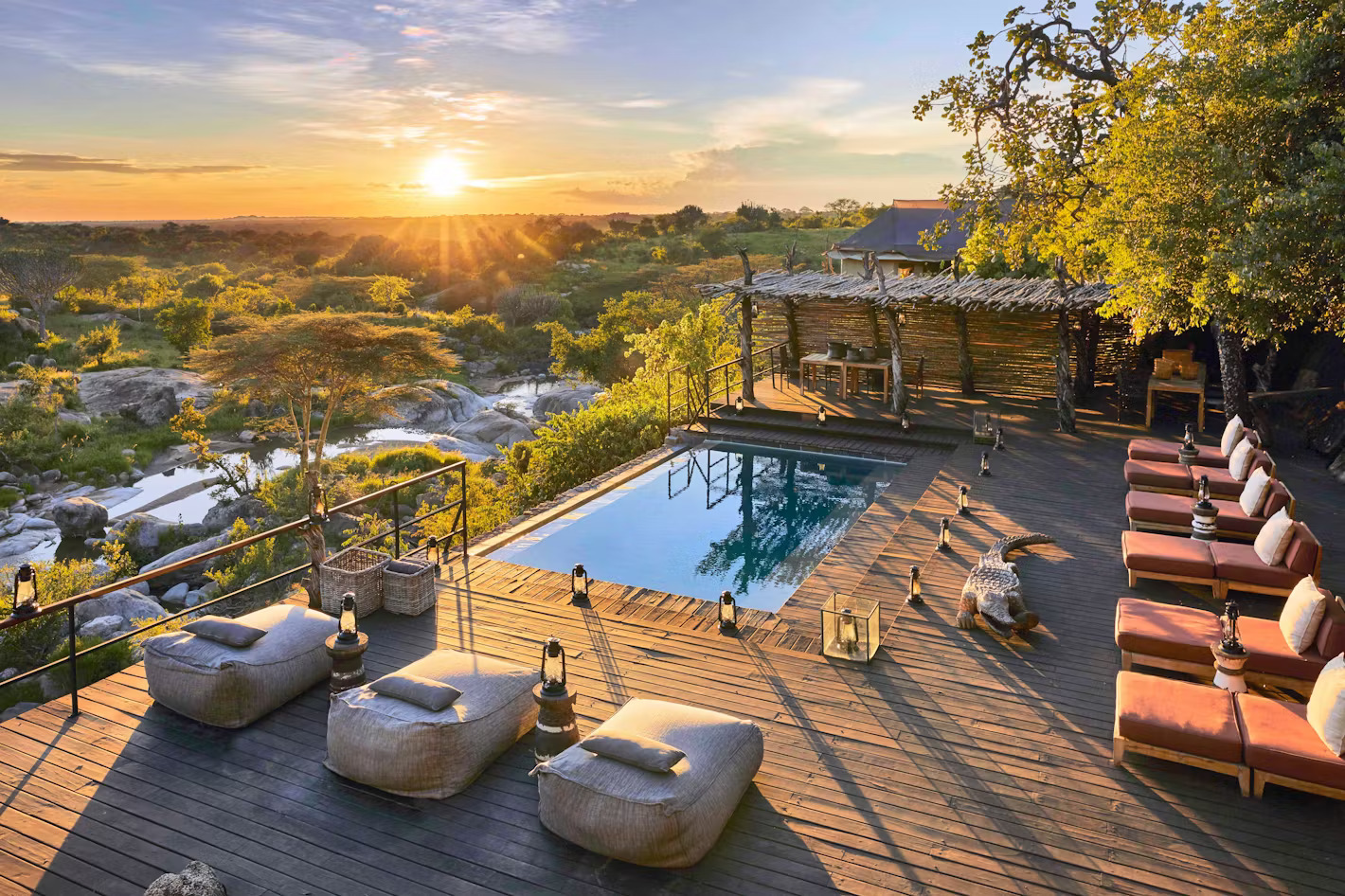
There’s a vast array of well-located accommodations ranging from comfortable tented camps and luxury lodges to mobile or fly camps, providing guests with comfort and immersive access to wildlife.
- Tented camps: These are luxurious in nature featuring hardwood floors, king size beds, en-suite bathrooms with hot showers, and superb meals. The canvas walls simply put you closer to nature’s sounds. Mid-range options include permanent tented camps with more amenities while budget camps are basic allowing your team to set up their own tents and provide their own meals.
- Luxury lodges: These are permanent structures built of stone, thatch, and wood. They offer hotel-style comforts including private plunge pools, spas, fine dining, and electricity with exceptional service, often in stunning locations while blending perfectly with nature.
- Mobile or fly-camps: These are designed to move with wildlife such as the Wildebeest Migration. Although basic, they offer a highly immersive and authentic experience.
Packing for Your First African Safari
Packing correctly can greatly improve your first African safari experience. Bring breathable, comfortable clothing suitable for warm days and cooler mornings. Neutral colors are preferred, as they blend into the environment. Avoid bright colors like white, yellow, red, or black which can startle wildlife.
Consider packing essentials such as a day pack, sunscreen, insect repellent, toiletries, a hat, and a good camera. Binoculars are fun to have but you may not use them a ton, or always, as guides often carry them. Packing light is important, especially if it involve small aircraft transfers with luggage restrictions.