
Packing list for Gorilla Trekking | What to wear for gorilla trekking
Knowing what to pack and wear for gorilla trekking in Uganda, Rwanda and Congo is fundamental for a successful tracking experience. It’s essential to pack wisely. Bringing the right gear will enhance your trekking experience, while overpacking can make the adventure cumbersome and full of regret.
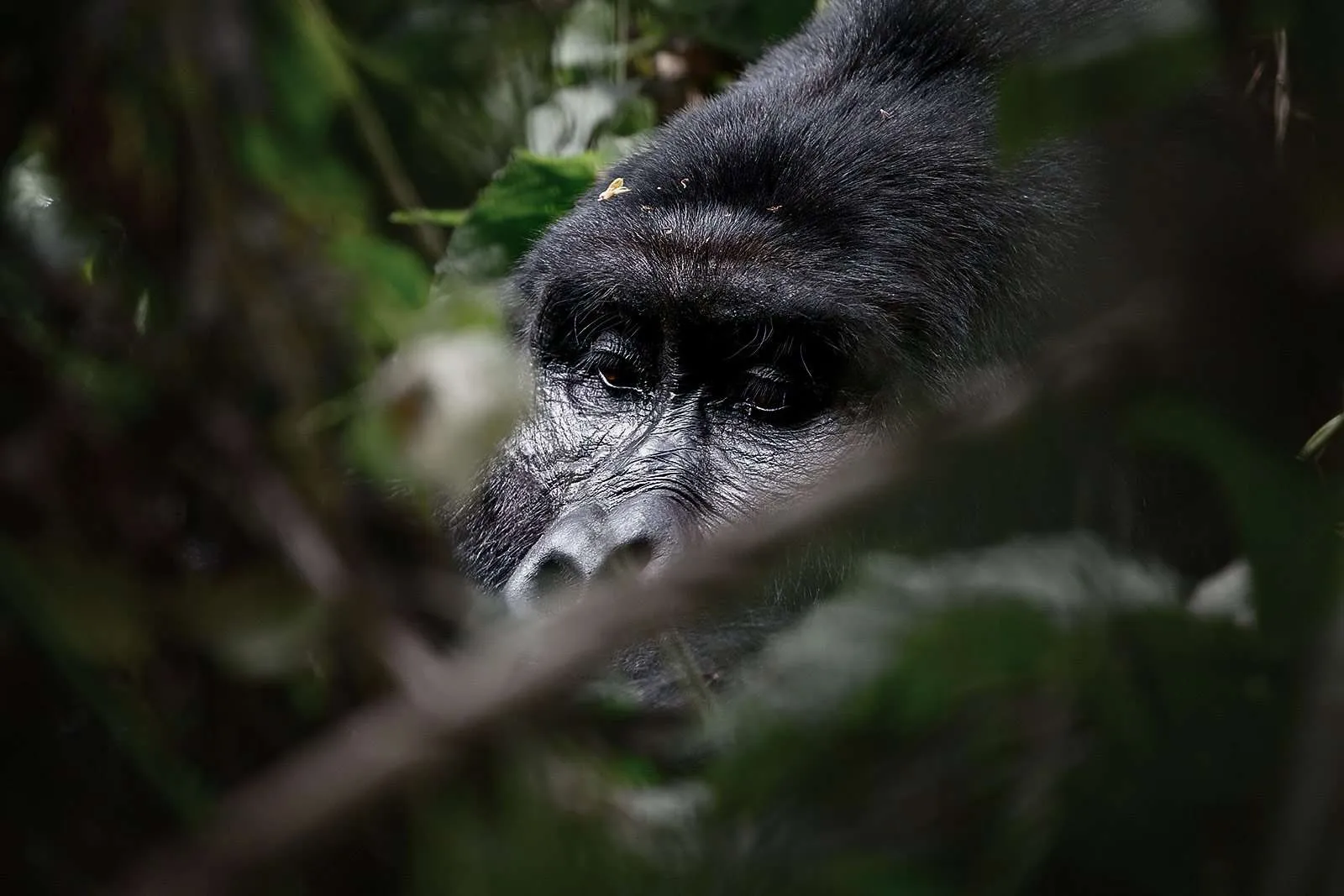
Gorilla tracking in Africa is arguably a popular and exciting activity. Spending time with a habituated family of mountain or lowland gorillas in their natural habitat is a life-transforming wildlife experience.
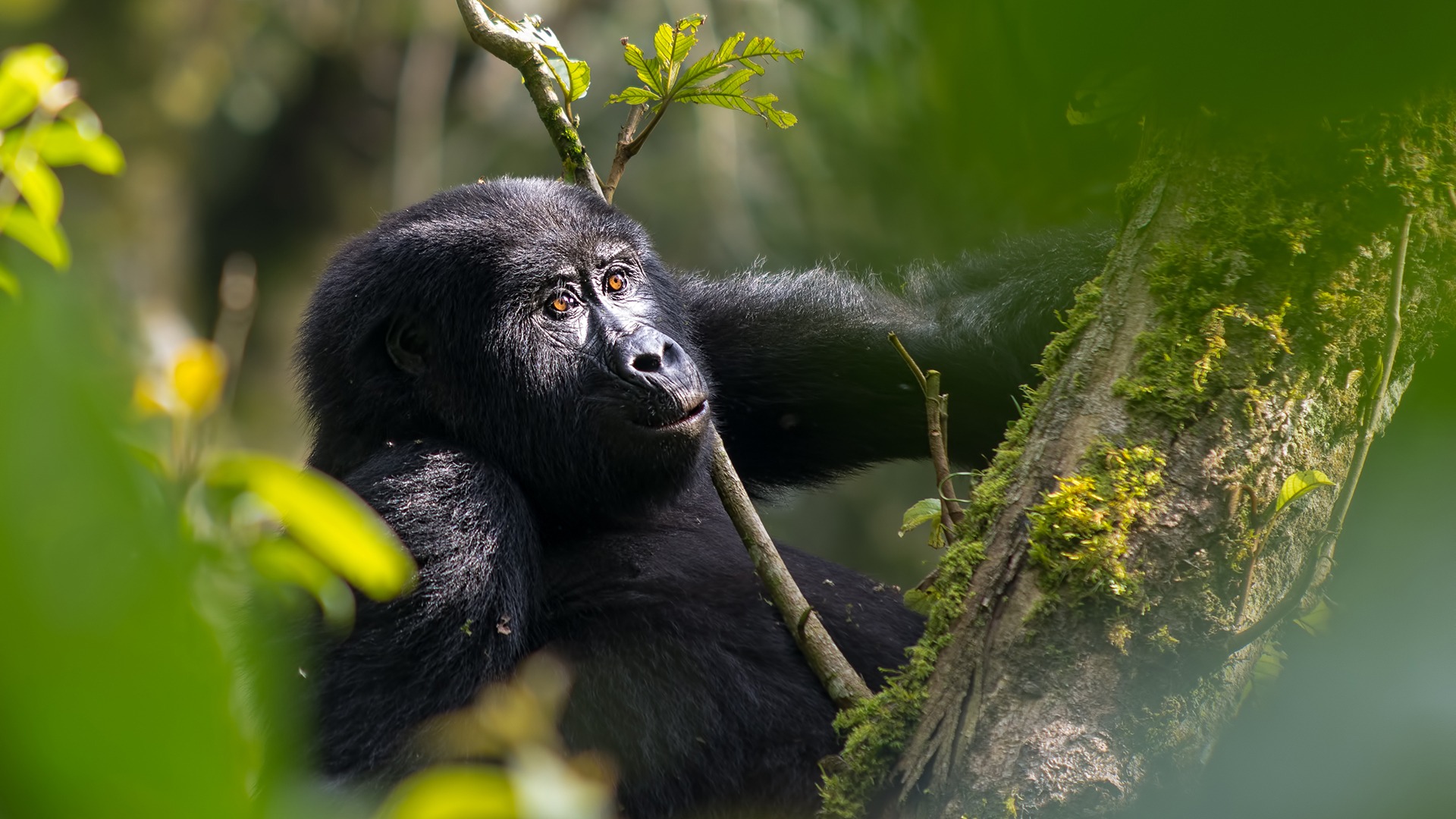
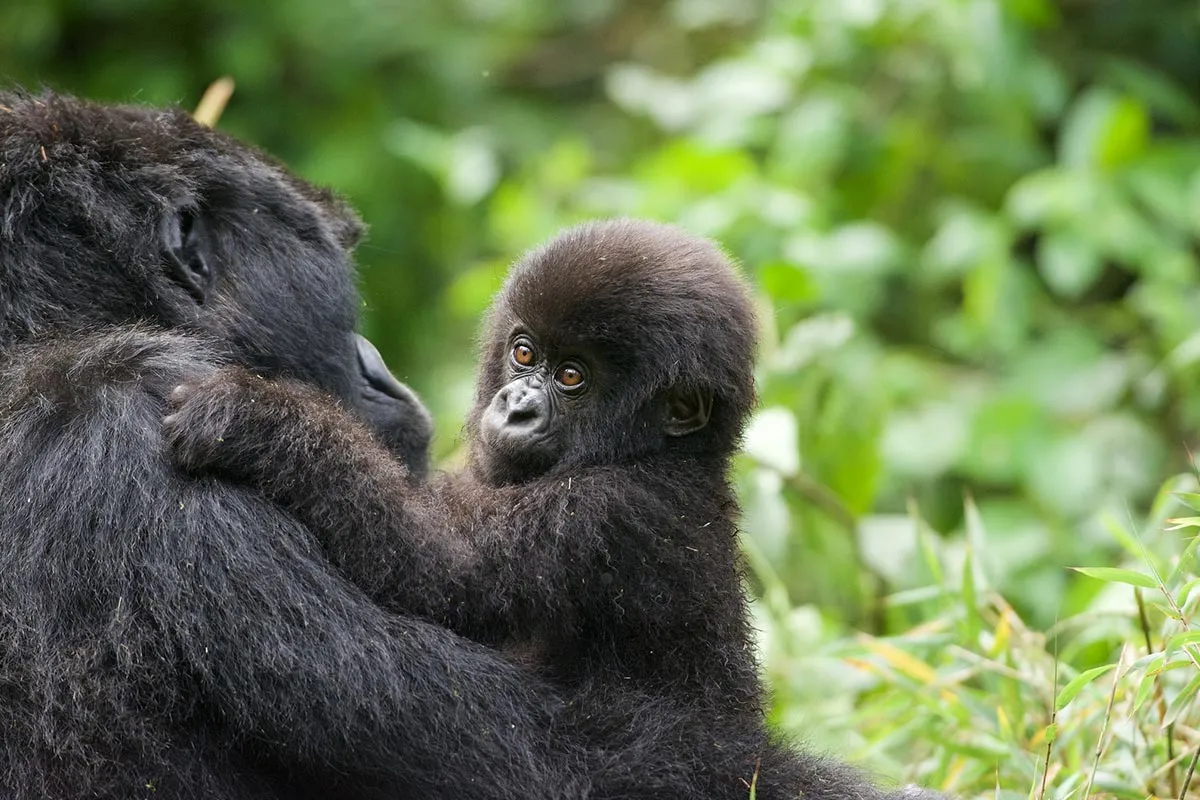
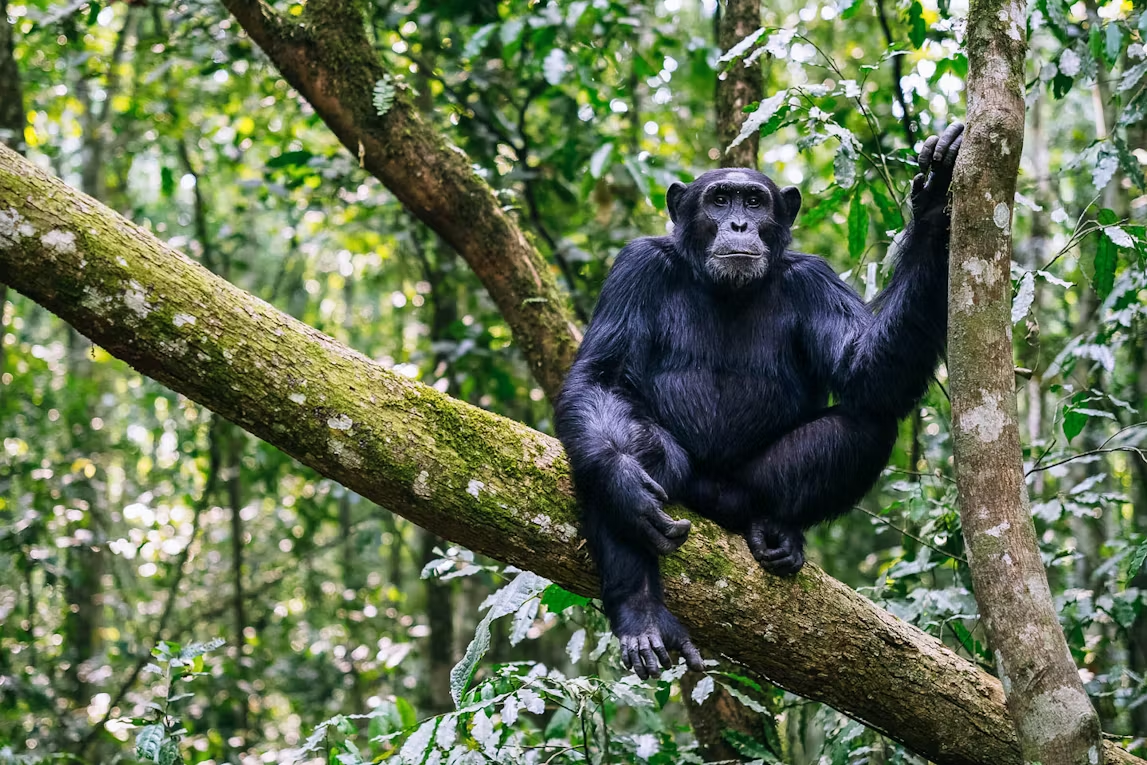
Mountain Gorillas are one of the most fascinating creatures. They share approximately 98% of their DNA with humans, making them exceptionally close relatives. There are roughly 1,100 individuals left in the world and seeing them in their natural habitat is one of the most humbling experiences.
Tracking these majestic creatures can be a strenuous and challenging undertaking. It’s therefore important to pack appropriately and be prepared for the trek. While packing, you should also focus on essential items that will keep you comfortable. In this comprehensive guide, we share detailed insights about what to wear for gorilla trekking in Uganda, Rwanda and Congo.
Gorilla trekking Packing List
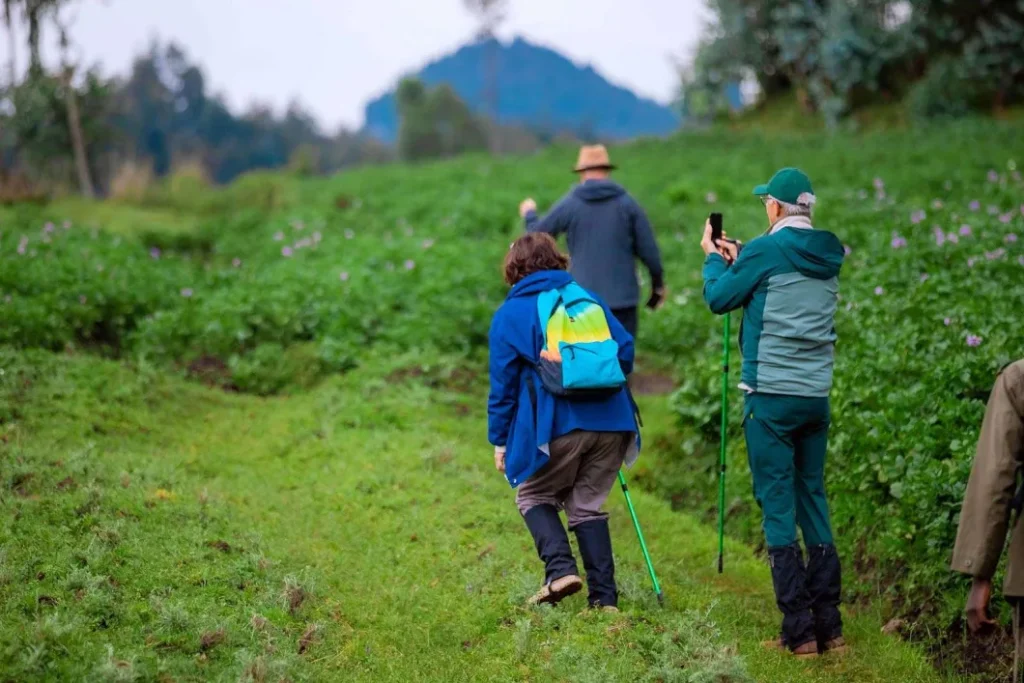
- Sturdy hiking boots
- Long sleeved shirts and pants
- Rain jacket or poncho
- Gloves
- Wide-brimmed hat
- Socks
- Gaiters
- Waterproof Backpack
- Camera with strong battery and memory
Here is a quick overview of a suggested packing list and what to wear for gorilla trekking.
- Sturdy hiking boots: Hiking boots are an absolute must for navigating the often uneven very challenging and sometimes muddy terrain. Sturdy hiking boots with good grip, ankle support and water protection make for a much more comfortable hike.
- Long sleeved shirts and pants: Comfortable lightweight long-sleeved shirts and hiking pants will protect against the sun, insect bites and scratches from thorny vegetation and branches, making for a much more pleasant trekking experience.
- Rain jacket or poncho: Waterproof clothing such as a rain jacket or a poncho will help to keep you warm during the rainy season. Even when you visit during the dry season, expect sudden showers since you’ll be hiking in a tropical rainforest.
- Gloves are worth bringing along: A pair of gardening or trekking gloves will protect your hands from stinging insects and branches as you navigate the forest. It can also prevent blisters if you use a wooden hiking pole.
- Wide-brimmed hat: This will protect you from the sun’s rays and keep you dry.
- Gaiters: Although gaiters are not a must-have, they can help keep mud, stones and water from getting into your hiking boots. Alternatively, you can tuck your hiking pants into your socks and they will stay tucked in even when hiking.
- Socks: Thick, moisture-wicking socks provide comfort, prevent blisters and help keep feet warm and dry. Leech socks provide a barrier up to your knee that keeps leeches out and protects against biting insects like safari ants and stinging caterpillars.
- Waterproof Backpack: A backpack for carrying your various items, including camera, water bottles, extra clothing, and snacks. One with a rain cover attached is a good idea and will keep your gear dry in case of rain.
- Camera with strong battery and memory for capturing your memories in the wild.
- Tips: Tipping is not only a good practice but also a fact of life in Uganda. Despite the high cost of gorilla trekking, tipping is still going to be expected. You can carry extra cash on you for tipping the trackers you meet in the jungle.
- Other items include; binoculars, insect repellent, sunscreen, water bottle, a face mask and toilet paper.
Excursions are led by expert guides and trackers, and finding a gorilla family can take anywhere from about two to eight hours. Depending on your speed and pace, your guide will stop regularly to allow you to rest and refresh.
If you’re ready to start planning your dream gorilla trekking safari, get in touch with someone who has been there.