
As we compare gorilla trekking in Uganda vs Rwanda, we will look at Rwanda’s easy accessibility and less vegetation cover vs. Uganda’s better trekking experience (including gorilla habituation experience), lower permit costs and wider range of post-trekking attractions.
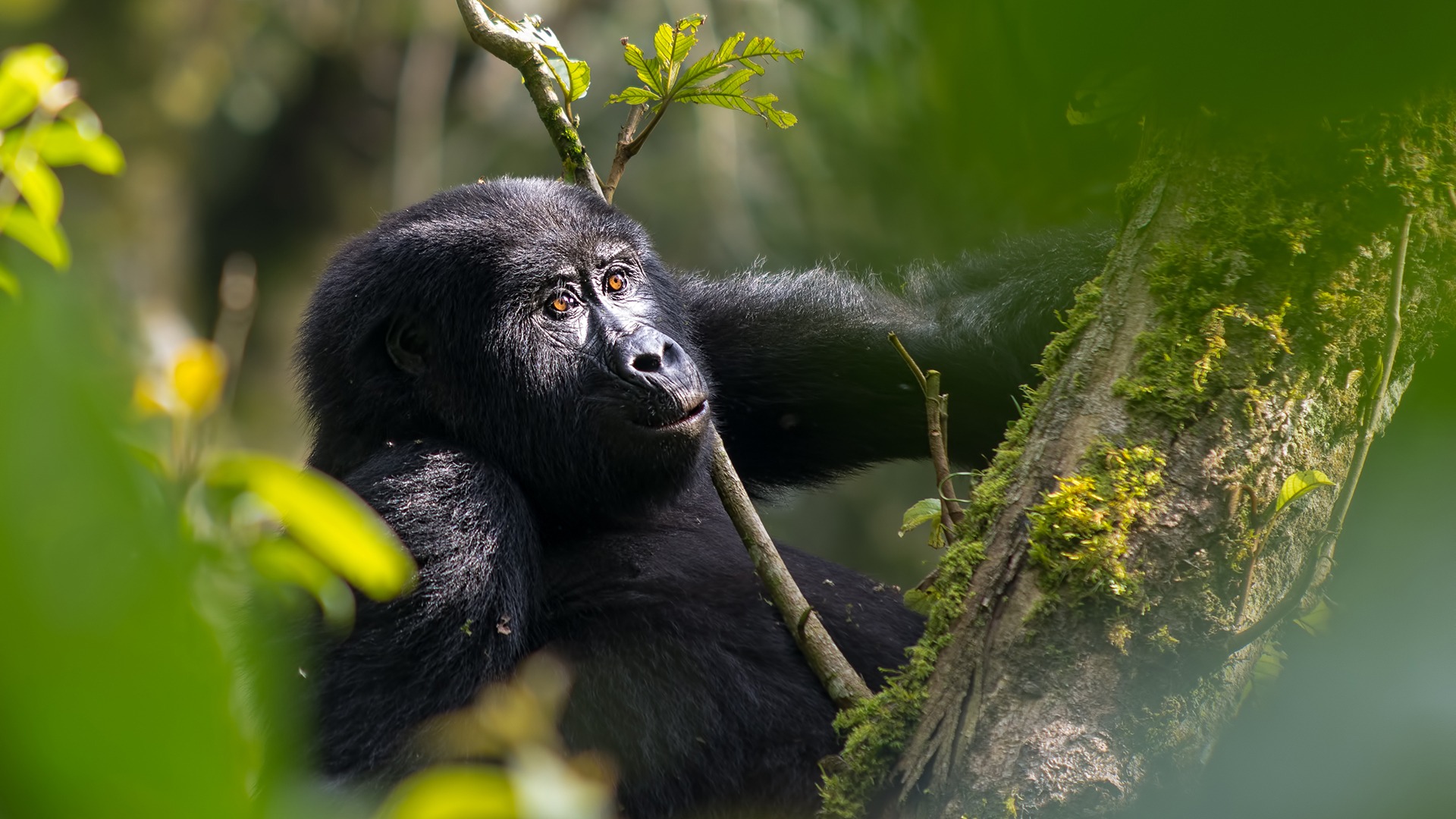
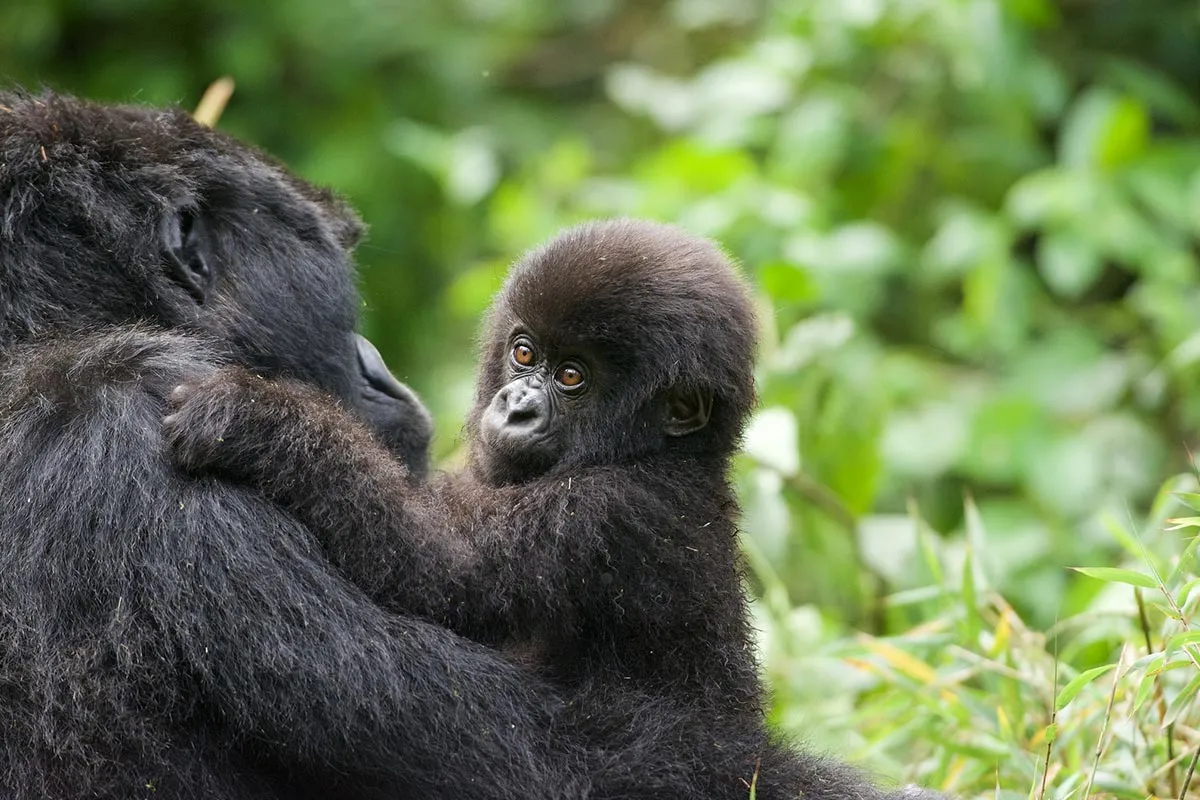
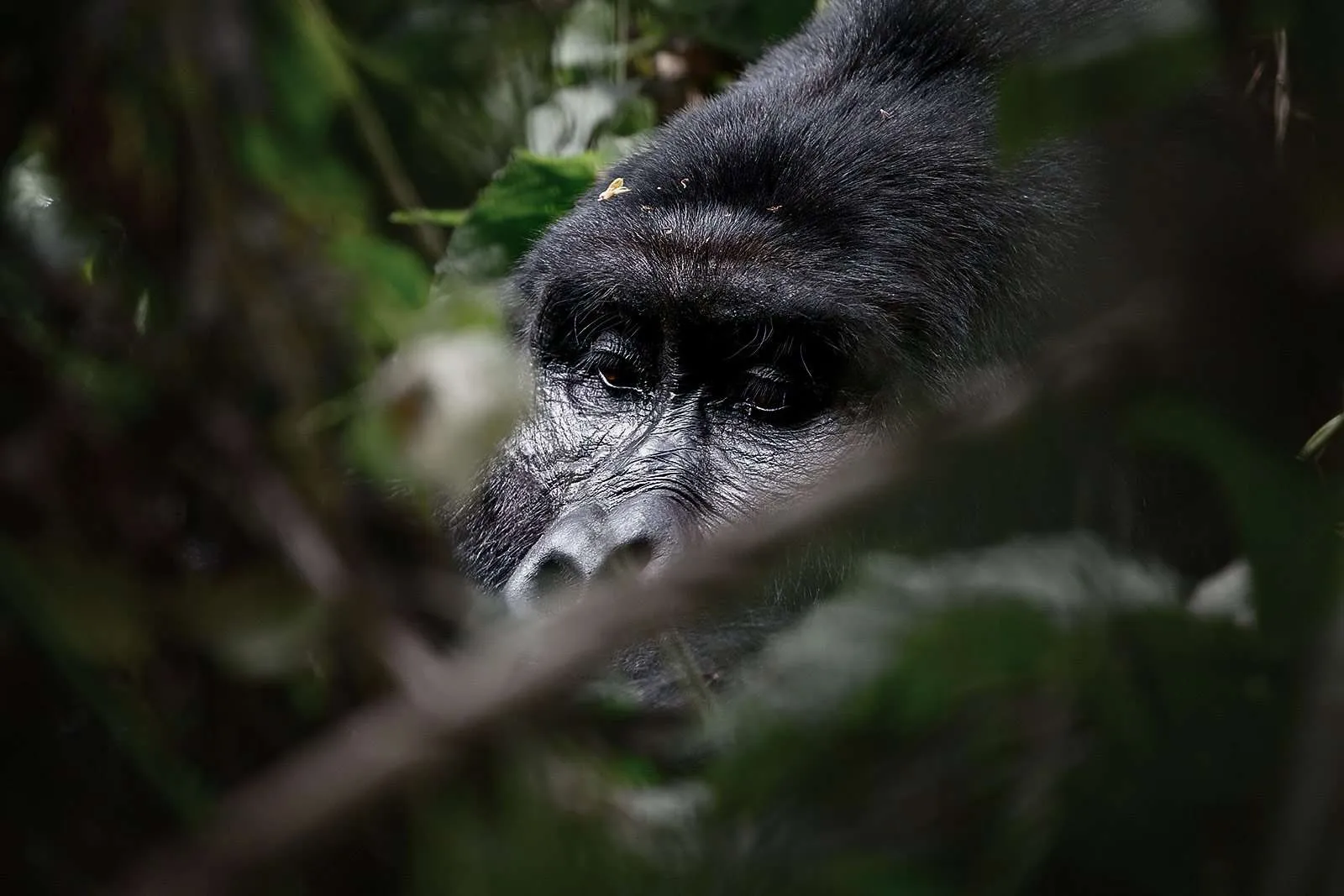
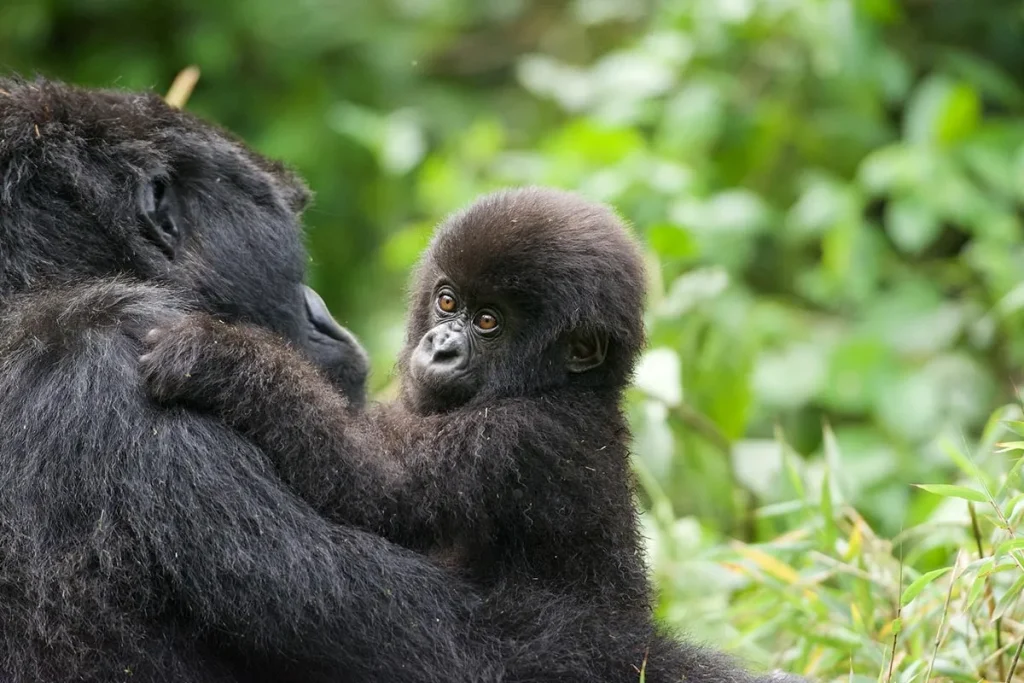
Gorilla tracking is a popular experience on an all-inclusive African safari, and we can guarantee that it’s worth it. Observing these intelligent creatures from a safe but intimate distance of 10 metres (32 feet) on the cold floor of a tropical rainforest as they munch on fruit and plants, play and groom one another is a once-in-a-lifetime experience that stays with you forever.
Where to Go Gorilla Trekking
You can go to Uganda and Rwanda as they offer sustainable and safe gorilla trekking experiences, unlike the Democratic Republic of the Congo because of security issues there. Besides, Uganda and Rwanda offer the best opportunities to see the mountain gorillas in their natural habitat, with 98% chances. So, whichever country you visit, you’ll be able to observe these gentle giants at close range uninterruptedly.
In Uganda, you can go tracking in Bwindi Impenetrable National Park and Mgahinga Gorilla National Park, while in Rwanda, you can go to Volcanoes National Park. There is a larger and steadier gorilla population in Uganda’s Bwindi Impenetrable National Park, making it the better and more popular alternative.
While both Rwanda and Uganda offer excellent gorilla trekking experiences, you must decide where to see these gentle giants in their natural habitat. Rwanda vs Uganda, how do you choose between the two? Below we have shared the pros and cons of gorilla tracking in Uganda vs Rwanda.
Is Rwanda Or Uganda better for gorilla tracking? Weighing up the pros and cons
Uganda vs Rwanda in Terms of Gorilla Trekking Prices
Uganda offers more affordable gorilla tracking experience than Rwanda with lower gorilla trekking permit prices and cheaper accommodations and other services. For instance;
Current gorilla tracking permits in Uganda cost USD 800 per person per trek for foreign non-residents, USD 700 for foreign residents, and UGX 300,000 for East African citizens. It allows you the opportunity to spend one hour with a habituated family. The gorilla habituation experience in Bwindi costs USD 1,500, and you’ll spend a maximum of four hours with them in the wild.
A gorilla trekking permit in Rwanda costs USD 1500 per person per trek for foreign non-residents, USD 500 for foreign residents, and USD 200 for East African citizens. This price is higher compared to that in Uganda for an average traveler, making Uganda the more affordable destination for a regular gorilla tracking experience.
The price variation is brought about by government policies in the two East African countries. While Uganda positions itself as an affordable destination, Rwanda promotes itself as a more exclusive, higher-end destination.
Rwanda vs Uganda in terms of Vegetation and Trekking Difficulty
As the name suggests, Bwindi Impenetrable is a dense tropical rainforest sitting between 1,160m and 2,607m above sea level, with terrain often steep and muddy, while Volcanoes National Park, located in the Virunga at higher altitudes ranging from 2,400m to 4,507m features largely bamboo vegetation and generally easier terrain to climb.
However, the magic lies in the nature of vegetation cover: Although Volcanoes National Park sits at a higher altitude, the forest is largely bamboo, which creates a less dense canopy, making it easier to walk through. Bwindi’s dense forested landscape, which although sits at a lower altitude, makes hiking a tricky experience and may require your guide to clear a path with a machete.
Gorilla families are spread across larger areas in Bwindi Forest. However, following the tracks to see them can be a challenging undertaking. While it’s certainly more of an adventure, a certain degree of fitness will be required. Meanwhile, Mgahinga Gorilla National Park, which has lighter, bamboo vegetation similar to Volcanoes, is steep in certain areas.
Uganda vs Rwanda in terms of Trekking Experience
Both Rwanda and Uganda offer thrilling gorilla trekking experiences. The mountain gorillas in both countries are the same species, with similar behaviors, visitor number restrictions and 98 percent chances of observing them in their natural habitat.
However, Visitors can enjoy the gorilla habituation experience only in Uganda where they can spend up to four hours with wild gorillas that are gradually getting accustomed to human presence. They have more time to spend with a semi-habituated family in Bwindi under the guidance of expert trackers and researchers compared to the regular gorilla tracking which lasts an hour.
Rwanda vs Uganda in terms of Accessibility
Most of Uganda’s mountain gorillas live in Bwindi Impenetrable National Park located in the extreme southwest. It’s an 8 to 10-hour road transfer from Entebbe International Airport to the gorilla trekking lodges.
This positions it relatively far from Kampala and Entebbe International Airport, both of which are in the central region, making accessibility quite challenging. Fly-in options to local airstrips are available but transfers to gorilla tracking areas can take about 30 minutes.
In Rwanda, mountain gorillas live in Volcanoes National Park, located in the country’s far northwest quite close to Kigali International Airport, making accessibility a relatively easy affair. It’s a short drive of about two and a half hours to arrive at the doorstep of the park. Fly-in options to local airstrips are available but rarely requested thanks to the good road network and comparatively short distance.
Although Bwindi is accessible by a 2.5-hour flight from Entebbe International Airport or a 4-5 hours’ drive from Kigali International Airport, Volcanoes’ close proximity to Kigali International Airport is a major draw for Rwanda’s mountain gorilla tourism industry.
Uganda vs Rwanda in terms of Accommodation
Since gorilla treks in Volcanoes National Park start at the park headquarters in Kinigi, most accommodations are within 10 minutes driving distance. In Bwindi Impenetrable Forest, however, there are four distinct trailheads (starting points) where it’s recommended to stay in a lodge near your specific trailhead. Accessing the trailhead can be quite a hassle as many roads are steep and rutted.
Rwanda vs Uganda in terms of Availability of Other Attractions
Uganda has ten national parks that can easily be combined with gorilla tracking in either Bwindi Impenetrable National Park or Mgahinga Gorilla National Park, making it the better destination if you’re considering a range of post gorilla trekking safari attractions.
However, Rwanda is a smaller country with only four national parks. Volcanoes National Park, which offers gorilla trekking, is the country’s premier safari destination. Others include Nyungwe National Park, Akagera National Park, and Gishwati Mukura National Park.
Conclusively, whether you choose Uganda’s affordable gorilla tracking and diverse wildlife attractions or Rwanda’s accessibility and high-end treks, both countries offer unforgettable gorilla trekking experiences to an intrepid traveler.
Sample Gorilla Trekking safaris

15 DAYS
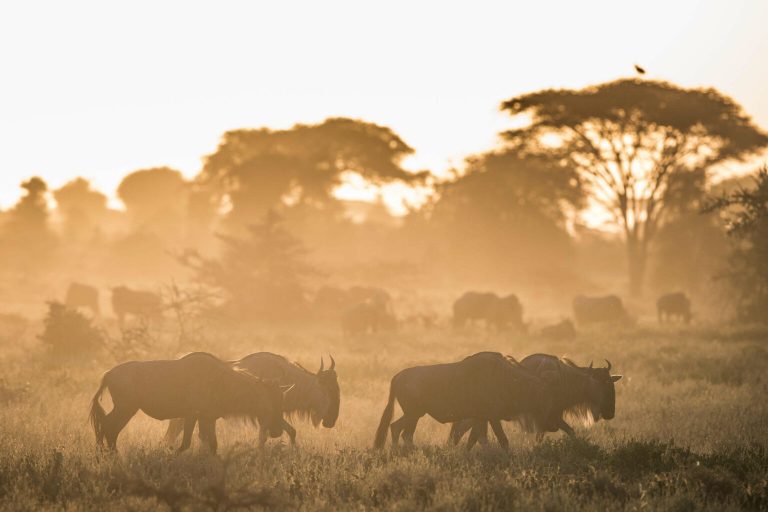
Best of East Africa Itinerary (Primates & Wildebeest)
Destinations: Tanzania, Kenya & Uganda
Ready To Start Planning Your Gorilla Trekking Adventure?
Contact a safari specialist to help you customize a trip to meet your travel preferences.