



Mountain Gorilla Facts
Species: Mountain Gorilla
Scientific name: Gorilla beringei beringei
Conservation status: Endangered
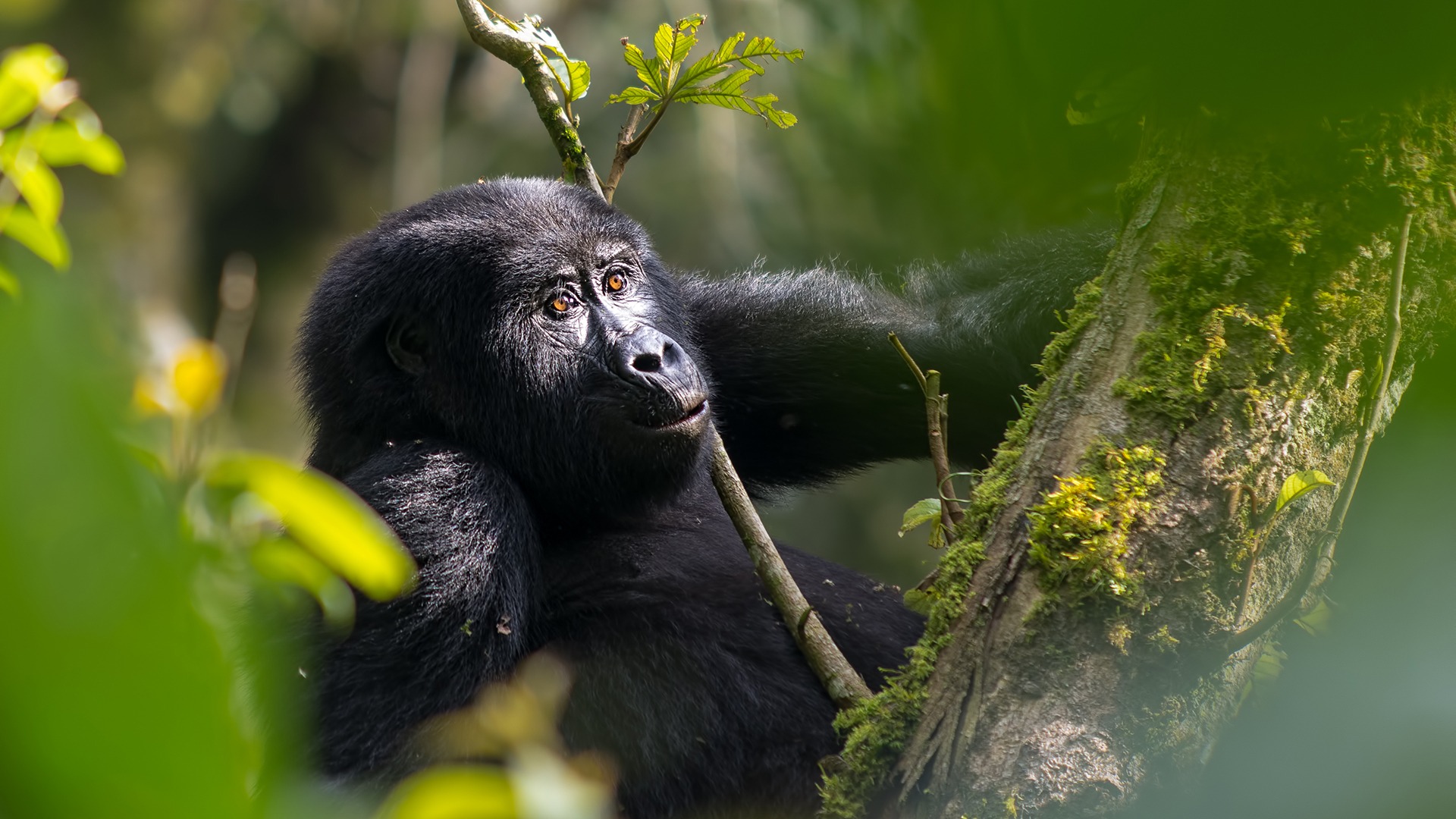
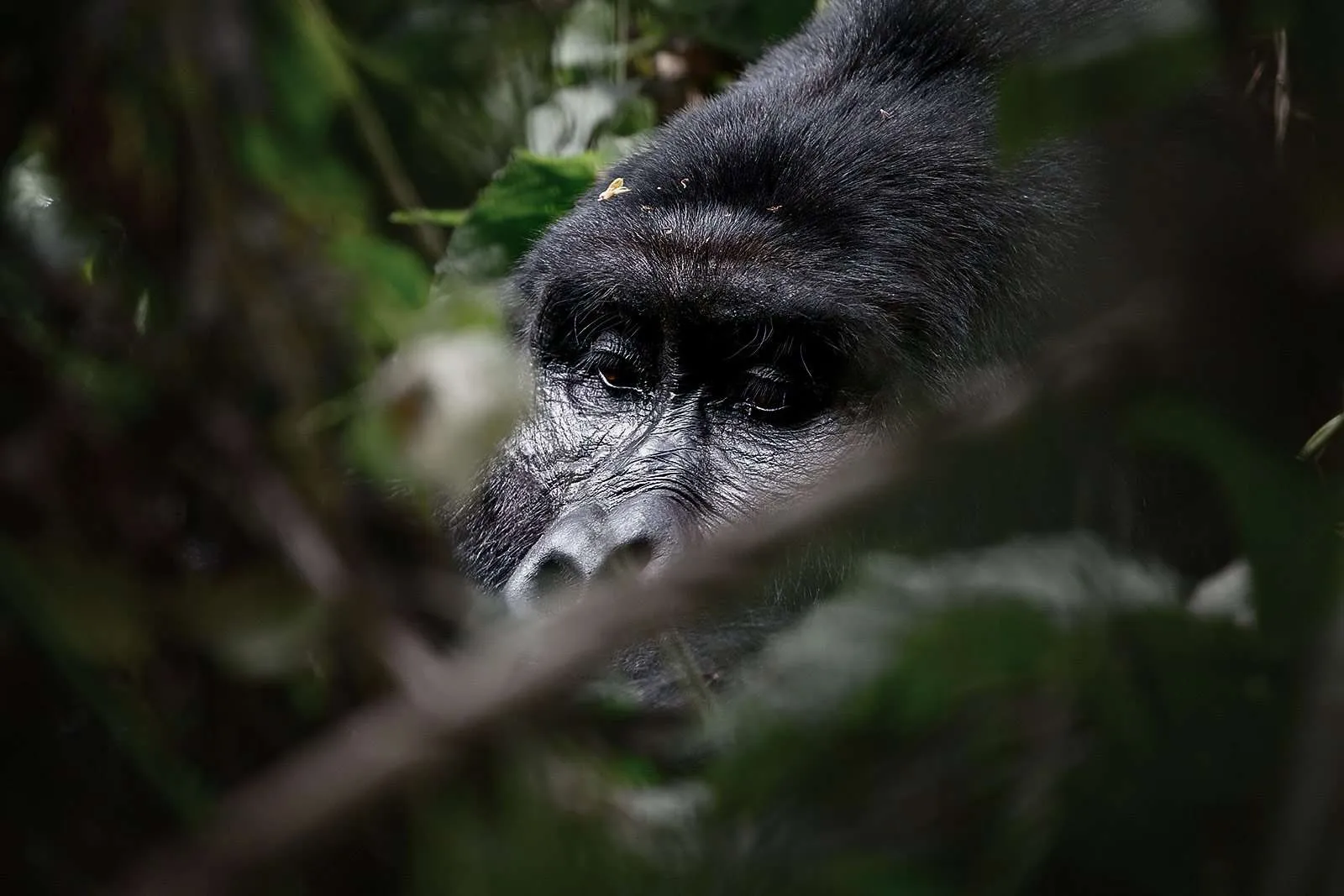
Mountain gorillas are one of the two subspecies of the eastern gorilla (the other being Grauer’s gorilla) and one of the world’s largest living great apes. These primates are robust and powerful, with muscular arms, a thick and massive chest, a protruding abdomen, and broad hands and feet. They have longer hair and shorter arms, which contrasts with those of their lowland cousins, while their thick black hair acts as insulation, helping them live in colder environments. The face features large nostrils, small ears, and prominent brow ridges on a hairless, black skin surface. Each individual has a unique nose print by which they can be identified.
Adult males are called silverbacks because a saddle of gray or silver hair develops on the lower part of the back as they age. The hair on their backs is shorter than on most parts of the body, while their arm hair is especially long. They typically weigh between 135 and 275 kg (300 to 600 lbs), making them roughly twice as heavy as adult females, which typically weigh between 70 and 100 kg (150 to 220 lbs). A silverback can reach an average height of 1.7 m (5.6 ft), with an arm span of 2.3 m (7.5 ft), while an adult female typically reaches an average height of 1.5 m (4.9 ft). Both sexes may grow quite fat and hence become much heavier if kept in captivity.
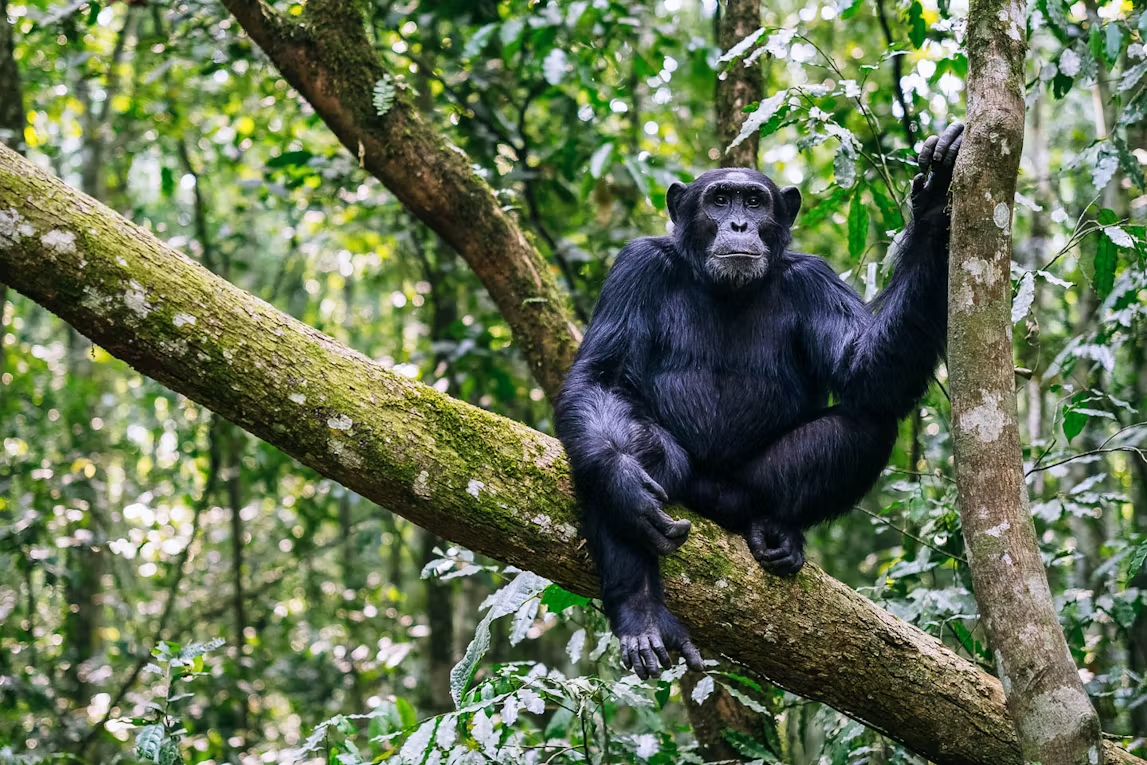
Mountain gorillas are primarily terrestrial and quadrupedal—they move on the ground using all four of their limbs, but can also walk on two feet. They move by knuckle-walking, supporting their weight on the backs of their curved fingers rather than their palms. They can also climb fruiting trees and even swing if the branches can carry their weight.
Social Structure and Behaviour
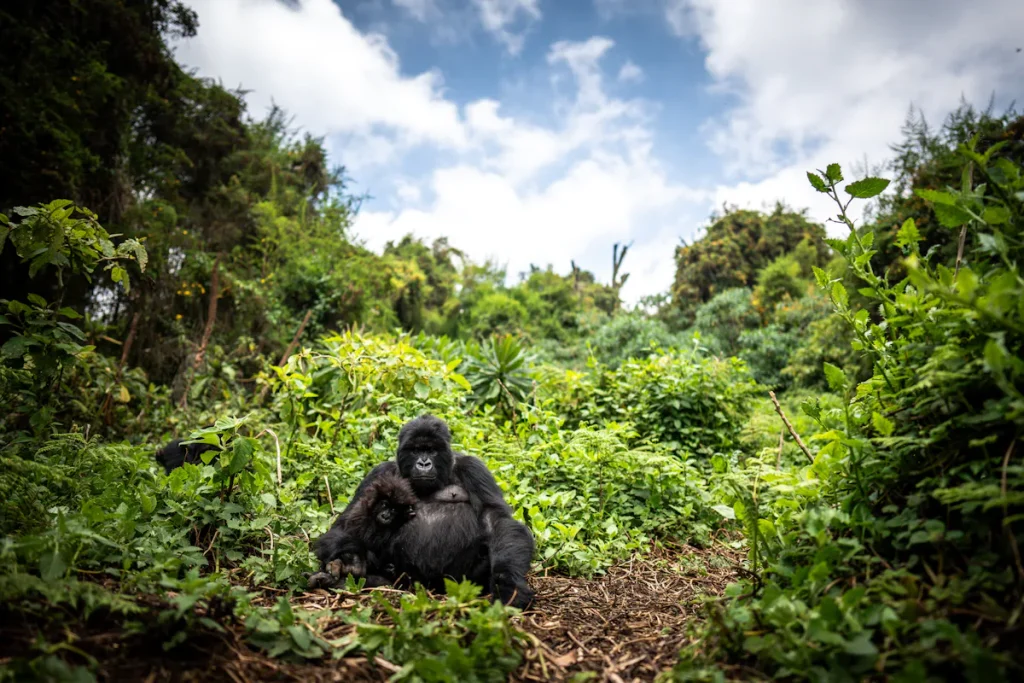
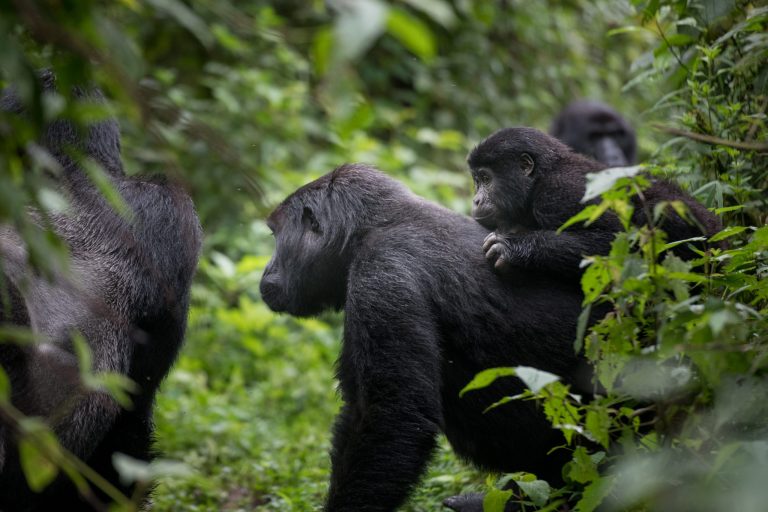
Mountain gorillas are incredibly social creatures, generally living in family groups of up to 30 individuals led by one dominant silverback. The group consists of a dominant male, several adult females, young ones of various ages and occasionally subordinate males (blackbacks). The dominant silverback is typically in charge of coordinating when the group eats, rests and moves around their home range. This organization and complex, evolved social order highlight the extraordinary intelligence of these majestic creatures. The Mountain gorilla is a close living relative to humans, with chimpanzees and bonobos being the closest.
These incredible creatures usually forage in the early morning, rest during the late morning and around midday, and forage again in the afternoon before resting at night. Each gorilla builds a fresh, circular sleeping nest from surrounding branches, leaves, and grasses, constructing a new one every single evening. Only infants share the same nest with their mothers. They leave the nests when the sun rises at around 6 am, except when it is cold and overcast; then they often stay longer.
Diet
Mountain gorillas are largely herbivorous. As diurnal creatures, they spend most of the day eating large quantities of shoots, fruit, leaves and bark needed to sustain their massive size. These great apes can eat as much as 18 kg (40 lb) of vegetation each day. They do not drink much water because they get most of their hydration from their constant consumption of vegetation as well as morning dew.
Reproduction
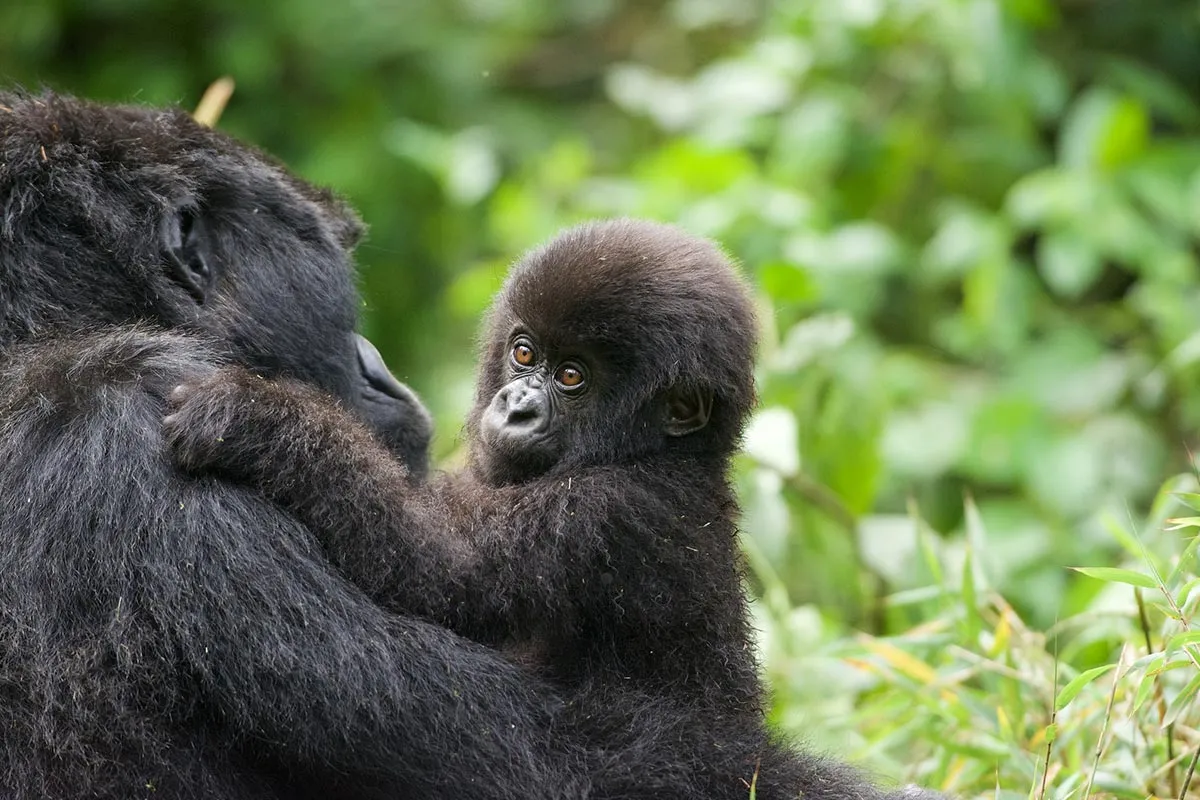
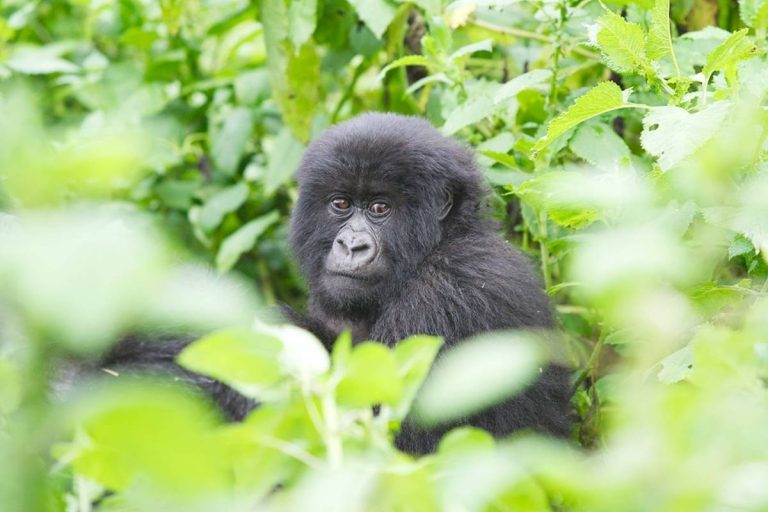
With a gestation period of nearly nine months, female gorillas give birth to one infant at an interval of 4 to 6 years. Newborns are tiny—weighing four pounds—and able only to cling to their mothers’ fur for about three months. Young gorillas remain dependent on their mothers for up to three years. Much of their day (juveniles) is spent in playing, climbing trees, chasing one another, and swinging from branches.
Lifespan
Mountain gorillas typically live an average of 35 to 40 years in the wild, with some exceptional individuals reaching their mid-40s or up to 50 years under favorable conditions. As they approach 35 or older, they show signs of aging, such as reduced mobility, arthritis, and tooth loss that can make eating difficult.
Habitat and Distribution
As their name suggests, mountain gorillas live in misty mountainous areas at elevations between 8,000 and 13,000 feet. There are an estimated 1,063 mountain gorillas remaining on earth, and about half live in Uganda’s Bwindi Impenetrable Forest, while the other half live across the Virunga mountains, spanning Volcanoes National Park in Rwanda, Virunga National Park in the Democratic Republic of the Congo (DRC), and Mgahinga Gorilla National Park in Uganda.
Threats and Conservation
Mountain gorillas have faced near extinction for many years due to continued habitat loss as a result of human encroachment on the lush mountainsides where they primarily live. This encroachment includes poaching and activities such as farming, grazing, logging, and, recently, habitat destruction by refugees. However, the development of ecotourism which allows travelers to see these gentle creatures in their natural habitat, alongside the involvement of governments and NGOs like the Dian Fossey Gorilla Fund and WWF, has greatly contributed to the conservation of mountain gorillas, leading to their population growth.
Mountain gorillas were classified as critically endangered on the IUCN Red List of Endangered Species until 2018 when they were recategorized as endangered.
Sample Gorilla Trips
5 DAYS
Luxury Gorilla Trekking Rwanda Safari
Destinations: Volcanoes
- Enjoy unforgettable gorilla trekking, dramatic landscapes and visiting Ellen DeGeneres Campus to learn gorilla conservation
6 DAYS
Uganda Gorilla Trekking & Walking Safari
Destinations: Bwindi Impenetrable
- Immerse yourself in the world of mountain gorillas and enjoy a guided hike through villages and lush terraced gardens of Bwindi
