
Wildebeest Migration Masai Mara
Wildebeest Migration in Masai Mara
The Masai Mara Great Wildebeest Migration: The grass is always greener on the other side – so, it is for the wildebeest migration in Masai Mara. Every year, millions of ungulates can be seen traversing the golden landscape of the Serengeti-Mara ecosystem in what is known as the race of life. Here’s a look at one of the world’s most iconic safari must-see experiences.
What is the Wildebeest Migration in Masai Mara
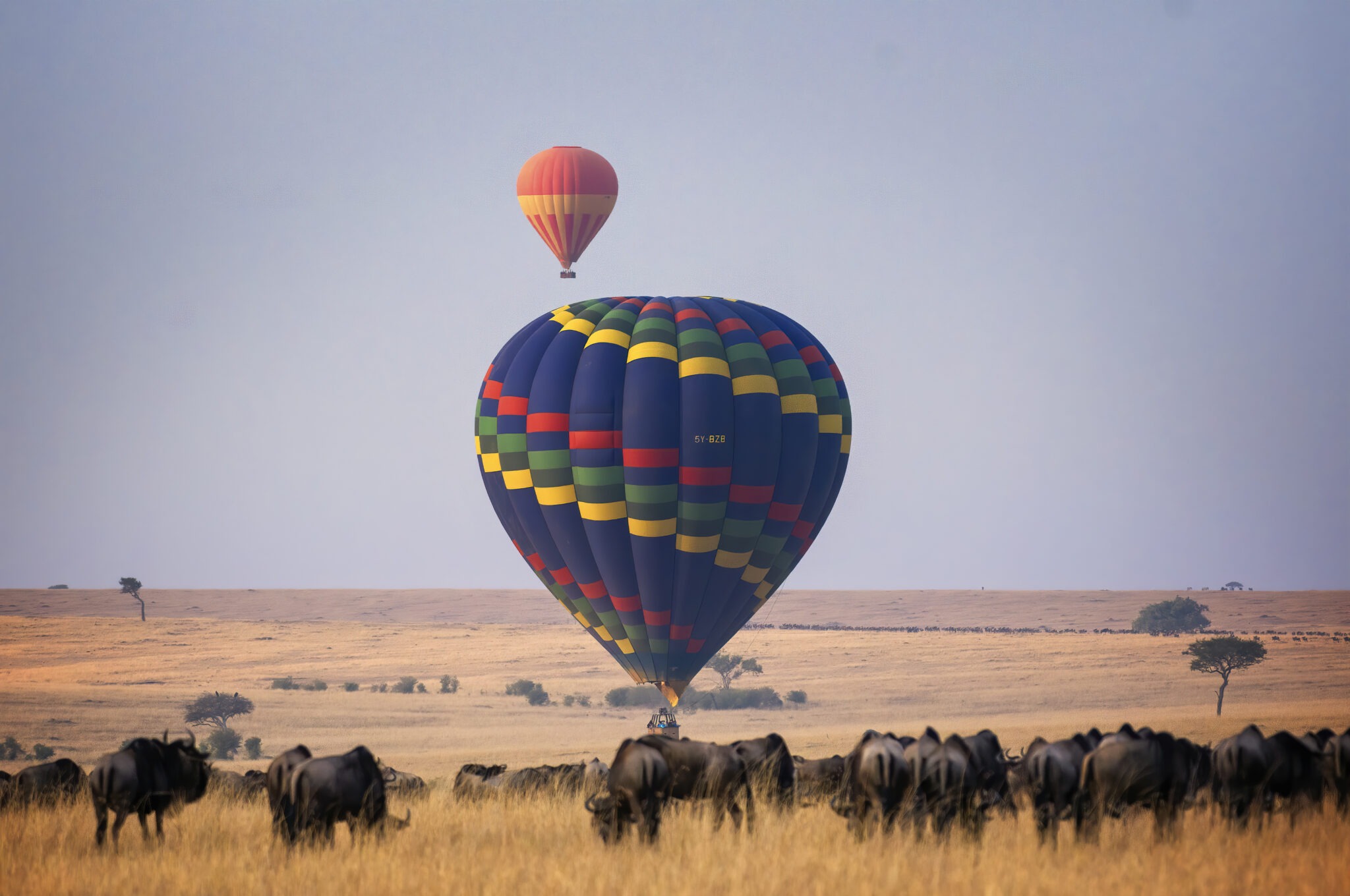
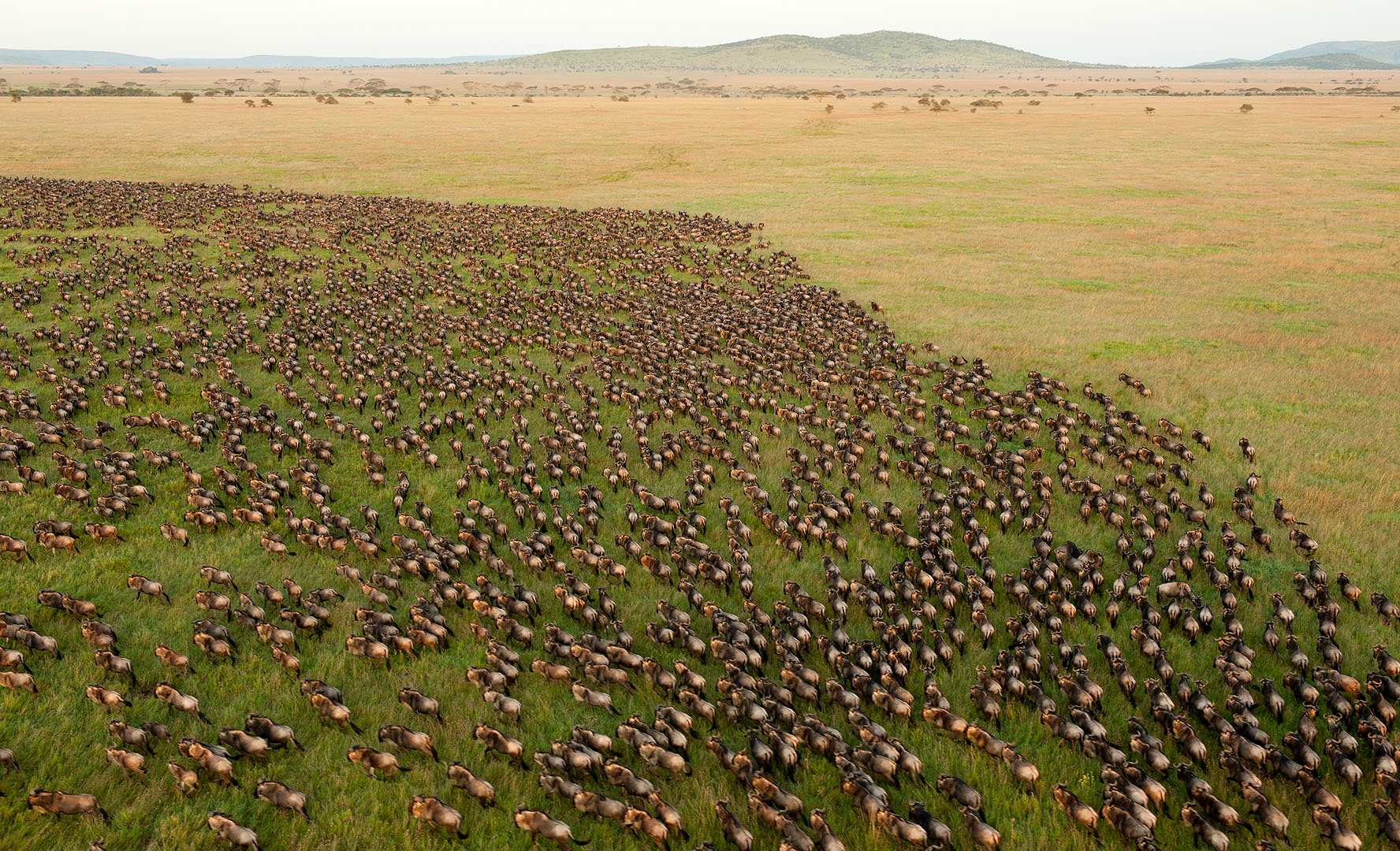
The Wildebeest Migration or the great migration is the annual movement of over two million wildebeest, zebra and other herbivores from Serengeti in Tanzania to the Masai Mara in Kenya in search of fresh lush pastures. It is one of the world’s most spectacular wildlife displays and one of the seven wonders of the world.
How The Story Unfolds Each Year
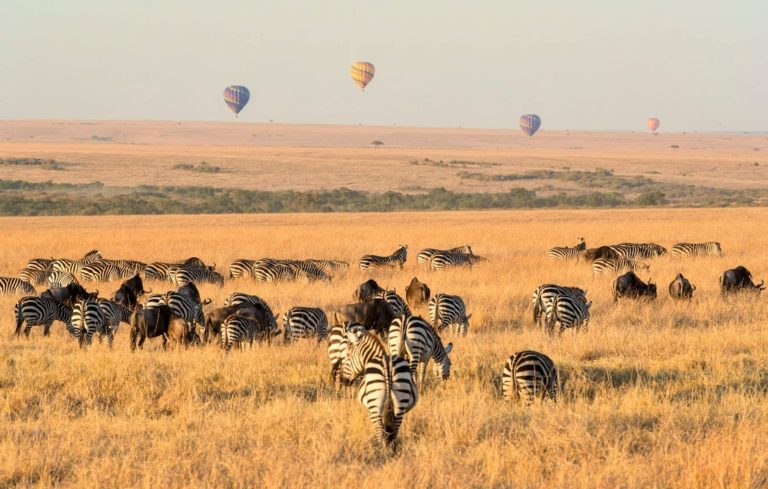
In this natural spectacle, columns of wildebeest can be seen from space. The numbers are overwhelming – over 1.5 million wildebeest, 400,000 zebra, 12,000 eland and 500,000 Grant’s and Thomson’s gazelles as well as other herbivores move northwards from southern Serengeti into the adjoining Masai Mara.
Guided by survival instinct, the herds cover 800 to 1,000 kilometers in a clockwise loop (nonstop travel) along the age-old migration routes every year in search of fresh, nutritious grass and water. They follow the climatic rain fall patterns, thanks to their ability to detect rain 50km away. For they are aware that wherever there’s rain, there’s food!
The wildebeest herds spend most of the cycle in the Serengeti, covering vast areas reaching the south, central and west before arriving at the bountiful plains of the Masai Mara around July to August. By around late October, they begin their southward trek to the Serengeti–this is less spectacular and more like a slow dispersal.
The Drama of the River Crossings
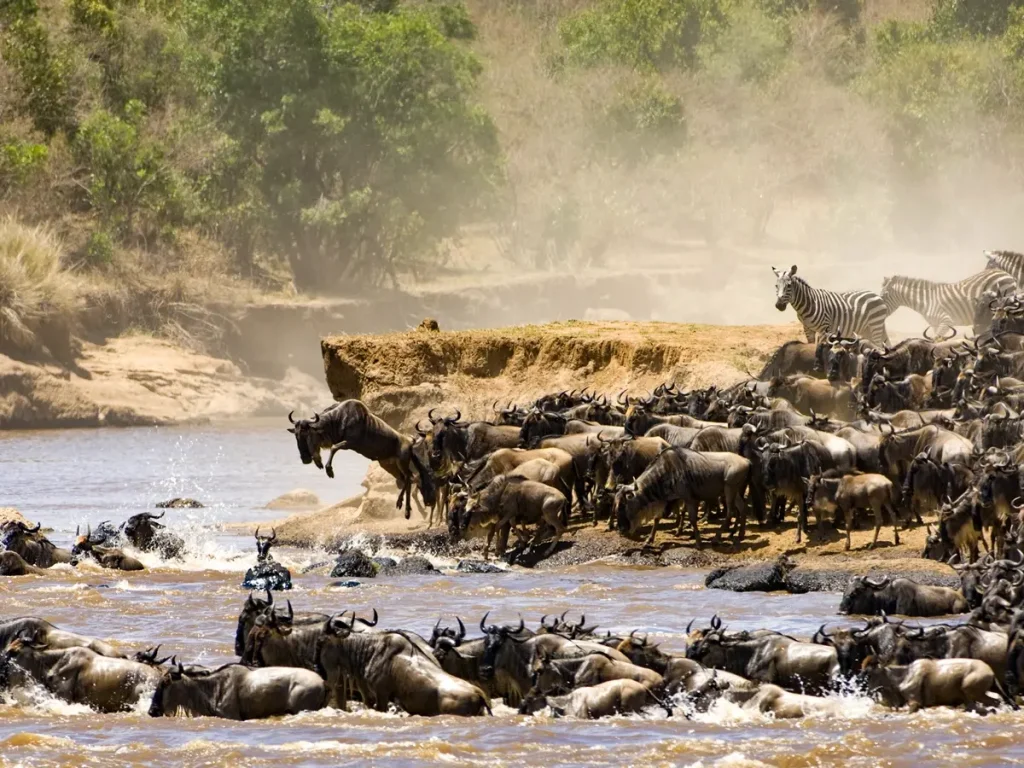
Great Wildebeest Migration Mara River Crossings
The great wildebeest migration involves dramatic river crossings where the herds must plunge into the crocodile-infested Mara and Talek rivers to reach Masai Mara. Beset with danger, hungry predators including lion, leopard, cheetah, hyena, wild dog and crocs make sure only the strongest survive.
New-born calves are snatched, the slow are brought down by lion prides, the brave break legs on the steep river banks, crocodiles take their share of the stragglers, and the weak and exhausted drown, making the great wildebeest migration one of the world’s most dramatic natural spectacles.
Why see the Great Migration in Masai Mara?
Witnessing the Great Wildebeest Migration in Masai Mara National Reserve (July to October) offers front-row seats to one of the world’s most dramatic wildlife spectacles. Here’s why you should see the Great Wildebeest Migration in Masai Mara.
- Dramatic river crossings (July and October): The perilous Mara River crossing is one of the most dramatic highlights of the great migration. Thousands of wildebeest brave strong currents and lurking crocodiles.
- Predator activity: The abundance of predators and the influx of prey transform the Masai Mara into the centre stage for sighting predator-prey interactions. You’ll be seeing predators like lions, leopards, cheetahs, and hyenas in action.
- The massive concentration of animals in Masai Mara during the migration offers denser wildlife viewing.
When to expect the wildebeest Migration in Masai Mara
While the great wildebeest migration typically starts arriving in the Masai Mara in July and ends in late September, the exact dates around this period cannot be predicted until the first large wildebeest herds actually gather at the northern edge of the Serengeti as they approach the Mara.
The first arrivals are sometimes known to gather at a specific spot for hours or days without crossing. Obviously, there is no way to know for certain that the herds will arrive and cross the river during a particular period of time. However, the Masai Mara has plenty of wildlife visitors can spot all year round.
July to October are the busiest months in the Masai Mara. With a high influx of visitors to witness the migration, you won’t have the herds all to yourself during these months as you may have to queue up during safari game drives to have the best views. For a quieter stay and best experience during this period, we recommend staying in one of the Masai Mara conservancies.
Best time to see the Masai Mara Wildebeest Migration
August is the best time to see the wildebeest migration in Masai Mara, when the herds begin to gather on the banks of the Mara River. The migration is a gradual event that takes places over several weeks at different locations along the Serengeti-Masai Mara border.
August, often considered the peak month, provides one of the best views with the highest probability of witnessing the heart-stopping Mara River crossings.
Sample wildebeest migration safaris
5 DAYS
Masai Mara Wildebeest Migration Safari
Destinations: Kenya
- Experience the famous wildebeest migration in the Masai Mara
- Enjoy multiple game drives in one of Africa’s best-known wildlife reserves

11 DAYS
Kenya Migration and Manda Bay Safari
Destinations: Masai Mara and Lamu
- Witness the famous wildebeest migration in one of Africa’s best-known wildlife reserves
- Barefoot beach luxury
