



Wildebeest Migration Calving Season
The Wildebeest Migration Calving Season: Great Migration’s Season of Abundance in Southern Serengeti and Ndutu Region.
Wildebeest Migration Calving Season
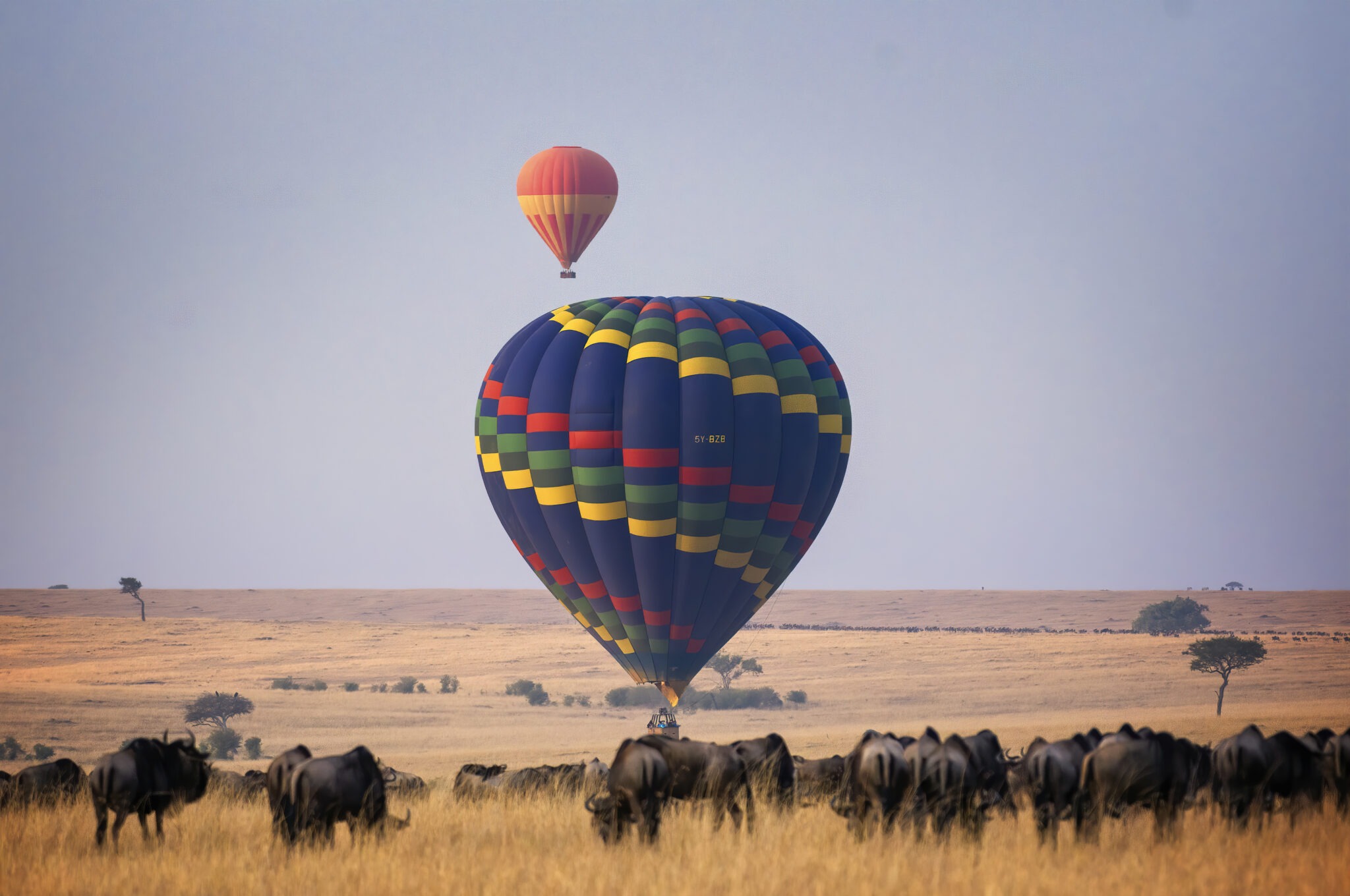
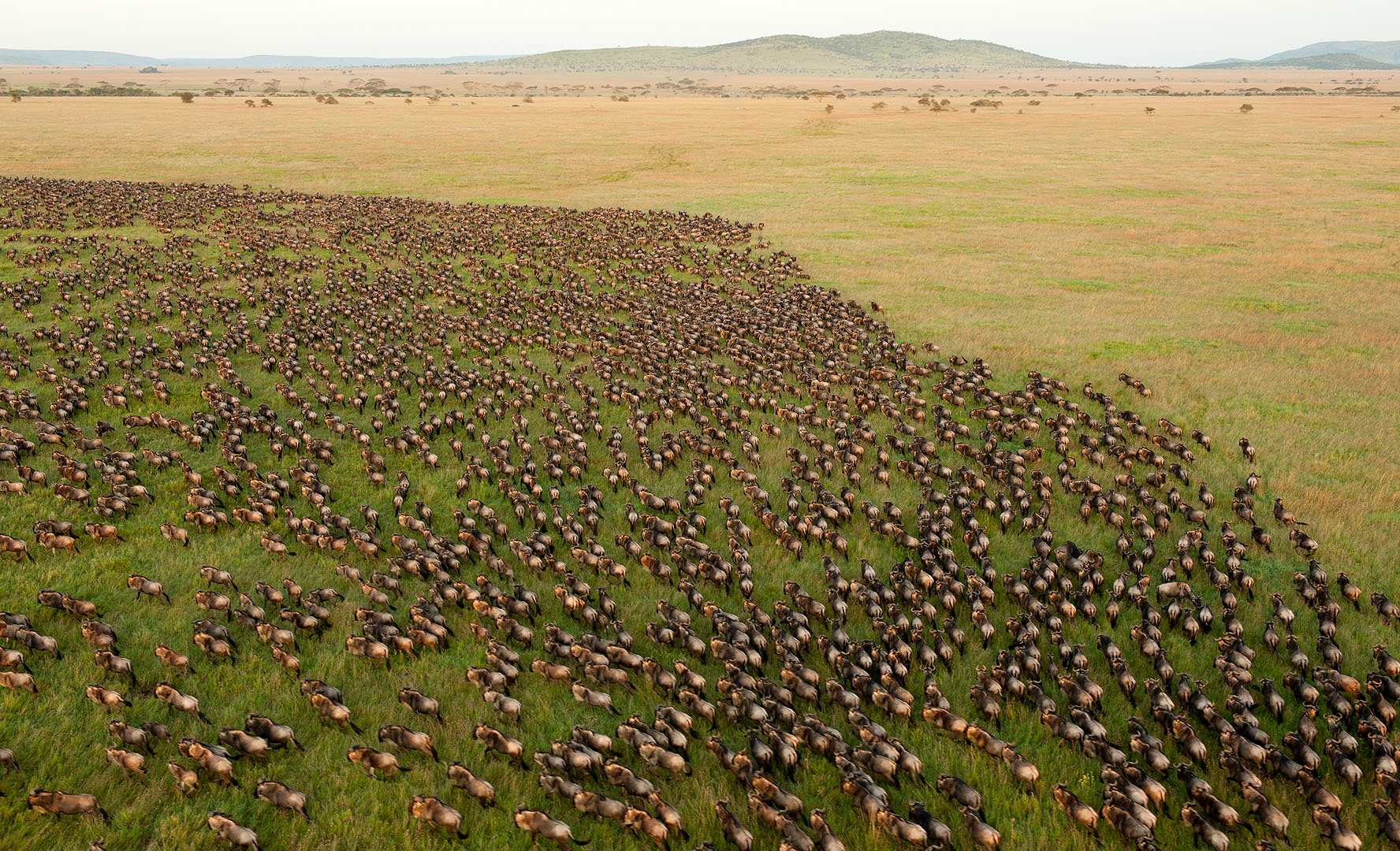
The Great Wildebeest Migration is a natural phenomenon where over 1.5 million wildebeest, 250,000 zebra and other herbivores travel over a 500-mile continuous ground trek from southern Serengeti in Tanzania to Masai Mara in Kenya every year for fresh and nutritious grass.
Driven by seasonal rains, the herds must make their way through the dry, golden-colored landscape, rough valleys and dangerous predator-infested territories, bravely and steadfastly crossing the crocodile-infested Mara and Grumeti Rivers.
The result is high drama as thousands are taken by lions, hyenas, leopards and crocodiles and thousands more are born, replenishing the numbers and sustaining the circle of life. Most of the cycle is spent in the vastly larger Serengeti than in the Masai Mara.
While the dramatic river crossings are a thrilling highlight of any wildebeest migration safari, there is another lesser-known but critical event that marks the journey across the Serengeti-Mara ecosystem—the wildebeest migration calving season.
What is the Wildebeest Migration Calving Season?
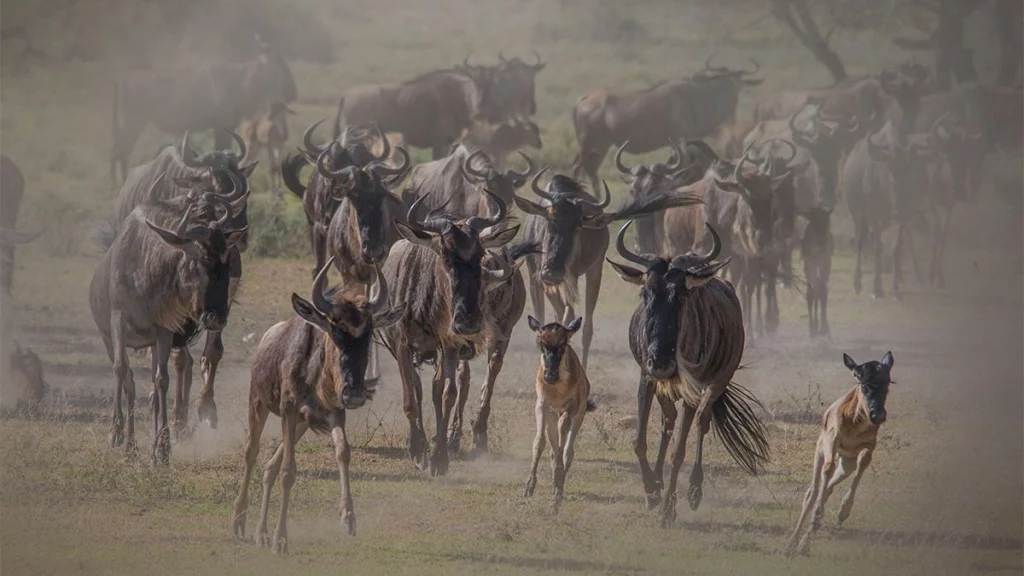
Wildebeest Calving
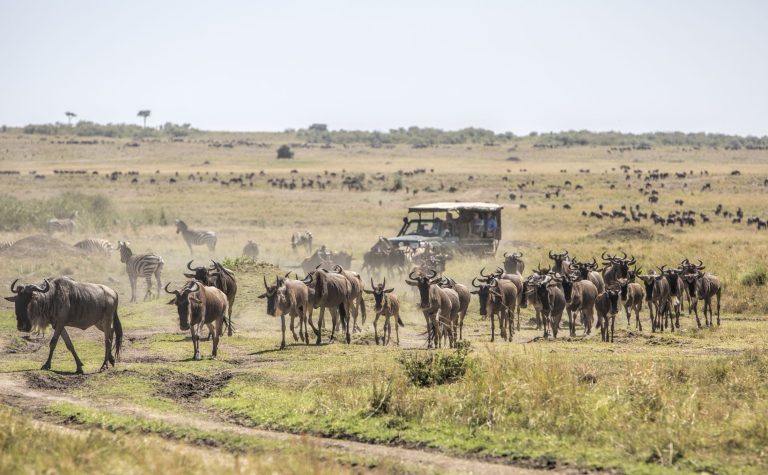
The Great wildebeest migration calving season is when about half a million (500,000) wildebeest calves are born, roughly 8,000 every day. It occurs annually between January and March in the southern Serengeti and around the Ndutu region in the Ngorongoro Conservation Area, where wildebeest flock.
February is the peak period and the best time to visit the Serengeti for the wildebeest migration calving. The wildebeest calves grow in height and weight, huddling and trotting together with the adult wildebeest on an epic quest to feed on the freshest yet nutritious greens of the season.
Understanding the Wildebeest Migration Cycle and the Calving Season
The wildebeest calving season is considered the beginning of the migration cycle and a time when a new generation of grazers is born.
Between January and March, the Serengeti and the Ngorongoro conservation area come to life with lush green, calcium-rich grass. This attracts a million wildebeest from the north in Masai Mara to the south in Serengeti and as far south as the Ngorongoro (though not quite into the Crater itself) to calve.
The short savanna grassland makes it easy for the herds to protect their newborns from predators, making it the perfect place for them to give birth. They spread across the verdant plains to feast on the fresh grasses that spring up after the short rains between October and December.
From there, the circuit takes the grazers north, crossing the Serengeti plains and the Maswa Game Reserve (others split and go through Central Serengeti) to the Grumeti Reserves in the Western Corridor and all the way arriving in the Northern Serengeti by May and June with the calves grown and ready to conquer the challenges of river crossing.
By July, the herds congregate in the Lamai region along the Mara River, straddling the Kenya-Tanzania border, where perilous river crossings peak in August and diminish by the end of September or mid-October. The herds cross into Masai Mara in Kenya for the well-watered plains (although not all fully cross but linger along the river’s edge).
Between October and December, the southern rains begin and the herds start their return journey to the south via the Central Serengeti and the Loliondo Game Controlled Area on the park’s eastern boundary, arriving by January, ready to begin the cycle again.
While the Southern Serengeti is the calving ground for the wildebeest with the perfect environment, the Masai Mara is considered the mating ground of the ungulates. Although the herds follow the age-old migration route, the exact timing of the journey varies based on seasonal rainfall patterns and the need to follow their inner compass.
Sample Wildebeest Migration Safaris
11 DAYS
Tanzania Migration and Zanzibar Safari
Destinations: Tanzania
- Excellent wildlife viewing including the Big Five and wildebeest migration
- Barefoot beach luxury
8 DAYS
Affordable Northern Tanzania Safari
Destinations: Serengeti and Ngorongoro Crater
- Witness the Great Wildebeest Migration
- Explore the Serengeti on foot
