
A guide to Hell’s Gate National Park featuring wildlife, attractions, things to do, best time to visit and how to get there.
Located south of Lake Naivasha in the district of Nakuru, roughly 90 kilometers (56 miles) northwest of Nairobi, Hell’s Gate National Park is a remarkable section of the Great Rift Valley. It spans just 68 sq. km, offering more than its small size suggests with a varied range of wildlife.
Established in 1984, Hell’s Gate National Park derives its name from a narrow opening in the cliffs, once a tributary of a prehistoric lake. Its dramatic scenery, featuring the Ol Jorowa Gorge, Fischer’s Tower, volcanic landscapes, and intense geothermal activity, makes it one of the most atmospheric yet spectacular safari parks in Kenya.
Hell’s Gate National Park is an ideal venue for day trips from Nairobi due to its proximity to the capital and excellent road network. It offers a wide range of activities, including rock climbing, cycling, hiking, and visiting the Olkaria Geothermal Spa.
Hell’s Gate features three basic campsites and a Maasai Cultural Center dedicated to teaching Maasai culture and traditions. Unlike the Masai Mara, do not expect an intense game drive; this is not a place for seeing wildlife drama or the Big Five. Rather, it is an ideal destination for activity-based, on-the-ground wilderness adventures.
Wildlife in Hell’s Gate National Park
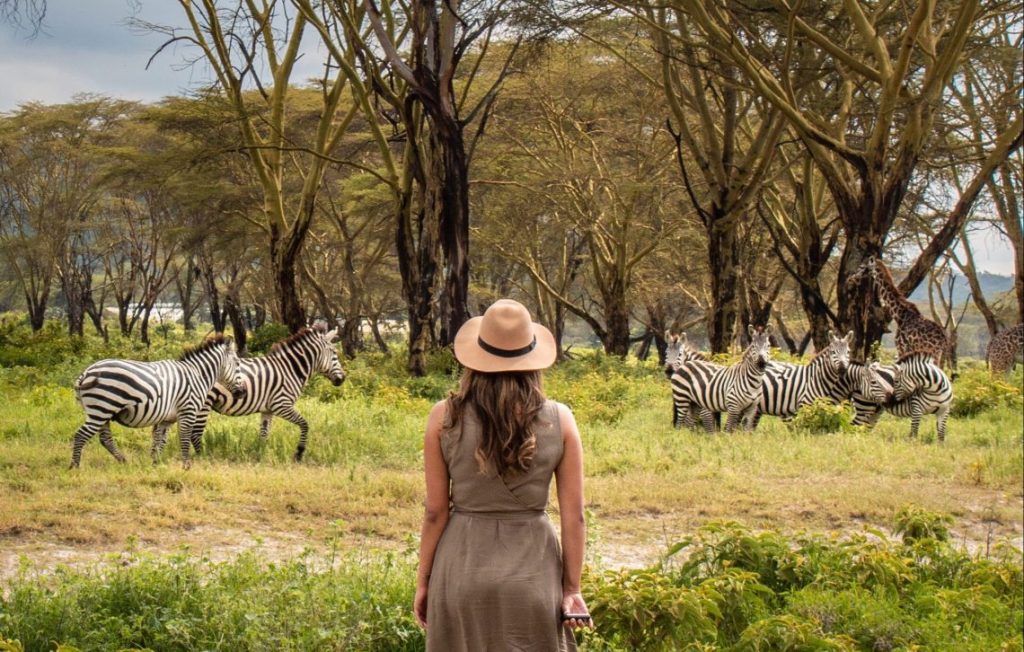
Hell’s Gate National Park is home to buffalo, hartebeest, eland, Thomson’s gazelles, zebras, giraffes, Chandler’s mountain reedbucks, Klipspringer antelopes, warthogs, hyenas, hyraxes, baboons, and servals. The park hosts more than 103 species of birds, including augur buzzards, vultures, swifts, and Verreaux’s eagles.
With no lions and few large predators, visitors are free to roam on foot or by bike, making it one of the most interactive protected areas in Africa.
Activities in Hell’s Gate National Park
- Rock climbing: The park is a great choice for climbing enthusiasts, with a variety of climbing routes that suit every experience level, such as the prominent Fischer’s Tower.
- Hiking and trekking: Visitors can follow several trails as they freely roam the park on foot, surrounded by zebras, giraffes, and the best of Kenya’s plains game.
- Biking: Visitors can take a half-day scenic ride through the park’s biggest attractions, including volcanic plugs, lookouts, and wildlife, an excursion best begun early before it gets too hot
- Olkaria Geothermal Spa: A series of three geothermal pools located on the northern tip of the park.
- Bird Watching and Wildlife Viewing
- Maasai Cultural Tours
- Photography and Sightseeing
Trips to the nearby Crescent Island and Lakes Naivasha and Nakuru are special arrangements unless they are part of your safari package.
Best time to visit Hell’s Gate National Park
The best time to visit Hell’s Gate National Park is during the dry season from June to October which offers ideal hiking and cycling conditions, while sparse vegetation makes wildlife easier to spot. Despite the heavy rains of the wet season months (March, April and May), the park is open and can be visited throughout the year.
Getting to Hell’s Gate National Park
After landing at Jomo Kenyatta International Airport (NBO), take the A104 road from Nairobi towards Naivasha for roughly 90-100km, through the Rift Valley escarpment, then follow Moi South Lake Road to reach Elsa Gate 25KM in Hell’s Gate National Park. The trip takes roughly 2 to 2.5 hours.
There are daily flights to the Loldia airstrip on the western side of Naivasha.
Naivasha is a convenient stopover for those traveling between Nairobi and the Masai Mara. The distance from Naivasha to Masai Mara is 170 km (105 mi), and the driving time is about 3½ hours.
Accommodation in Hell’s Gate
Most people visit the park as a day trip from Lake Naivasha, as there are no lodges inside the park. Visitors can stay in accommodations on the outskirts or choose one of the three well-maintained campsites.
Sample Trips
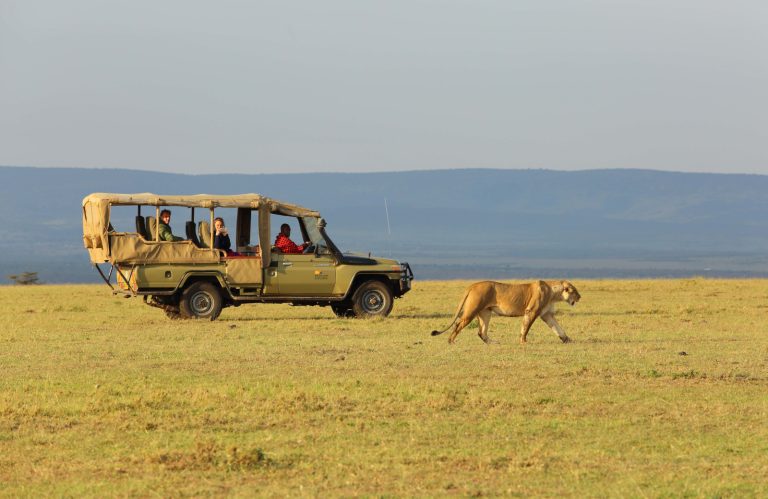
3 DAYS
Wildlife (Big Five) Safari
Destinations: Masai Mara, Kenya
- Intimate and exclusive wildlife viewing and wildebeest migration experiences
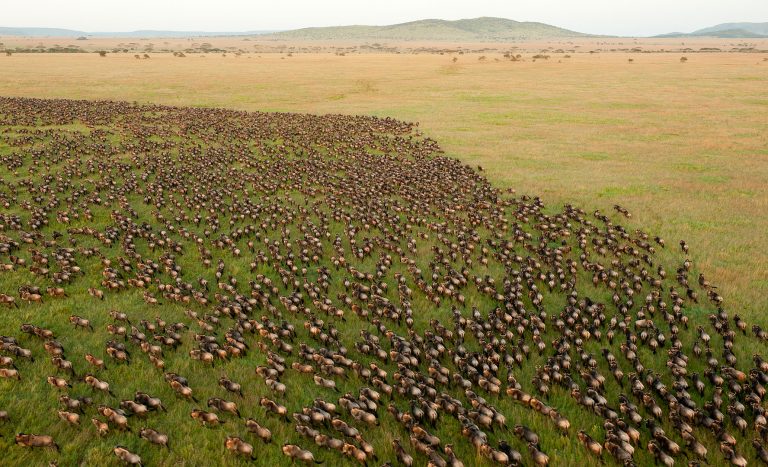
7 DAYS
Kenya and Uganda Safari
Destinations: Bwindi Impenetrable Forest and Masai Mara
- Intimate and exclusive gorilla trekking and wildebeest migration experiences
