
Tsavo West National Park
Famous for its dramatic landscapes featuring lava flows and the unique Mzima Springs and maneless man-eating lions, Tsavo West National Park offers unforgettable wildlife safaris across one of Kenya’s most visually striking landscapes, making it an ideal destination for any Kenya safari.
Tsavo West National Park is located in south eastern Kenya, stretching across 9,065 km² (3,500 sq mi) in Taita-Taveta County. Tsavo West, combined with Tsavo East which covers 13,747 km², forms the wider Tsavo Conservation Area which spans a staggering 22,000 km².
Tsavo West and Tsavo East were once a single mega-park, but were separated decades ago by the Nairobi-Mombasa highway and they feel like quite distinct national parks with different ecosystems. Although somewhat smaller than its sister national park, Tsavo West stands out as one of Kenya’s magical safari destinations, thanks to its incredible wildlife and few crowds.
Wildlife in Tsavo West National Park
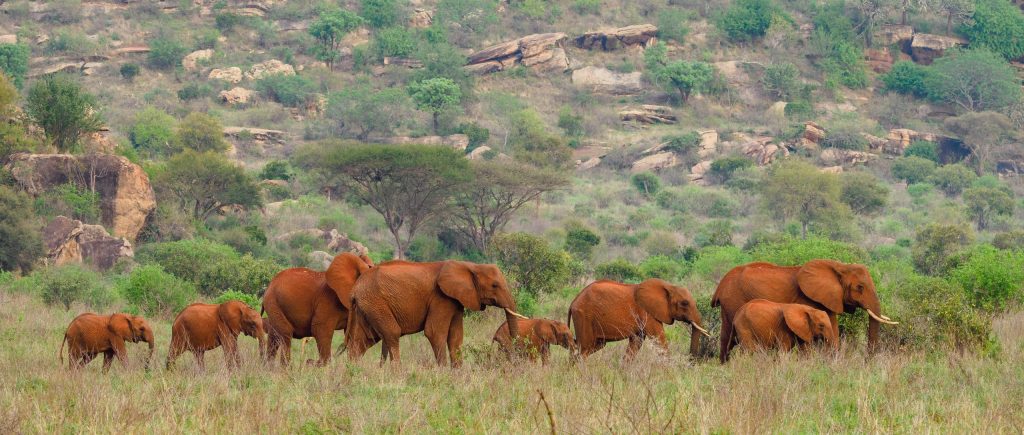
Red elephants in Tsavo West National Park
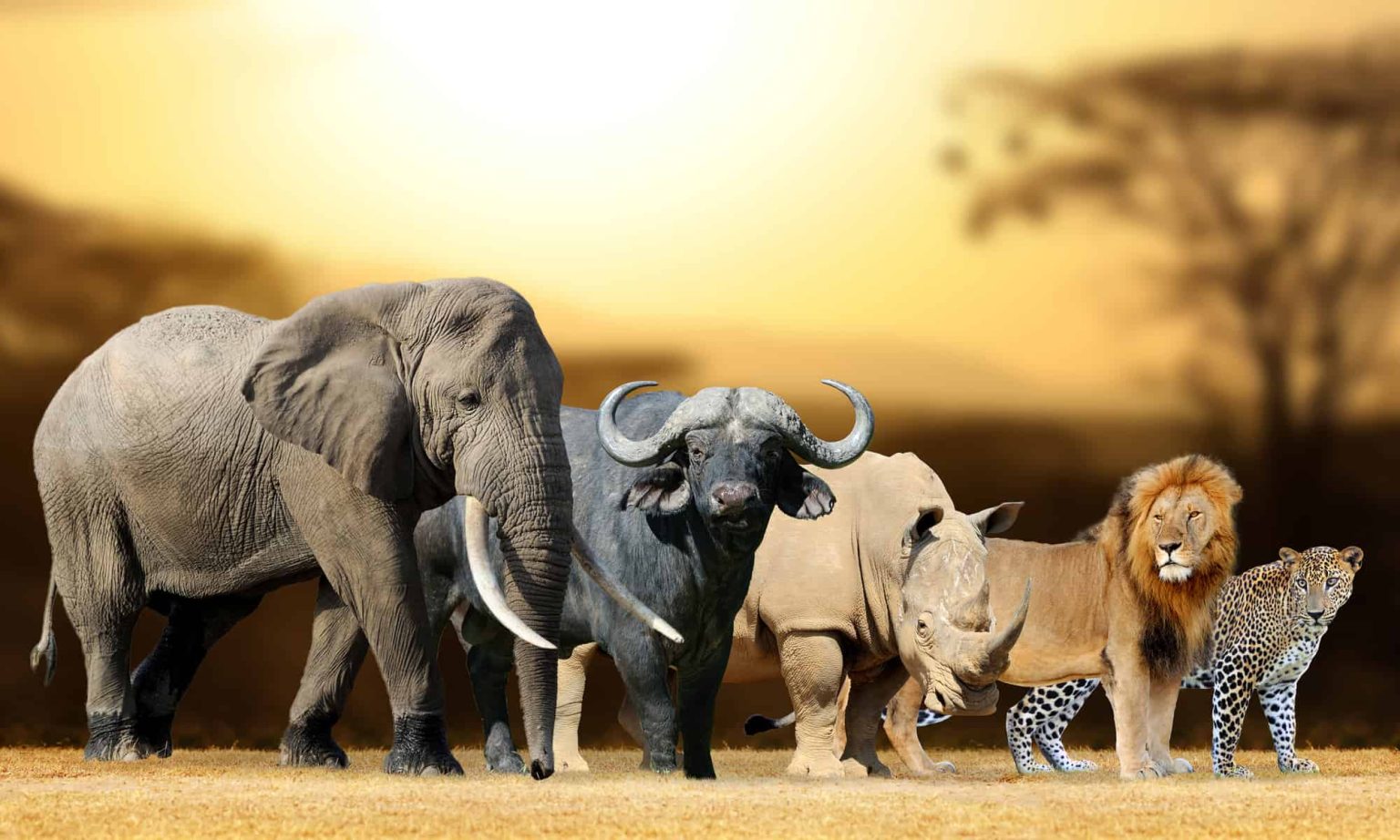
Tsavo West National Park is home to the Big Five and particularly its large herds of dust-coated ‘red elephants’ and unique black rhinos. It also supports thriving populations of cheetahs, spotted hyenas and the last remaining population of Hirola antelopes in Kenya. Other species include Maasai giraffes, Burchell’s zebras, gerenuk, elands, impalas, lesser kudus, waterbucks, wildebeests, warthogs, hippos, and crocodiles.
Over 400 bird species have been recorded, making the park a birdwatcher’s paradise. Some of the birds include the corncrake, Basra reed warbler and secretary bird.
Scenery in Tsavo West National Park
Tsavo West National Park features dramatic volcanic landscapes defined by open grasslands, scrublands, riverine and acacia woods, volcanic cones and striking black lava flows, creating a visually rich setting ideal for immersive exploration. Visitors are greeted by Lake Jipe, the Mzima Springs—a striking feature of the park—and the Tsavo River, which flows across the park from west to east.
Attractions in Tsavo West National Park
Major attractions in Tsavo West include:
1. Ngulia Rhino sanctuary
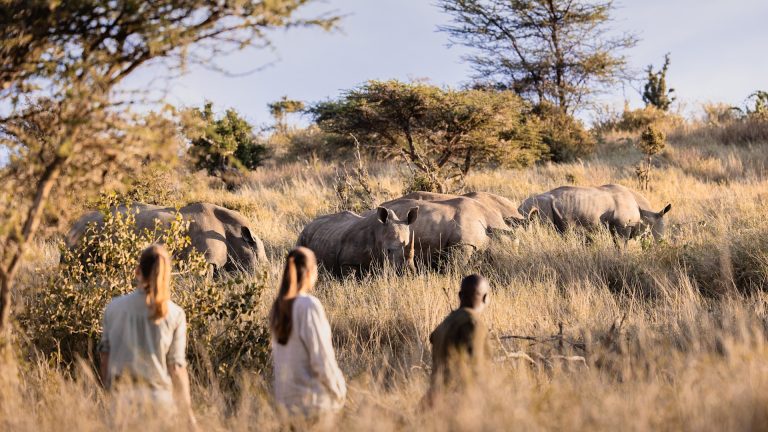
Located at the base of Ngulia Hills, this 92-square-kilometer conservation area is enclosed by a 1m-high electric fence to protect approximately 150 of its highly endangered black rhinos. Although the driving tracks and waterholes within the enclosed area can increase visibility, chances of seeing one are slim, as the rhinos are typically nocturnal.
These archaic creatures are breeding successfully, and around 15 have been released elsewhere in Tsavo West National Park.
2. Shetani lava flow
The spectacular Shetani lava flow is a vast, 50-square-kilometer expanse of jagged, folded jet-black volcanic rock extending across the savannah next to the Chyulu Hills. It is 4km west of Tsavo West’s Chyulu gate, on the road to Amboseli. The flows were formed as a result of an eruption around 200 to 500 years ago, and locals historically believed that the fire was the devil himself (Shetani means devil) emerging from the earth.
3. Mzima springs
Mzima Springs is one of the park’s most iconic features. This oasis of green produces an incredible 250 million litres of fresh, crystal-clear water from beneath parched lava rocks, forming lush pools that attract a wide variety of wildlife and birdlife.
Located in the west of the park, it comprises four springs, whose sources are a natural reservoir rising in the Chyulu Hills and provide the bulk of Mombasa’s fresh water. A walking trail leads along the shoreline to allow visitors to observe crocodiles and a wide variety of birdlife.
4. Poacher’s Lookout
Poacher’s Lookout and Roaring Rocks provides panoramic views of wildlife movement and park topography.
Activities in Tsavo West National Park
- Guided drives to lookout for wildlife
- Walking safaris as you explore the Mzima Springs .
- Hiking
- Tsavo West is a true birdwatchers’ paradise
- The park provides a natural stage for filmmaking and photography
Best time to visit
The best time to visit Tsavo West National Park is during the dry season from June to October and December to March. Vegetation is sparse and animals are drawn to water sources, making wildlife viewing excellent.
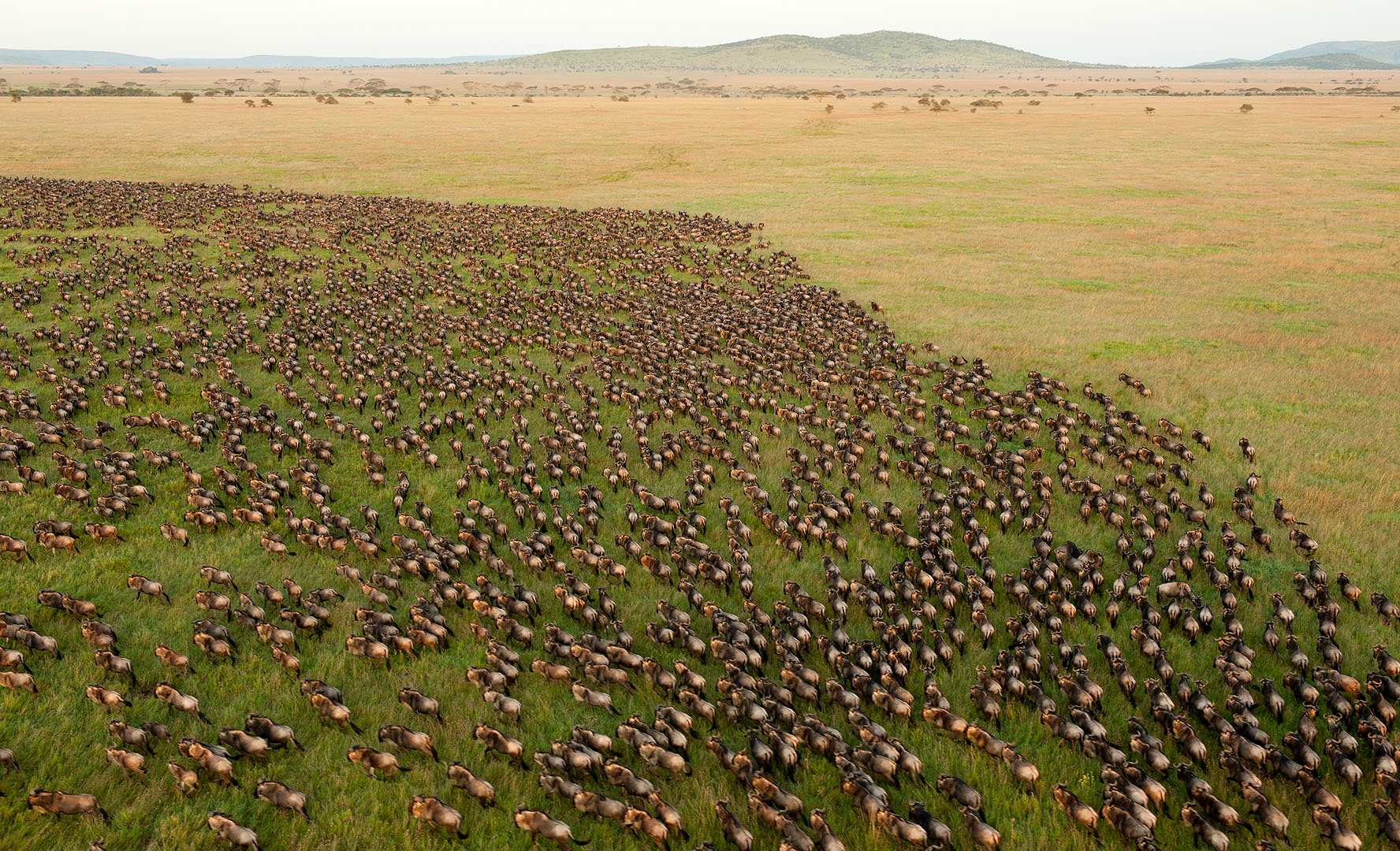
Sample wildebeest migration safaris
7 DAYS
Kenya and Uganda Safari
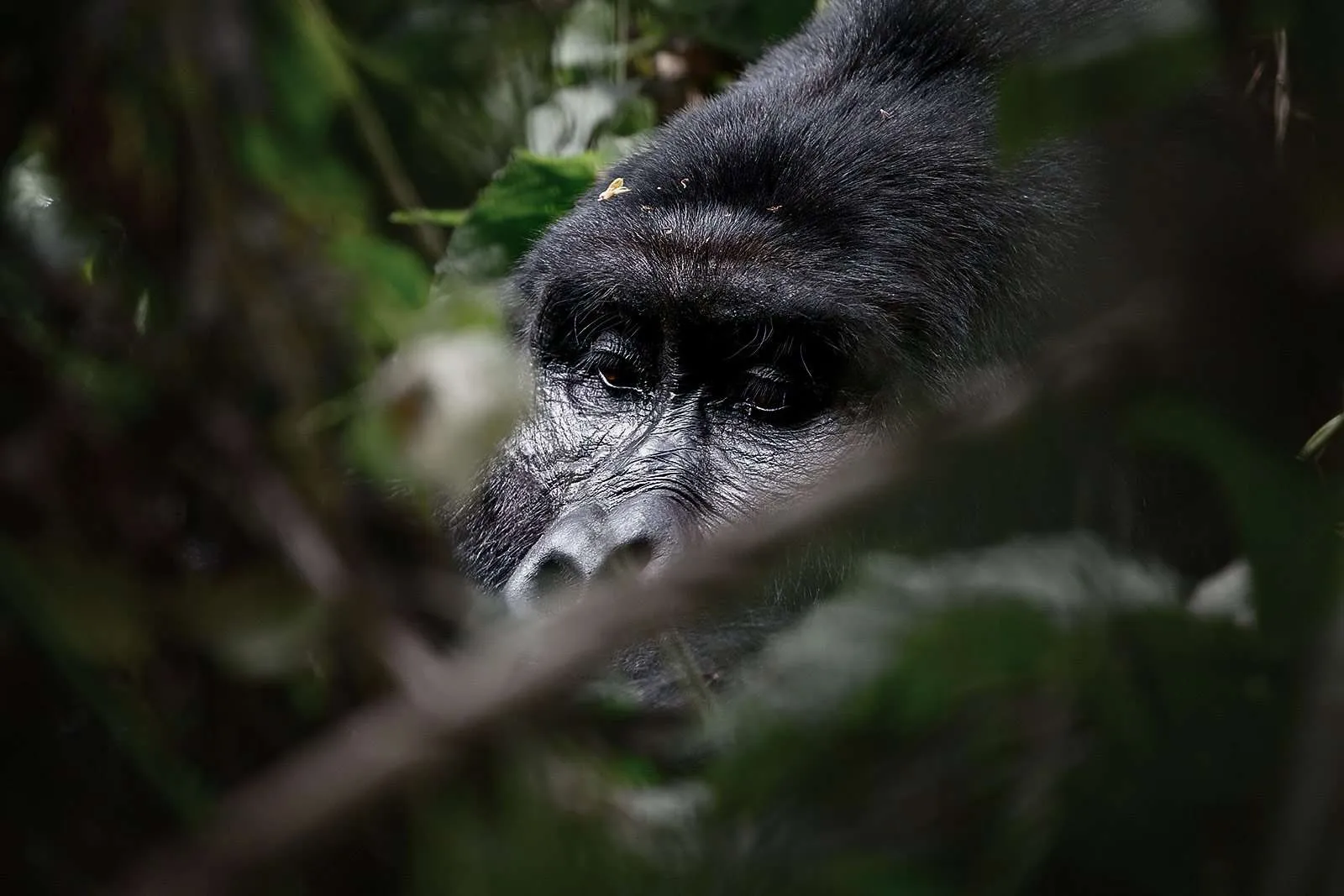
Destinations: Bwindi Impenetrable Forest and Masai Mara
- Intimate and exclusive gorilla trekking and wildebeest migration experiences
10 DAYS
Best of Kenya Safari in Private Conservancies
Destinations: Lewa, Namunyak and Naboisho
- Intimate and exclusive wildlife viewing


