
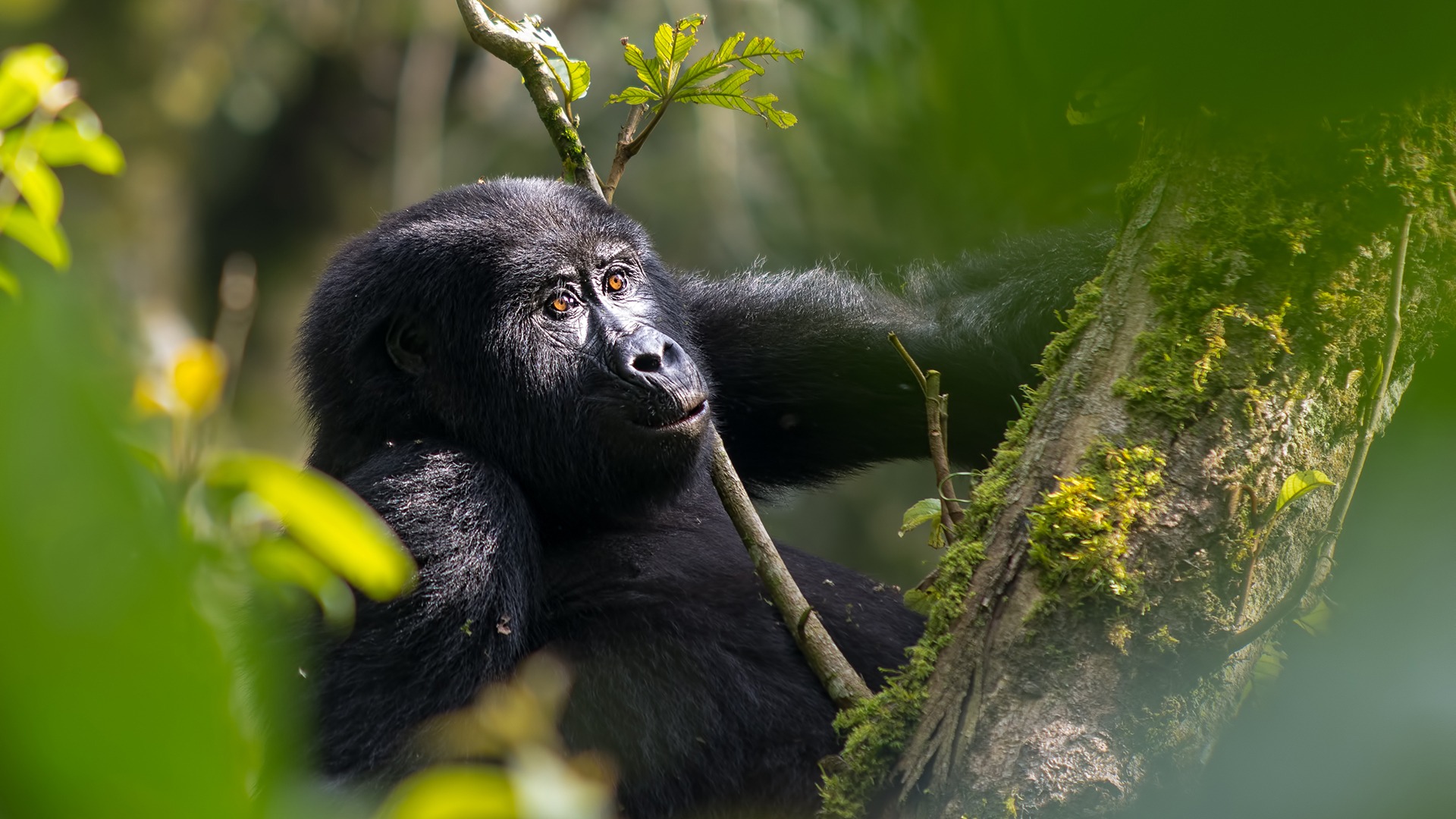
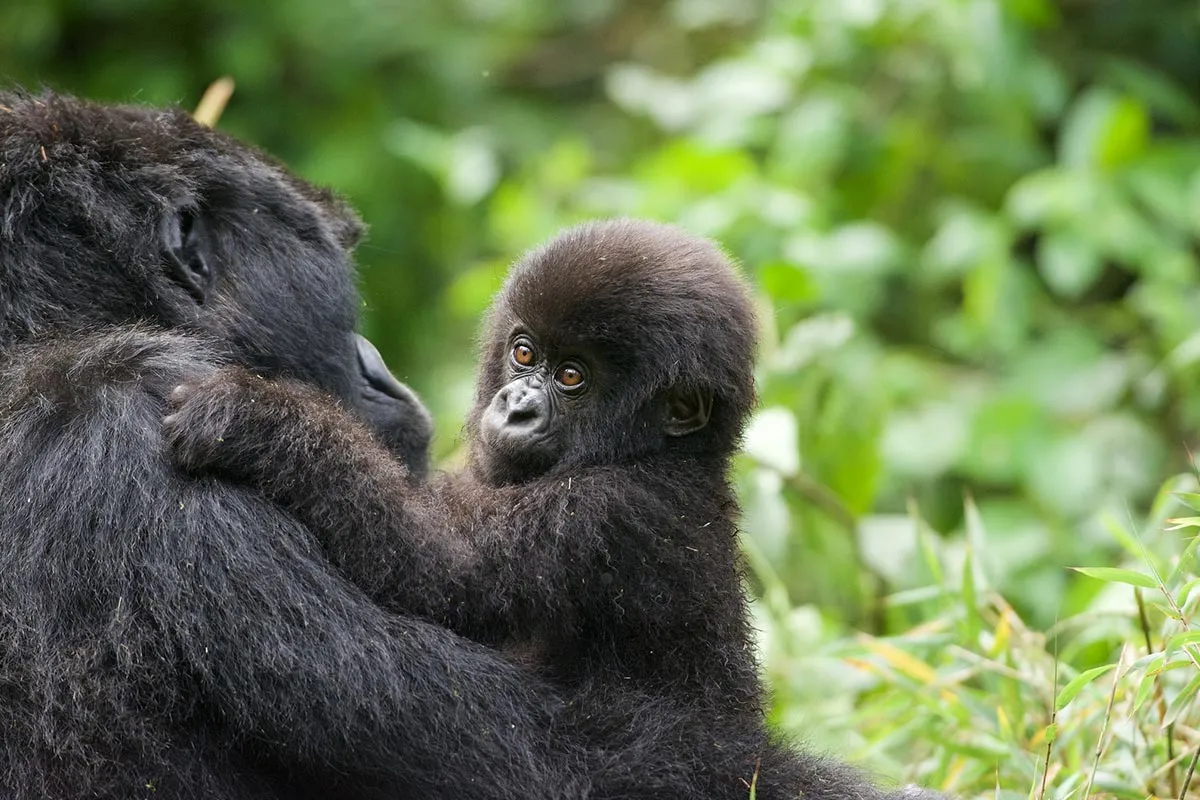
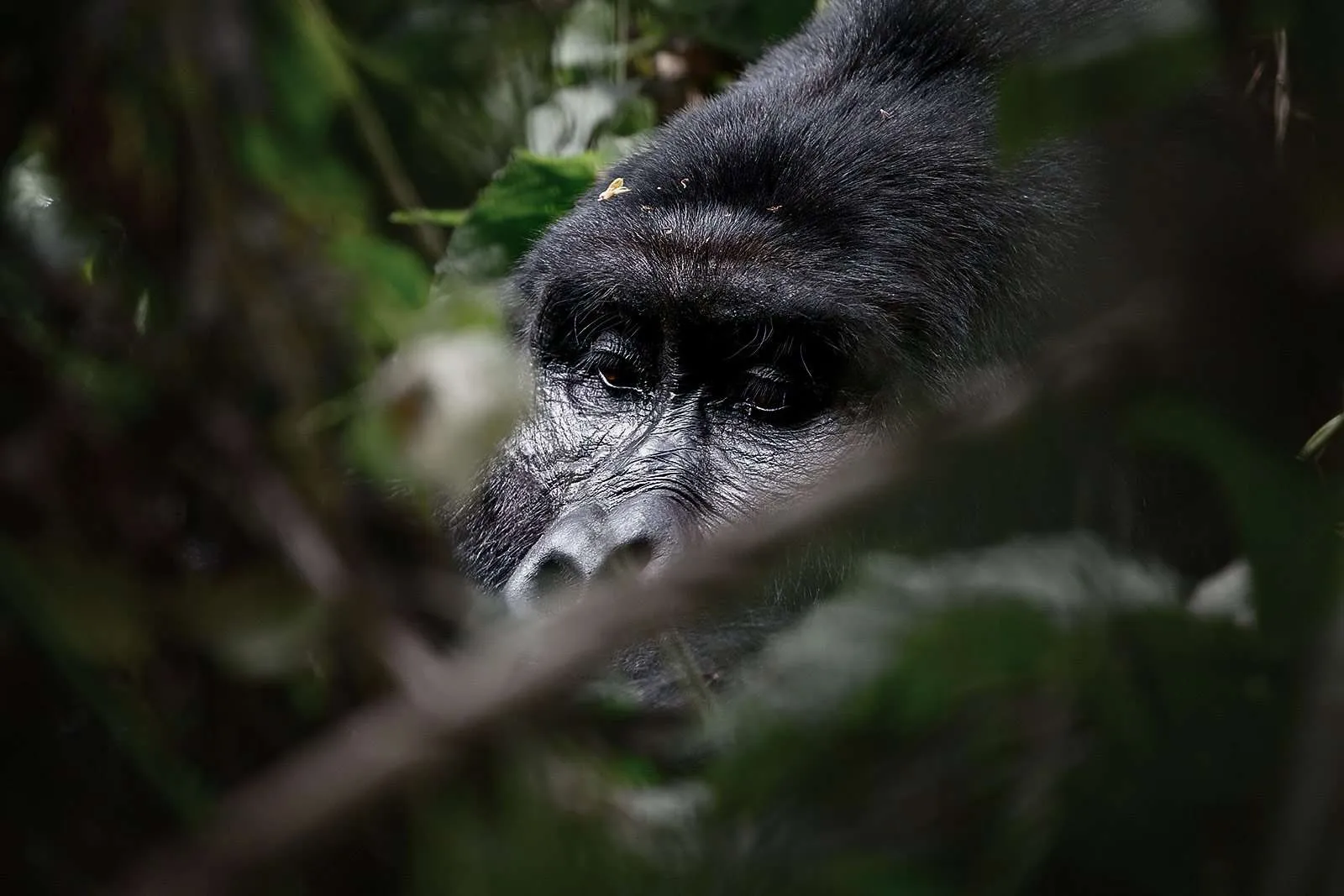
Gorilla trekking is a wildlife experience that involves hiking through dense, misty rainforests to see a family of habituated mountain gorillas in their natural habitat. Led by a machete wielding guide who clears your path, you’ll follow a narrow hiking trail through the lush tropical rainforest, steep hills and streams while wiping sweat from your eyes before finally finding these critically endangered species.
There are approximately 1063 mountain gorillas left in the world and you can only see them by trekking into their native forests, as they cannot survive in captivity. Mountain gorillas share 98% of their DNA with humans.
Gorilla tracking is widely considered one of the most awe-inspiring and sought-after wildlife experiences. Coming face-to-face with a 200kg (440lbs) silverback as he keeps a protective eye over his family in the wild is arguably one of life’s greatest privileges.
Where can you see mountain gorillas in Uganda?
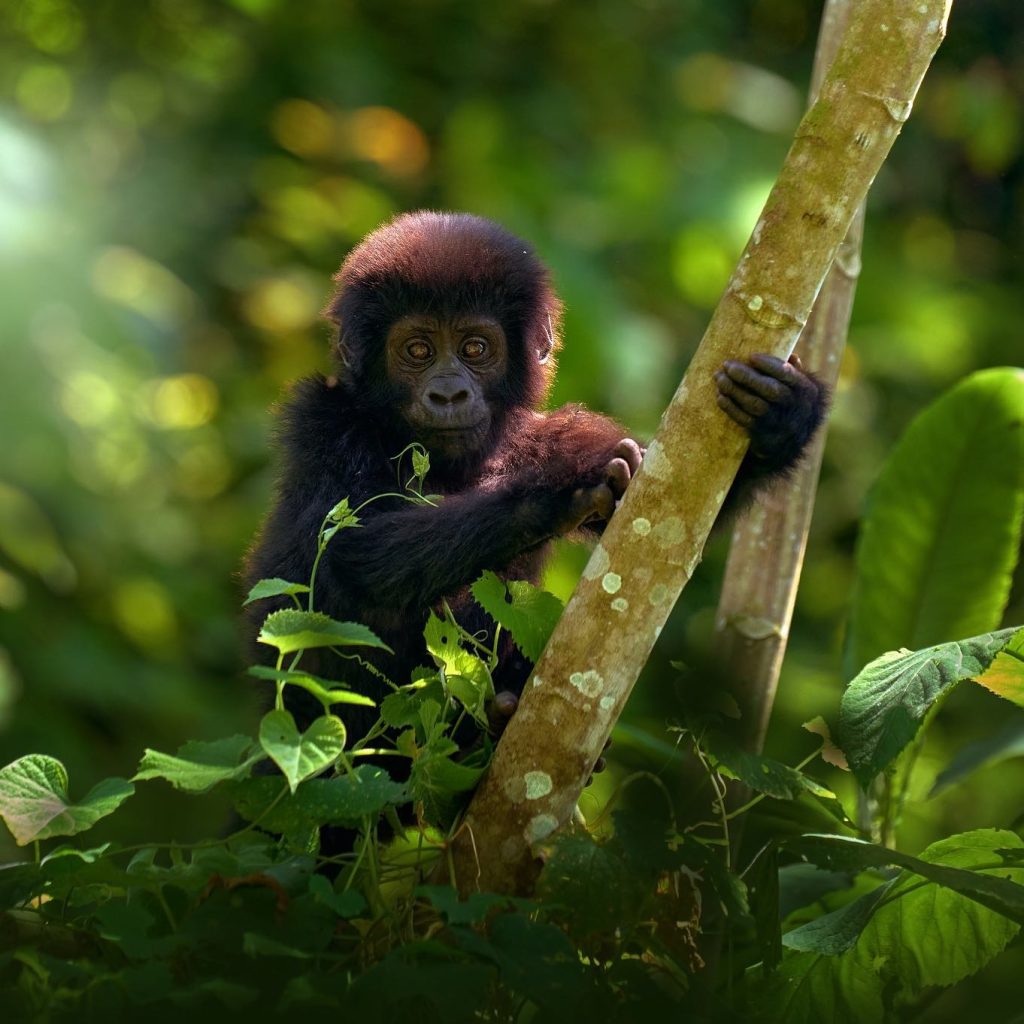
In Uganda, you can see mountain gorillas in the wild in two different locations in the southwestern region: Bwindi Impenetrable National Park and Mgahinga Gorilla National Park. Together, these parks are home to roughly 500 individuals accounting for half of the world’s remaining mountain gorilla population.
Bwindi Impenetrable National Park
Bwindi Impenetrable National Park is a UNESCO World Heritage Site spanning approximately 331 square kilometers. It is the most popular and largest gorilla tracking destination in Uganda. The park hosts roughly 450 individuals, accounting for the vast majority of Uganda’s gorillas. It features around 18 habituated gorilla families distributed across four trailheads;
- Buhoma Sector: Situated in the northern part of Bwindi, Buhoma sector is a pioneer trailhead as it was the first to start gorilla trekking in Uganda back in 1993. It is known for providing the most accessible and easiest gorilla treks as well as high-end tourism infrastructure including a high concentration of luxury lodges.
- Ruhija Sector: Known for its high altitude (highest point in Bwindi), Ruhija is the quietest of the four gorilla trekking trailheads, and provides the most secluded experience. It is home to four habituated gorilla families, three for regular gorilla trekking, and one is strictly for research and long-term studies.
- Rushaga Sector: Located in the south of Bwindi, Rushaga Sector boasts the highest density of gorillas and the largest number of habituated gorilla families in the park. Furthermore, it is the only sector offering the immersive Gorilla Habituation Experience, where you spend up to 4 hours with the gorillas. The region is home to nine fully habituated gorilla families, promising a 100% sighting success rate.
- Nkuringo Sector: Situated in the southern part of Bwindi, Nkuringo sector is one of the highly sought-after trailheads known for its rugged, scenic terrain, panoramic views of the Virunga Volcanoes and providing one of the most challenging hikes. Established in 2004 (second), a decade after opening the Buhoma sector, Nkuringo is home to four fully habituated gorilla families.
Mgahinga Gorilla National Park
Mgahinga Gorilla National Park is Uganda’s smallest National Park spanning approximately 33.7 square kilometers. It is a section of the wider Virunga Mountain Ranges and hosts the remainder of the country’s mountain gorilla population (around 80 individuals). The park features only one habituated mountain gorilla family—the Nyakagezi family—and daily treks usually start from Ntebeko visitor center.
While Mgahinga Gorilla National Park receives few visitors compared to Bwindi, those who make it are rewarded with a quieter, uncrowded, and off-the-beaten-path experience as well as great views of the chain of extinct volcanoes.
Of the two parks, most visitors prefer to go to Bwindi Impenetrable National Park for gorilla trekking in Uganda because it offers more habituated gorilla families meaning greater permit availability, and more diverse lodging options.
How much is a Tracking Permit in Uganda?
A gorilla tracking permit in Uganda costs USD 800 per person for foreign non-residents, USD 700 for foreign residents, USD 500 for rest of Africa and UGX 300,000 for East African citizens. The immersive gorilla habituation experience permit costs USD 1,500 per person per trek.
Best Time to See Gorillas in Uganda
While gorilla trekking in Uganda is considered a year-round activity, the best time to see mountain gorillas is during the dry season from June to September and December to February which offers more favourable trekking conditions. The trails are usually dry in these months and there are fewer chances of rain falling.
The low safari season from March to May and October to November is the best time for budget-conscious visitors interested in gorilla trekking in Uganda. This is when the parks experience fewer crowds and accommodation facilities are more affordable. Read best time to see gorillas in Uganda