The Samburu Special Five
The Samburu Special Five | Kenya’s Rare Northern Animals
While the Big Five is a common phrase in African travel, the Samburu Special Five is another fascinating group of African wildlife species to include on your bucket list.
The Samburu Special Five are animals that are unique to Kenya’s north-central arid and semi-arid frontier, particularly in the Samburu National Reserve. Located in the Samburu County, the region is named after the indigenous Samburu people who have resided there for centuries.
Samburu County is an immense wilderness, defined by unique landforms and wildlife, but the stars here are the iconic Special Five. These animals have evolved remarkable adaptations to thrive in the hot, arid, and sparsely vegetated northern-central frontier. Spotting them in Samburu is like unlocking a hidden treasure chest of safari wonders.
The Special Five not only are unique to the desert landscapes of north-central Kenya, but also give Samburu a safari identity that can’t be found anywhere else in the country. Step off the beaten path on an unforgettable safari to see Samburu’s iconic Special Five across breathtaking semi-arid landscapes. Here is a fascinating line-up of what makes a Samburu safari so extraordinary.
What are the Samburu Special Five?
- Reticulated giraffe
- Grévy’s zebra
- Beisa oryx
- Gerenuk
- Somali ostrich
Reticulated Giraffe (Giraffa reticulata)
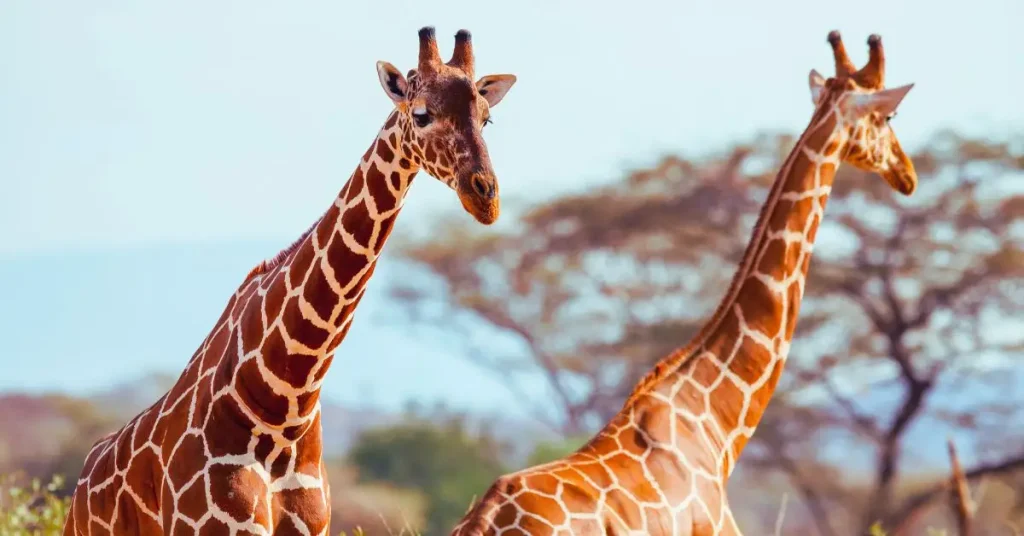
Reticulated Giraffe Unique
The reticulated giraffe is often considered the most striking of all giraffe species. Also known as the Somali giraffe, this species is native to the Horn of Africa, particularly in the southern parts of Somalia and Ethiopia. While small isolated populations may still exist there today, a significant population (stronghold) remains predominantly across northern and northeastern Kenya.
The reticulated giraffe is differentiated by its prominent liver-red, polygonal (or squared), block-like patches which show much less white between them compared to other giraffe species. It is the largest species of giraffe and the tallest land animal reaching heights of up to 6 meters. Sadly, this species has experienced a significant population decline with approximately 20,900 individuals remaining in the wild.
Grevy’s Zebra (Equus grevyi)
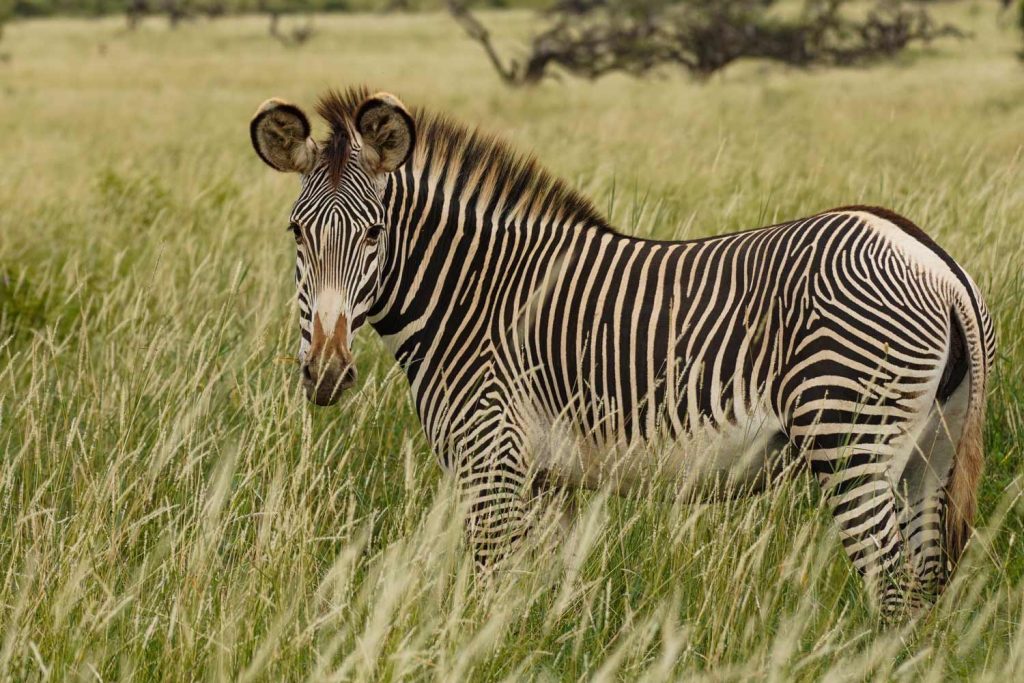
Grevy's Zebra
The endangered Grevy’s zebra is the largest of the zebra species. Like their relatives the plains zebras, they have distinct black and white stripes, though theirs are narrower, closely spaced and terminate around the belly area. Their long-legs make them taller than the common plains zebra. They also have the largest, rounded ears of any zebra, which, when combined with a long neck, make them appear more like a mule. They are more solitary than plains zebras, often seen in smaller groups.
Grevy’s zebra is native to Ethiopia and northern Kenya, but is facing increased poaching, disease and habitat loss and must compete for resources with other grazers, including livestock.
Beisa Oryx (Oryx beisa beisa)
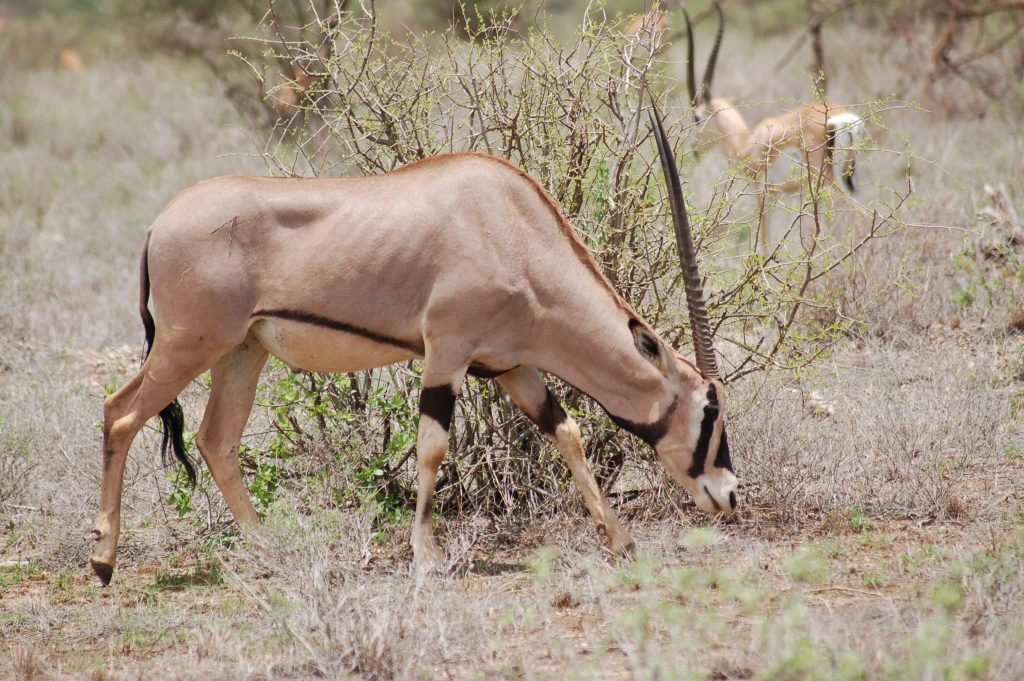
Beisa Oryx
Beisa oryx (or East African oryx) is a remarkable species of medium-sized antelope renowned for its stately presence in arid and semi-arid environments. It is well-suited to the desert plains of Samburu in north-central Kenya, where it eats grasses, leaves, fruit and buds. These antelopes are large and regal-looking with distinctive black markings and towering, long, slender, and nearly straight spear-like horns (including females) which serve as lethal weapons against fearsome predators. They are typically social and move in herds of five to 40 individuals depending on resource availability, though some older males are usually solitary.
Beisa oryxes face threats from poaching, drought, habitat loss or fragmentation resulting in conflict with livestock that compete for forage and water, but some populations persist due to habitat restoration and anti-poaching efforts.
Gerenuk (Litocranius walleri)
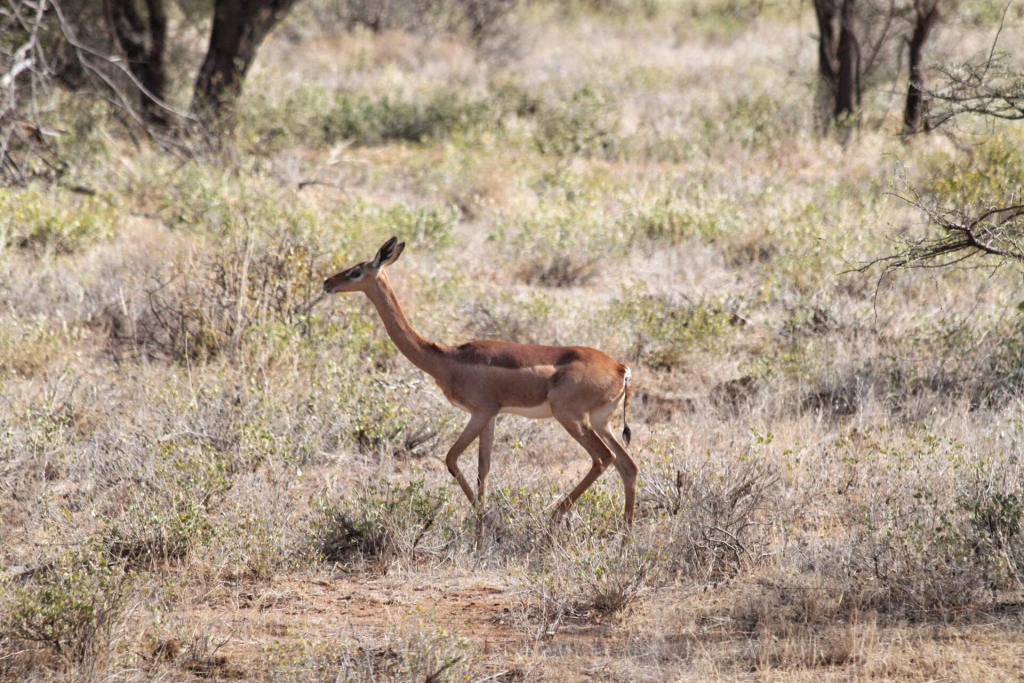
Gerenuk
Gerenuks, also known as giraffe gazelles, are known for their exceptionally long, strong yet thin legs and long slender necks. Their head is uniquely small for their size, wedge-shaped and paired with big, expressive eyes and sensitive ears. Males have a more heavily muscled neck than the females along with horns, which are stout and heavily ringed, all of which are key for survival in arid environments. Such delicate-looking appearance allows them to access food in a way that no other antelope can—hoisting themselves up on their hind legs and stretching out their necks and heads.
These unique antelopes are native to the dry, arid thornbush and semi-arid scrublands of East Africa, particularly Kenya, northeastern Tanzania, Somalia and eastern Ethiopia, but they face threats from habitat loss and fragmentation.
Somali Ostrich (Struthio molybdophanes)
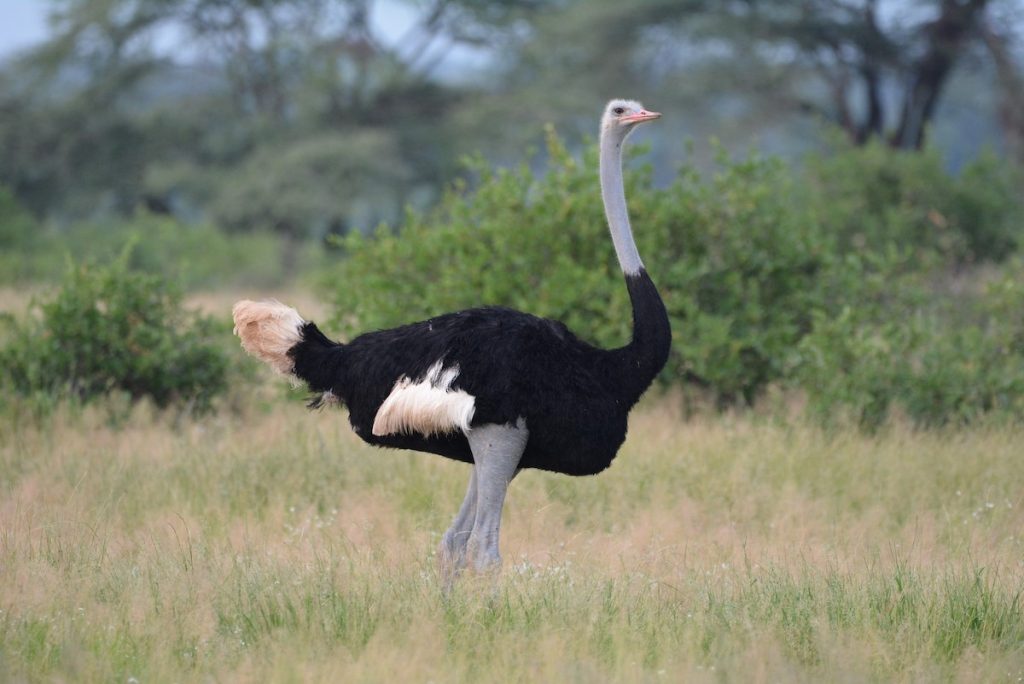
Somali Ostrich
Also known as the blue-necked ostrich, the Somali Ostrich is a large flightless bird adapted to arid habitats. It is one of the two ostrich species in Africa, but it is larger than the more widespread common ostrich (Struthio camelus). This species is known for its striking blue-gray skin (rather than pinkish) and lean physique, an adaptation suited for the arid, open habitats where agility and endurance are critical for survival. Males have black-and-white feathers, while females are grayish-brown. Although these extraordinary birds cannot fly, they are the fastest-running birds reaching speeds of 70 km/h or 43 mph.
The Somali ostrich is native to the Horn of Africa and Northern Kenya, particularly Samburu, a key stronghold. It prefers the open savannahs, scrubland, and acacia-dotted landscapes which provide ideal conditions for foraging and nesting as well as high visibility, allowing them to spot and evade predators when necessary.
Best time to see the Samburu Special Five
Best time to see the Samburu Special Five is during the dry seasons from June to September and January to March. In these months, there is no rainfall and vegetation gets sparse causing animals to concentrate at the Ewaso Ng’iro River, making them easier to spot.
Sample Trips
10 DAYS
An Exclusive Kenya Family Safari
Destinations: Aberdare National Park, Ol Pejeta Conservancy, Lake Naivasha and Masai Mara
- Intimate and exclusive wildlife viewing and wildebeest migration experiences
10 DAYS
Best of Kenya Safari in Private Conservancies
Destinations: Lewa, Namunyak and Naboisho
- Intimate and exclusive wildlife viewing including walking safari and camel safari
